
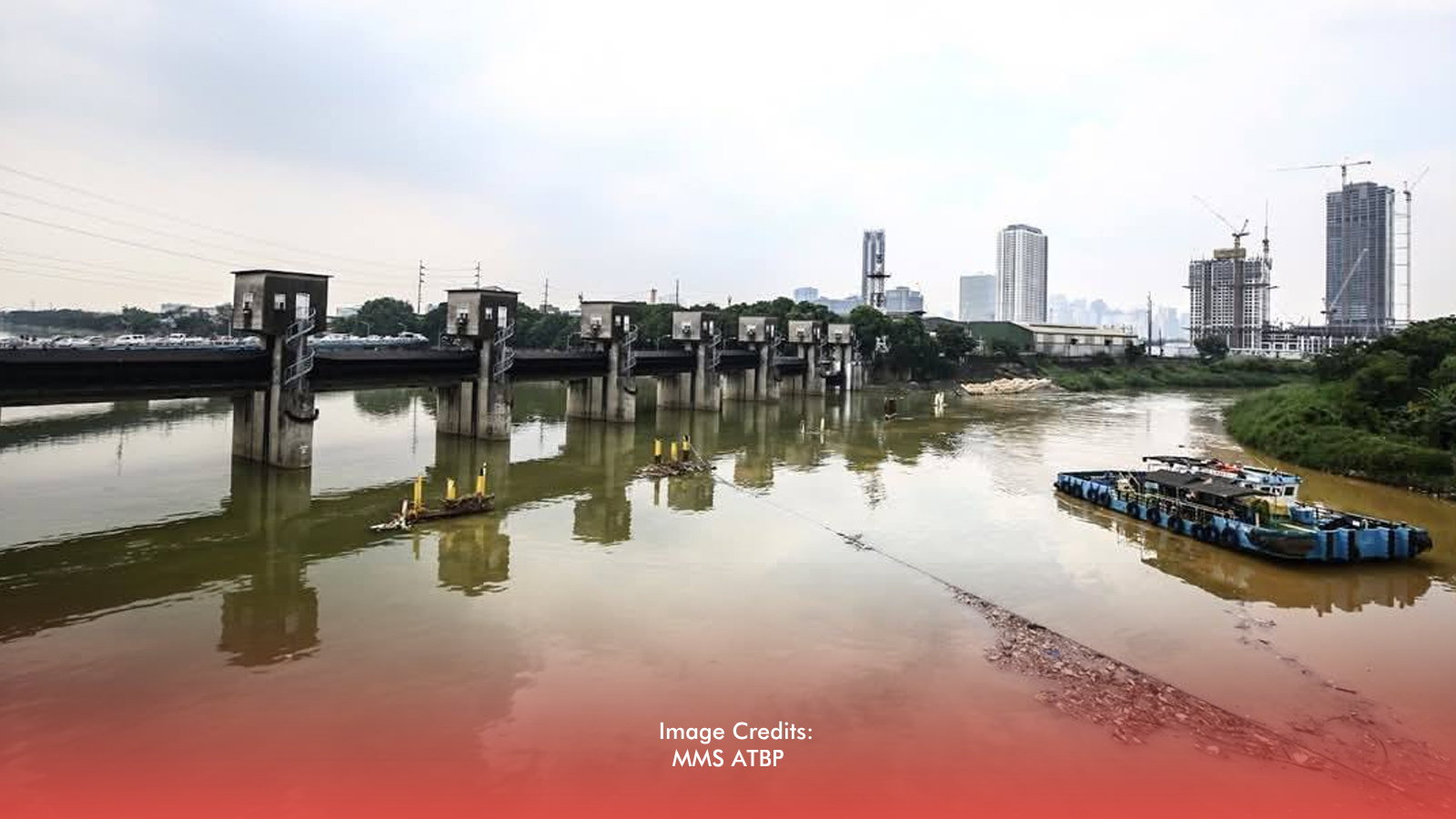
Even as questions persist over past flood control projects, the Department of Public Works and Highways (DPWH) is moving forward with efforts to strengthen Metro Manila’s flood defenses.
The Pasig-Marikina River Channel Improvement Project (PMRCIP), now in Phase 4, covers a major flood-prone corridor stretching from the Sierra Madre to Manila Bay. Over two decades in the making, it remains one of the government’s key flood mitigation initiatives.
This phase introduces Alloy Saving Duplex Stainless Steel (ASDS) for floodgates, a first in the Philippines. The material is lighter, corrosion-resistant, and requires less maintenance than conventional steel. While initial costs are higher, officials say its durability makes it more cost-effective over time. Tighter construction standards and material testing are also being enforced.
Addressing Longstanding Weaknesses
Phase 4 builds on lessons from earlier flood control efforts, which were criticized for outdated designs and weak oversight.
The project has undergone review by the DPWH Bureau of Design and is monitored by consultants. Studies with the Japan International Cooperation Agency (JICA) show that without improvements, major flooding could cause up to $1.3 billion in damage and affect around 1 million people. With upgrades in place, losses could be reduced significantly.
The current phase also aligns with a broader master plan, incorporating climate-responsive designs and highlighting the need for complementary measures such as watershed management and waste control.
Building for Future Flood Risks
Upgrades include widening parts of the river to improve capacity and installing composite piles for stronger structures. New floodgates will be placed near key areas, including the Manggahan Floodway, Cainta, and Taytay.
While designed for severe flood scenarios, current capacity is estimated at about a 30-year flood event. With rainfall expected to increase, additional measures like retarding basins and flow-through dams are being considered to manage extreme weather similar to Tropical Storm Ondoy.
Supported by Japan’s Official Development Assistance, the project now costs around P57.7 billion, with officials aiming to deliver a more reliable, long-term flood control system for Metro Manila.