In February 1986, millions of Filipinos gathered along Epifanio de los Santos Avenue (EDSA) in a historic, four-day protest that would change the course of the nation’s history. From February 22 to 25, what began as a military split from the government transformed into a peaceful civilian uprising now known as the People Power Revolution.
Four decades later, the events of EDSA remain a defining moment in Philippine democracy.
The Backdrop: Two Decades of Rule
By 1986, President Ferdinand Marcos Sr. had been in power for over 20 years. He declared Martial Law in 1972, citing threats of rebellion and instability. While Martial Law was formally lifted in 1981, many of its restrictive powers remained in place.
The assassination of opposition leader Benigno Aquino Jr. in 1983 intensified public outrage. Aquino had just returned from exile when he was shot at the Manila International Airport (now named in his honor). His death galvanized the opposition and united various sectors—religious groups, business leaders, students, and civil society—against the Marcos administration.
The Snap Election and Allegations of Fraud
In November 1985, Marcos called for a snap presidential election, which was held on February 7, 1986. His main challenger was Corazon Aquino, the widow of Benigno Aquino Jr., who had become the face of the opposition movement.
The official tally declared Marcos the winner. However, independent poll watchdog National Citizens' Movement for Free Elections (NAMFREL) reported a different count favoring Aquino. Reports of widespread cheating, intimidation, and vote manipulation triggered public protests and deepened divisions within the military.
The Military Break and the Call to the Streets
On February 22, 1986, Defense Minister Juan Ponce Enrile and Armed Forces Vice Chief of Staff Fidel V. Ramos withdrew their support from Marcos and barricaded themselves in military camps along EDSA.
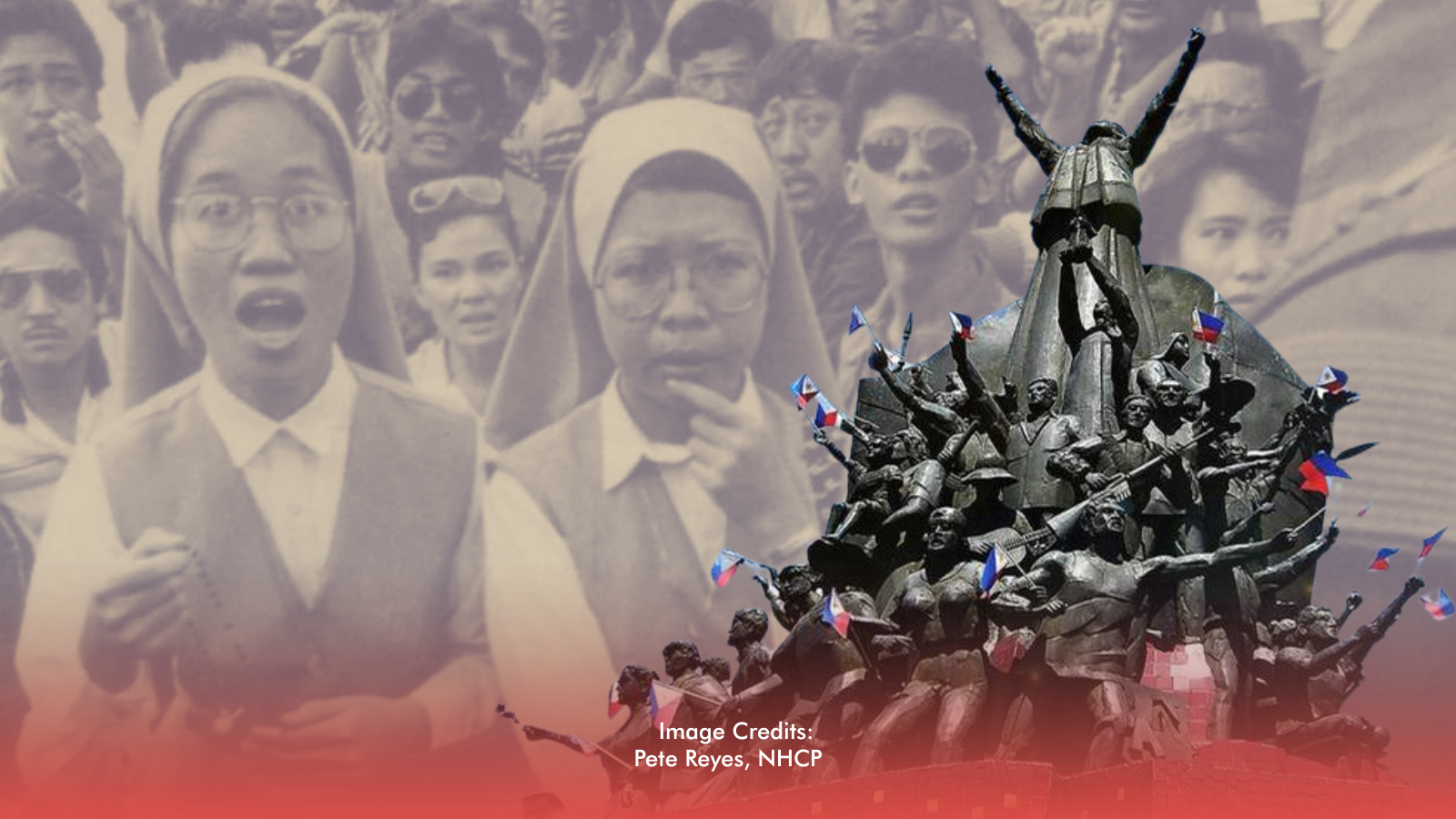
Fearing an attack from forces loyal to the president, Cardinal Jaime Sin went on Radio Veritas to call on Filipinos to protect the defecting officers. In response, thousands, and eventually millions, of civilians poured into EDSA, forming human barricades, offering food to soldiers, and praying the rosary in front of tanks.
The protest remained largely peaceful. Images of nuns kneeling before armored vehicles and civilians handing flowers to soldiers became enduring symbols of nonviolent resistance.
The Fall of a Regime
By February 25, 1986, two rival inaugurations took place. Marcos held his oath-taking ceremony in Malacañang Palace, while Corazon Aquino was sworn in as president at Club Filipino in San Juan.
That same day, as public pressure mounted and military support dwindled, Marcos and his family fled the country aboard U.S. aircraft. They were later granted exile in Hawaii.
Aquino assumed the presidency, marking the restoration of democratic institutions and the drafting of a new Constitution in 1987.
Why EDSA Still Matters
The 1986 People Power Revolution is often cited globally as a model of peaceful protest. It demonstrated the power of collective action and civilian resistance in toppling an authoritarian regime without large-scale violence.
Forty years later, EDSA continues to spark debate about governance, historical memory, and the meaning of democracy in the Philippines. For some, it stands as a triumph of unity and faith. For others, it raises questions about whether the promises of reform were fully realized.
However, what remains undeniable is this: in February 1986, ordinary Filipinos stood together on EDSA and altered the nation’s political landscape, an extraordinary chapter in Philippine history that still shapes conversations today.