Public attention on the flood-control controversy has largely centered on the 2025 national budget. However, budget records, government statements, and ongoing investigations suggest that many of the issues now under scrutiny began years earlier.
The timeline points to 2023 and 2024, when unprogrammed appropriations expanded significantly, flood-control spending accelerated, and billions of pesos in infrastructure projects were released through a system that investigators later described as vulnerable to political influence and weak planning.
Follow the Chain
Unprogrammed appropriations (UAs) are standby funds that can only be released when specific conditions are met, such as excess government revenues, new revenue sources, or approved foreign loans.
The size of these allocations grew sharply in recent years:
- 2022: P251.6 billion
- 2023: P807.2 billion
- 2024: P731.4 billion
In the 2024 budget alone, the executive branch proposed about P281.9 billion in UAs. Congress later increased that amount to P731.4 billion.
The expansion does not, by itself, indicate wrongdoing. However, it shows that a growing share of public spending was being channeled through a category that operates differently from the regular programmed budget.
Where Did More Than P200 Billion Go?
Questions surrounding the controversy extend beyond the size of the appropriations and into how the funds were used.
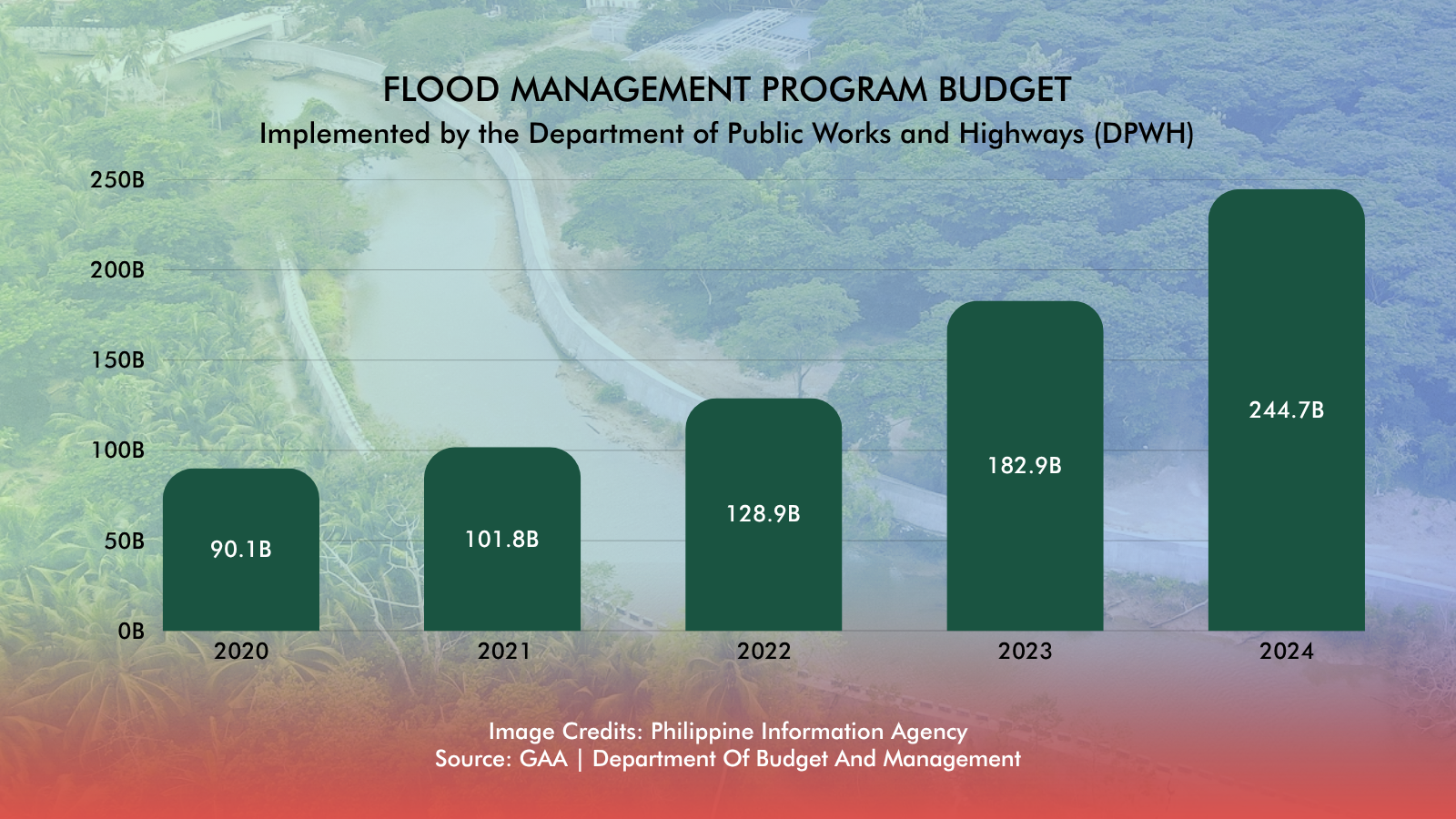
Based on a review of Special Allotment Release Orders, approximately P213.8 billion was released in 2023 and 2024 for priority infrastructure projects under the Department of Public Works and Highways (DPWH). Of that amount, around P111 billion went to flood-control projects, while roughly P82.1 billion funded roads and bridges.
Reports also indicated that legislators had substantial influence over the identification of UA-funded projects. Adding to the concerns, DPWH Secretary Vince Dizon later stated that many projects, including more than P100 billion worth of flood-control works funded through UAs, were not part of the government's major flood-mitigation and river-basin master plans.
These developments raised questions about project selection, planning, and oversight, particularly given the large amounts involved.
From Budget Questions to Corruption Allegations
The issue gained greater public attention during Senate hearings in 2025.
Contractors Curlee and Sarah Discaya testified under oath that some DPWH officials and political figures allegedly demanded kickbacks ranging from 10% to 25% of project costs. They named several officials and politicians, including former House Speaker Martin Romualdez.
The allegations remain unproven. While the testimony was given under oath, project-specific evidence for each alleged payment was not presented during that hearing. Romualdez denied the accusations, calling them false and malicious.
Separate complaints also alleged that P241 billion worth of insertions had been made in the 2025 national budget. These complaints remain under investigation and should not be interpreted as findings of guilt.
The Warning Signs Didn't Appear Overnight
The controversy has also fueled claims that concerns about budget allocations were already being discussed within government circles before the issue became public.
Navotas Representative Toby Tiangco claimed that during a November 2024 meeting, President Ferdinand Marcos Jr. reprimanded senior officials over the alleged concentration of public funds and its impact on government priorities. The account was reported publicly but remains Tiangco's recollection of a private meeting rather than a documented presidential statement.
Meanwhile, comments from public figures such as Francis Escudero, Winnie Monsod, Butch Abad, and Vice President Sara Duterte added to broader discussions surrounding the budget and flood-control controversy.
Moving Beyond Politics
The controversy has since progressed beyond public debate.
By late 2025, the DPWH and the Independent Commission for Infrastructure had reportedly recommended that the Ombudsman examine possible plunder, graft, and bribery complaints involving major flood-control contracts. The referral reportedly covered around P100 billion in contracts.
In April 2026, the Sandiganbayan issued a precautionary hold-departure order against Romualdez following a reported preliminary finding of probable cause by Ombudsman investigators. Romualdez again denied wrongdoing.
As of June 2026, investigations by the Ombudsman and the Senate remained ongoing. Referrals, complaints, and preliminary findings are part of the investigative process and do not constitute final judgments.
Why Investigators Are Looking at the Whole Picture
The central question facing investigators goes beyond a single budget year.
A complete review would need to examine how projects were proposed, how budgets were amended, how unprogrammed funds were activated, who identified the projects, whether they followed established master plans, how contractors were selected, and whether communities received the flood protection taxpayers paid for.
As investigations continue, the public's interest remains straightforward: where the money went, who made the decisions, and whether the projects delivered the results they were intended to achieve.