
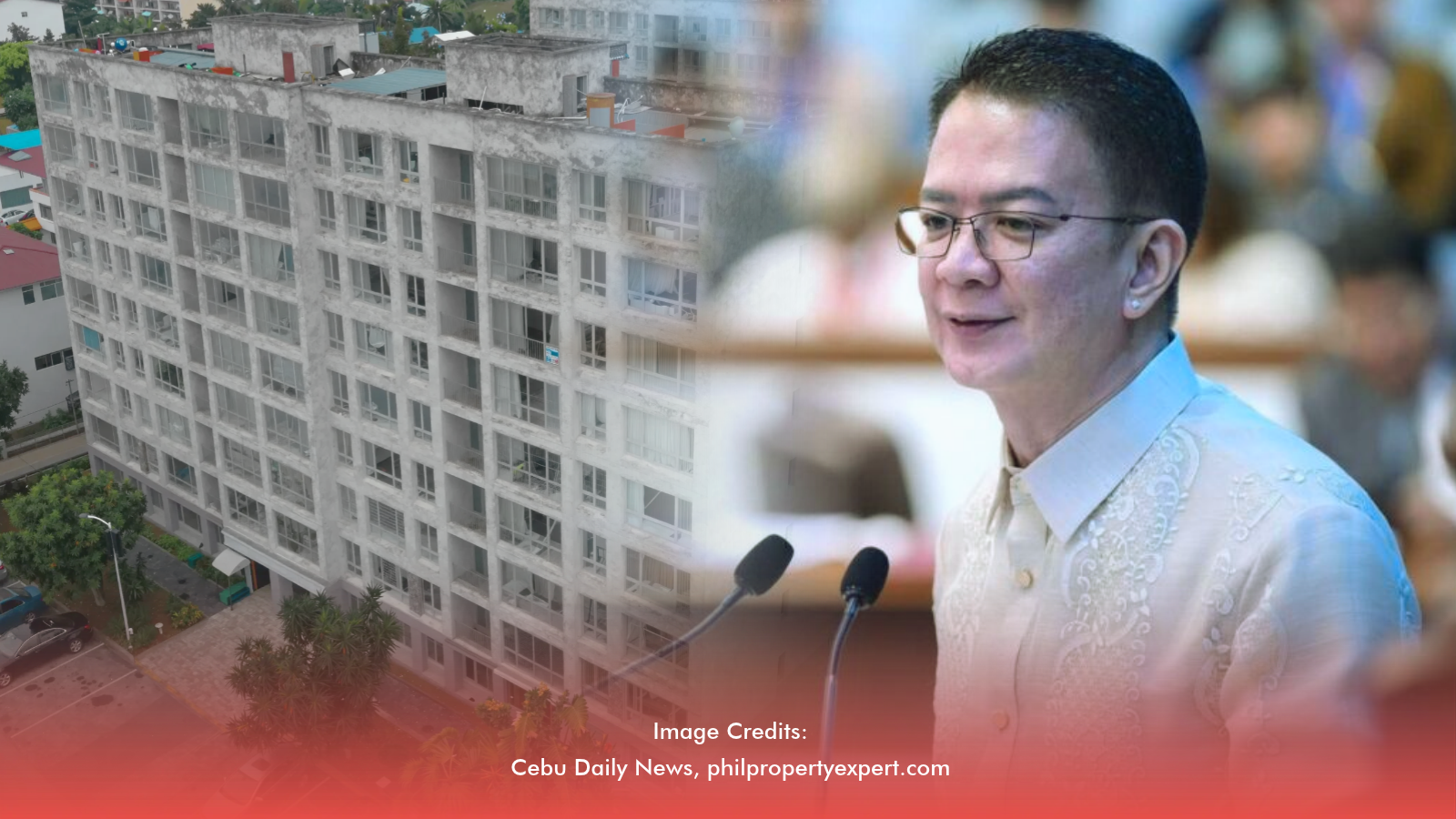
Two bills by Senator Francis "Chiz" Escudero aim to lower what condo and subdivision residents pay and to give aging condo towers a way to be rebuilt. Senate Bill 2569 was filed on Oct. 21. Senate Bill 2420, an update of the 1966 Condominium Act, passed the Senate 18 to 0 on Sept. 1, and the Senate ratified its final version on Oct. 8.
Relief From a Tax That Reaches Residents
SB 2569 would amend Section 234 of the Local Government Code, which lists properties exempt from real property tax. Common areas "duly designated or recognized" in residential condo and subdivision projects, such as hallways, lobbies and parks, would be exempt if they are not used for commercial or income-generating activity. Areas converted to business use would stay taxable.
Escudero says residents carry the cost. "These places do not make money, but they still pay taxes. In the end, it's the families who live there who pay, not the developer," he said in a statement. His explanatory note says the tax raises the cost of owning a home and may discourage developers from setting aside land or floor space for amenities. Reports on the bill say developers typically pass the tax on to homeowners' associations, which raises dues.
As enacted in 1991, Section 234 exempts government property, charitable, religious and educational use, certain utility equipment, registered cooperatives and pollution-control equipment. Common areas are not listed. Under the Code, in a city 70 percent of the tax collected goes to the city and 30 percent to its barangays. No estimate of the revenue loss has been published.
A Way Forward for Aging Towers
Escudero's office says SB 2420 would make the 1966 law "more responsive to the realities of contemporary urban living." Today, a condominium corporation can be dissolved by voluntary vote only if all its members agree. "Currently, a unanimous vote from every unit owner is required, which we know is impossible," Escudero said on Aug. 25.
Under the Senate version, projects under 30 years old would need approval of unit owners in good standing, projects 30 to 50 years old two-thirds, and projects 50 years or older a majority. Escudero said the final version simplifies floor-area deviation limits to three brackets of 1 to 3 percent and offers two liquidation options: selling the whole project or declaring liquidating dividends. His office says the bill protects unit owners while letting old properties "find new life." Escudero is listed as the bill's principal author.
Property consultants described benefits of the House version, House Bill 2286, in January. Joe Curran, chief executive officer of Savills Philippines, said the proposed law "reduces risk for buyers and investors in older but well-located projects." Roy Amado Golez Jr. of Leechiu Property Consultants said lower voting thresholds would let landowners replace obsolete and inefficient properties in prime locations with buildings of higher floor area ratio densities.
Who Is Affected
The Philippine Statistics Authority counted 169,327 occupied housing units in condominium or condotel buildings as of May 1, 2020, or 0.7 percent of the country's occupied housing units. Leechiu Property Consultants counted 775,400 condominium units in Metro Manila at the end of November 2025, with 80,300 of them unsold.
The Senate resumes session on Nov. 9.