Artificial intelligence (AI) is becoming increasingly difficult to distinguish from reality. From realistic videos and images to AI-generated information, the technology is changing how people learn, work, and interact online.
For Filipino students growing up in this environment, knowing how to use AI responsibly is becoming just as important as knowing how to use it.
The Philippines is taking steps to prepare the next generation through international partnerships, teacher training, and new education programs designed to strengthen digital literacy while protecting children from online risks.
International partnerships push digital education forward
In November 2026, First Lady Liza Araneta-Marcos led the Fostering the Future Together gathering alongside the 49th ASEAN Summit.
The initiative stems from a global coalition launched by US First Lady Melania Trump, bringing together nearly 60 countries to expand children's access to technology and education.
Its four key priorities include AI in education, educational technology, digital skills development, and online child protection.
During the gathering, Araneta-Marcos emphasized the importance of balancing technological innovation with community involvement and stronger safeguards against cyberbullying and online exploitation.
The message highlights an important part of digital education: children must learn how to benefit from technology while understanding the risks that come with it.
DepEd brings AI into Philippine classrooms
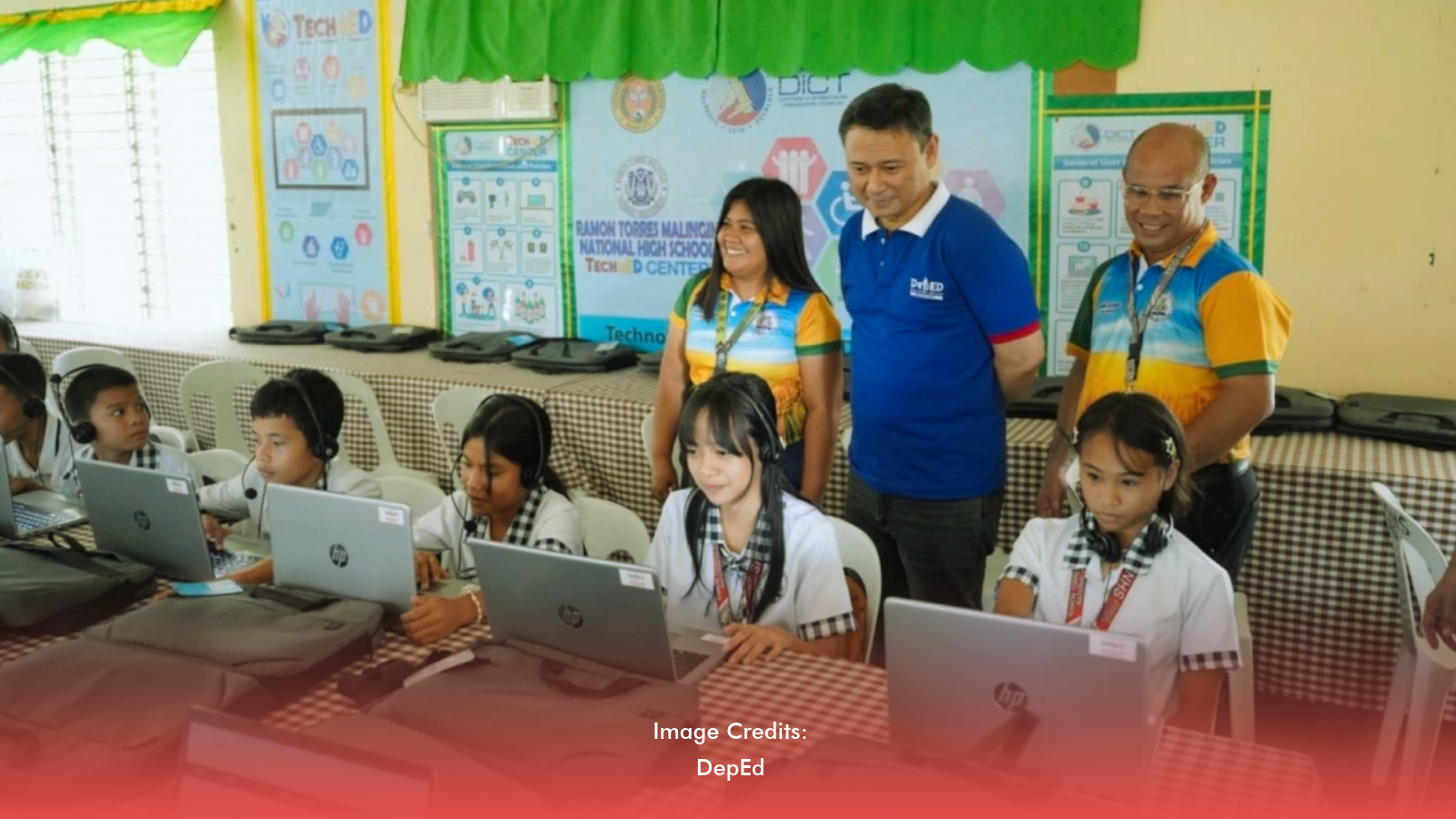
The Department of Education (DepEd) is also expanding its efforts to introduce AI into the country's education system.
Through its partnership with Microsoft Philippines, DepEd aims to train 2,000 public school educators in AI literacy. The program will help teachers explore how AI tools can support lesson planning, personalize instruction, and simplify administrative tasks.
Meanwhile, the department's Education Center for AI Research (ECAIR) is developing localized AI solutions suited to Philippine classrooms.
One initiative is Project SABAY, an AI-assisted screening tool designed to help identify young learners experiencing communication and learning difficulties. The project aims to support earlier identification and intervention.
DepEd is also working to strengthen digital infrastructure through its Computerization Program, which provides schools with computer laboratories, e-classrooms, and laptops for teachers.
These initiatives reflect the growing role of technology in making education more accessible and responsive to students' needs.
Teaching students to use AI responsibly
As AI becomes more advanced, students will inevitably encounter it in their classrooms, future workplaces, and everyday lives.
However, access alone is not enough. Young learners must understand that AI-generated information can be inaccurate, images and videos can be manipulated, and personal information can be misused online.
Teaching AI literacy early can help students develop the skills to fact-check information, think critically, protect their privacy, and use AI for research, creativity, and problem-solving without becoming overly dependent on it.
Equally important is protecting children from cyberbullying, exploitation, and other online threats.
Technology will continue to evolve, and the tools students use today may look very different in the years ahead. Preparing them now means giving them the confidence and knowledge to adapt, make responsible decisions, and use these advancements to their advantage.