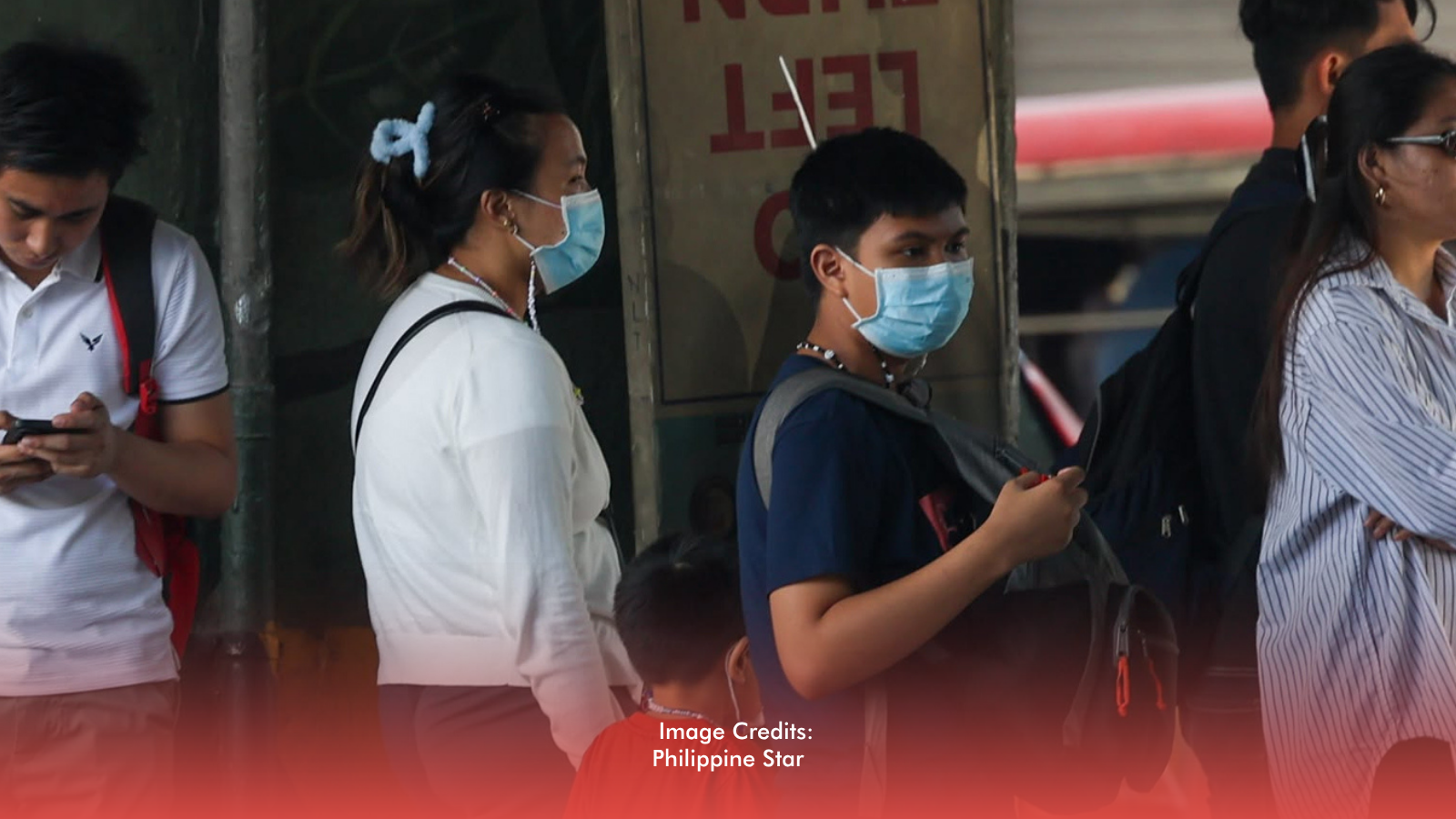
Residents in several parts of Metro Manila were urged to wear face masks after “very unhealthy” levels of fine particulate matter (PM2.5) were detected on Sunday, April 19.
By 3:00 p.m., Caloocan, Malabon City, Marikina CEMO, and Quezon City had recorded hazardous PM2.5 readings. Navotas City also registered “unhealthy” air quality, with smoke from a burning landfill further worsening conditions in nearby areas. In contrast, Mandaluyong City and Muntinlupa City reported comparatively lower, “fair” air quality levels.
Understanding PM2.5 in the Air We Breathe
PM2.5 refers to microscopic particles and liquid droplets measuring 2.5 micrometers or smaller—small enough to travel deep into the lungs and even enter the bloodstream.
According to the Environmental Management Bureau’s monitoring data, these pollutants commonly come from vehicle exhaust, construction activities, road dust, improper waste management, and biomass burning across the metro.
Health Concerns Prompt Precautionary Measures
Health experts caution that even short-term exposure to elevated PM2.5 levels can trigger serious health risks. These include aggravated asthma, reduced lung function, irregular heartbeat, and increased likelihood of heart and respiratory complications, particularly among vulnerable groups.
Authorities continue to remind the public to limit outdoor activity when possible and to use protective masks as air quality remains a concern in affected areas.