The endemic abaca plant, a banana relative, is unique to Catanduanes Island and is well-known worldwide for its robust fiber.
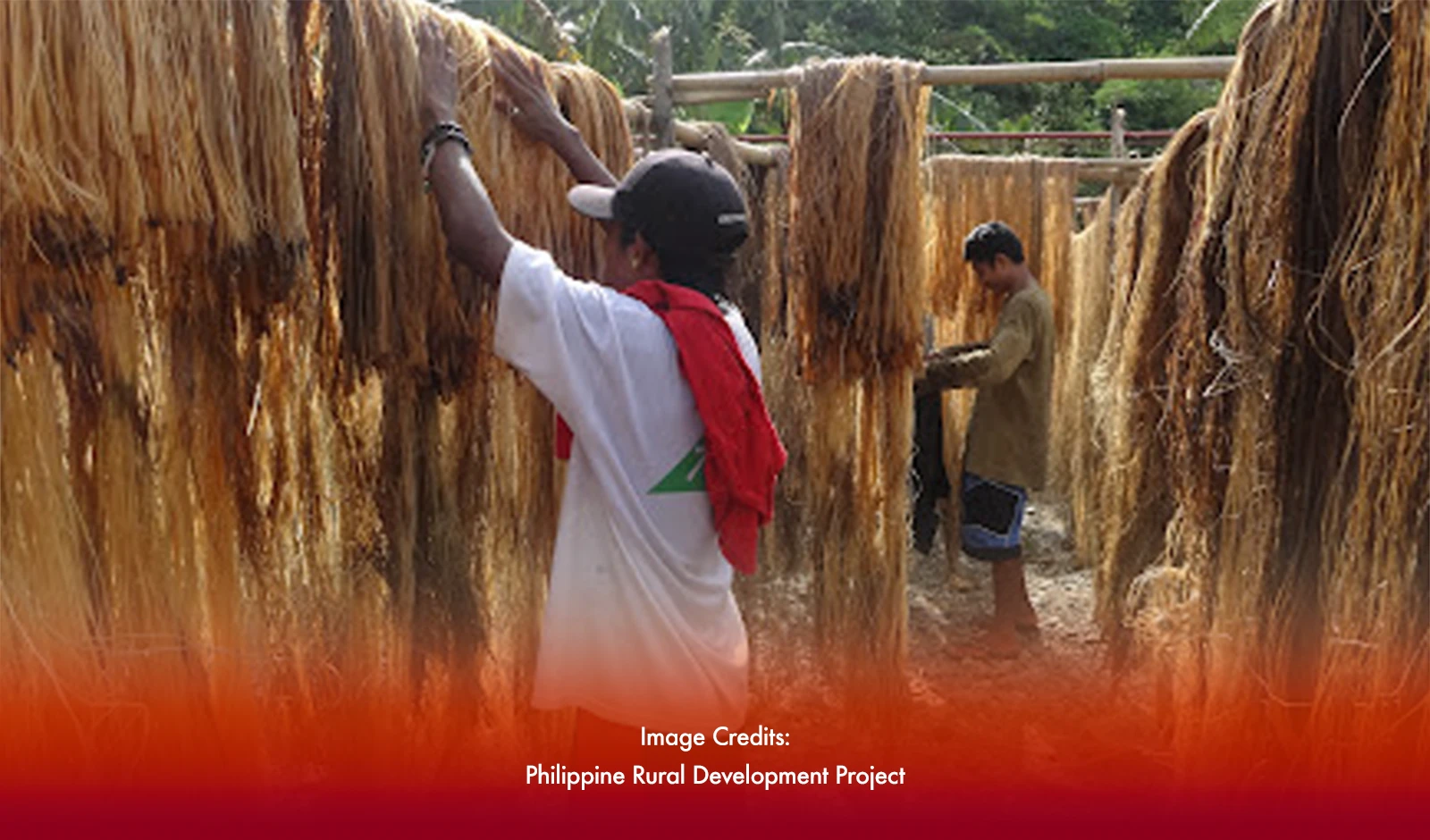
Abaca, also known as manila hemp, is taken from the leaf sheath that encircles the trunk of the abaca plant, which is indigenous to the Philippines and extensively found throughout the humid regions.
Farmer’s struggles
Because the majority of the province's abaca plantations are situated in upland regions, farmers and strippers must endure a two-hour journey regardless of any weather conditions just to produce abaca. This arduous task has left farmers reeling, especially when the pandemic and natural disasters devasted their abaca farms.
Despite this, Catanduanes remains the Philippines’ largest contributor, accounting for 31.72 percent of the nation's output in 2020, 33.74 percent in 2019, and 33.37 percent in 2018.
With 21,500 hectares of abaca plantations, the province produces more than 80% of the abaca in Bicol.
Abaca’s uses
Abaca is valued for its durability, the ability to withstand salt damage, and lengthy fibers that can reach up to three meters. The most robust abacas are fine, glossy, and have a light beige color.
Ropes, fishing nets, and coarse cloth for sacking are all made from abaca. However, the abaca fiber is more prominent in papermaking, furnishings, screens, clothes, and curtains.
The majority of abaca fiber is processed into specialty papers by pulping it. Tea and coffee bags, paper for sausage casings, filter papers for cigarettes, papers for food preparation and disposal, medical supplies, premium writing paper, vacuum bags, and most especially, cash are some products that can be made from abaca.
Because of its high tensile strength, it can also be utilized as an alternative to glass fiber in reinforced plastic components for exterior semi-structure components and interior automated applications.
Abaca capital
In recognition of Catanduanes' position as the nation's leading producer of native fiber, the province was dubbed the "abaca capital of the Philippines" on April 25, 2022, under Republic Act No. 11700.
Catanduanes is also the home of the abaca festival. Virac hosts the Abaca Festival every year, officially called the Catanduanes Abaka Festival.
The celebration acknowledges the value of abaca fiber to the local economy and the need to highlight its adaptability as a primary source of income.
Every May, the celebration will highlight the island's distinctiveness, exoticism, and tenacity of the Catandunganon people and their culture.