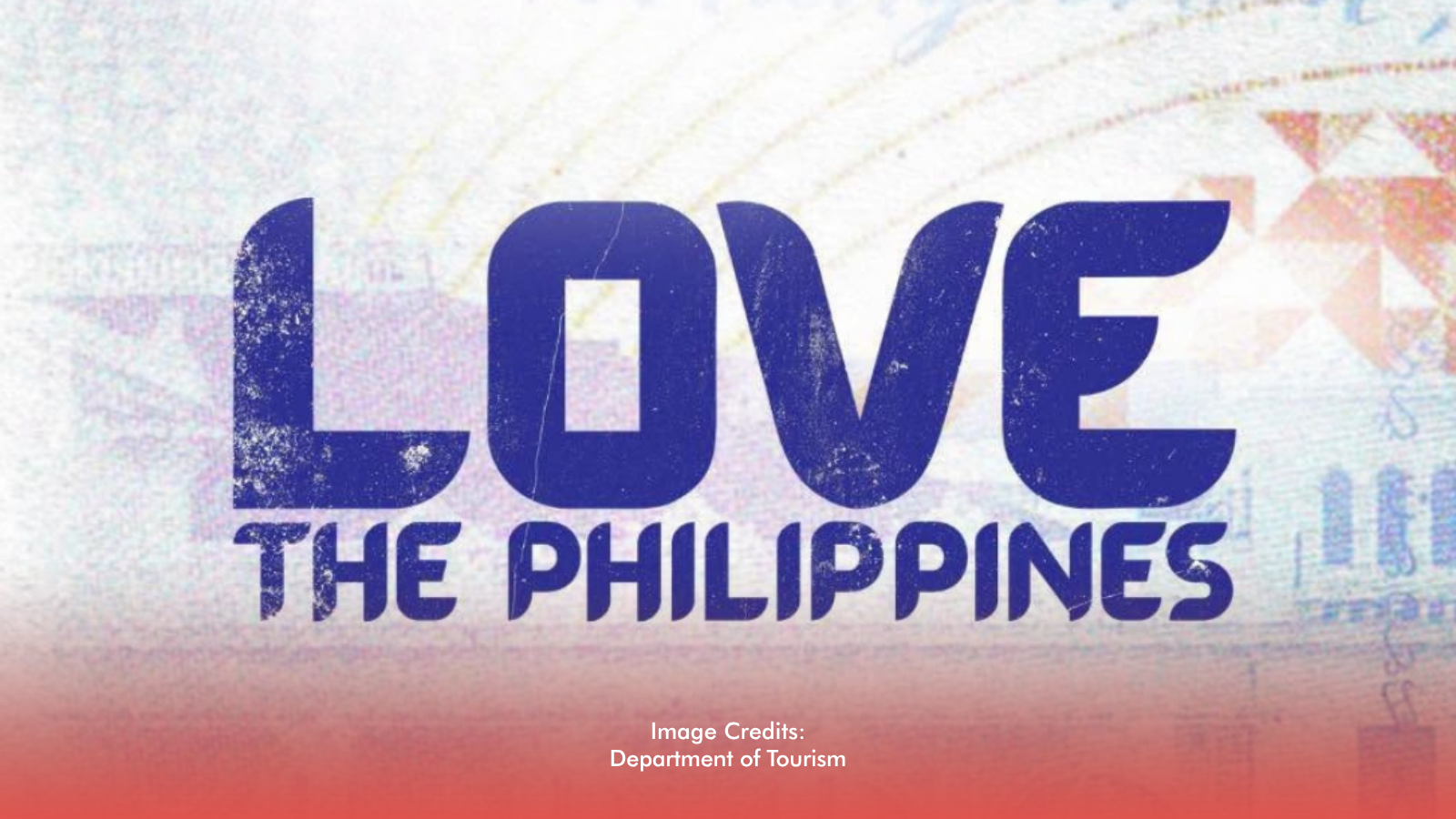
A proposed measure in the Senate would require the Philippines to maintain a single official tourism campaign slogan for at least 15 years, aiming to give the country’s tourism branding greater continuity across changes in administration. Senate Bill (SB) 2511, or the proposed Philippine Tourism Campaign Slogan Act, assigns the Department of Tourism (DOT), in consultation with relevant stakeholders, to formulate the official slogan.
The proposal follows concerns raised during deliberations on the DOT’s proposed 2027 budget. The measure points to the successive use of “Wow Philippines,” “It’s More Fun in the Philippines”, and “Love the Philippines” as examples of changes in the country’s tourism branding, with proponents arguing that repeated shifts could affect brand recognition among travelers.
RELATED: [Mindanao Tourism Gets Boost as Regions Gather for 4th MTEX]
Proposed Slogan Would Guide National and Local Tourism Branding
Under SB 2511, the official tourism slogan would be incorporated into national and local development plans and serve as the primary message for tourism campaigns. The measure would also prohibit supplementary campaign slogans, establishing a more consistent branding framework across government tourism promotions.
The bill's proponent said frequent rebranding can create breaks in the country’s tourism identity, reduce public familiarity with a campaign, and require resources for developing and implementing new branding. The proposal draws a contrast with Malaysia’s “Malaysia, Truly Asia” campaign, which has been used since 1999, although its branding and implementation have evolved over time.
“It seems like we’re the only country that keeps changing things with every administration. There’s ‘Love,’ then ‘More Love’... We don’t have a distinct brand,” Tulfo said.
Tourism Secretary Dita Mathay has expressed support for retaining a long-term tourism slogan, saying continuity could help strengthen the country’s tourism branding. The proposal also calls for faster implementation of tourism programs and initiatives intended to attract foreign and domestic visitors, increase tourism receipts and maximize the sector’s contribution to economic growth.
Long-Term Branding Tied to Tourism Growth
The debate over a fixed tourism slogan goes beyond the words used in promotional materials. A consistent national brand could shape how Philippine destinations, businesses, and local tourism campaigns present themselves over a longer period, while the proposed 15-year requirement would also limit how quickly future administrations could change the country’s central tourism message.
That question comes as the country continues to rebuild its tourism momentum. The DOT recorded 5,865,319 foreign visitor arrivals in 2025 through the DICT eTravel system, slightly below the 5,949,350 recorded in 2024 and still well short of the 8.26 million foreign arrivals recorded in 2019. The broader Bureau of Immigration count put 2025 foreign arrivals at 5,940,975, reflecting visitor categories not consistently captured by the eTravel system.
The numbers make the branding debate more than a question of which phrase sounds better. “It’s More Fun in the Philippines,” launched in 2012, became closely associated with the country’s tourism identity, particularly as Filipinos embraced and adapted the campaign across social media. Its long run also gave the slogan a level of familiarity that newer campaigns have yet to match.
That familiarity can still be felt in the occasional nostalgia surrounding “It’s More Fun in the Philippines.” Some Filipinos continue to look back on the campaign as a particularly memorable period in the country’s tourism branding, not necessarily because they are calling for its return, but because the slogan became closely tied to how the Philippines presented itself to both visitors and its own people.
That lingering nostalgia raises a bigger question about what makes a tourism campaign stick. A slogan can be changed overnight, but the identity built around it takes years to establish. If SB 2511 is ultimately about giving Philippine tourism a lasting identity, the real test may be whether the next slogan can become more than a government campaign and earn the same familiarity that still makes an old one feel familiar years later.
RELATED: [Japan Is Still the Filipino Traveler's Favorite Spring Getaway]