
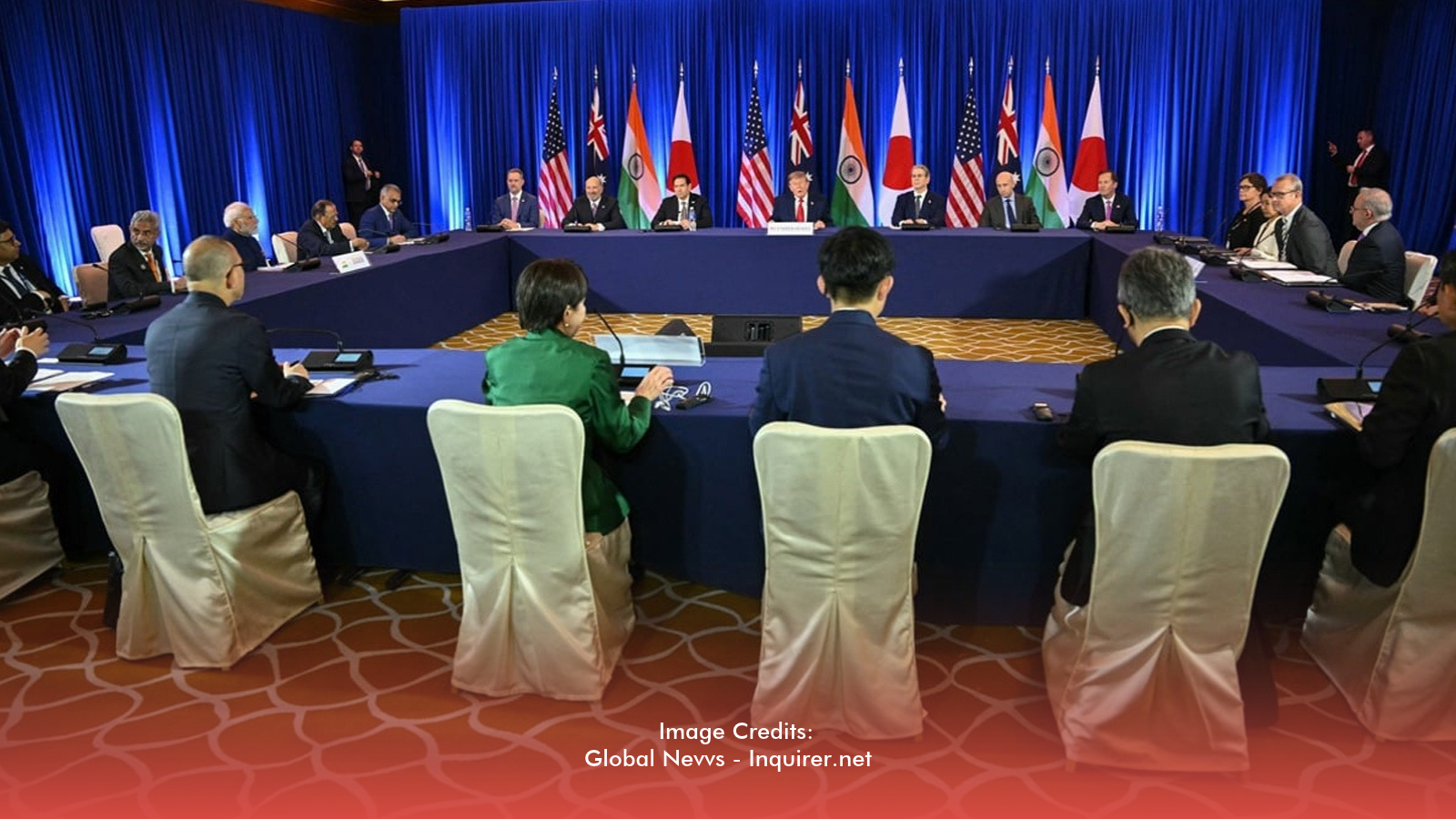
The United States, Japan, Australia, and India are planning to conduct their first joint maritime exercise in 2027 as part of efforts to strengthen security cooperation and promote stability in the Indo-Pacific region.
The proposed exercise was among the key developments following the Quadrilateral Security Dialogue (Quad) meeting in Manila on November 17, held on the sidelines of the 49th Association of Southeast Asian Nations (ASEAN) Summit.
The meeting brought together U.S. President Donald Trump, Japanese Prime Minister Sanae Takaichi, Australian Prime Minister Anthony Albanese, and Indian Prime Minister Narendra Modi.
Joint Exercise to Strengthen Maritime Surveillance
Under the Indo-Pacific Maritime Surveillance Collaboration, the four countries plan to deploy P-8 and P-3C maritime patrol aircraft for the exercise in 2027.
The initiative is intended to improve information sharing, strengthen maritime domain awareness, and enhance coordination in monitoring regional waters.
The planned activity marks another step in expanding the Quad's security partnership, particularly in addressing shared maritime concerns across the Indo-Pacific.
Quad Leaders Reaffirm Regional Security Commitment
The four leaders also reaffirmed their commitment to maintaining a free, open, and stable Indo-Pacific.
In their discussions, they expressed concern over unilateral actions that seek to change the status quo through force or coercion. They also highlighted the importance of protecting freedom of navigation and addressing economic pressure, including arbitrary export restrictions.
Broader Cooperation in Trade and Technology
Beyond maritime security, the Quad countries are also looking to expand cooperation in economic development, technology, and infrastructure.
The leaders announced plans for the first Quad Business Leaders' Forum in early 2027 to encourage stronger business partnerships and investments among member countries.
Other areas of cooperation include artificial intelligence, cybersecurity, undersea cable connectivity, and energy infrastructure.
These initiatives reflect the Quad's broader goal of strengthening regional partnerships and building a more secure, connected, and resilient Indo-Pacific.