
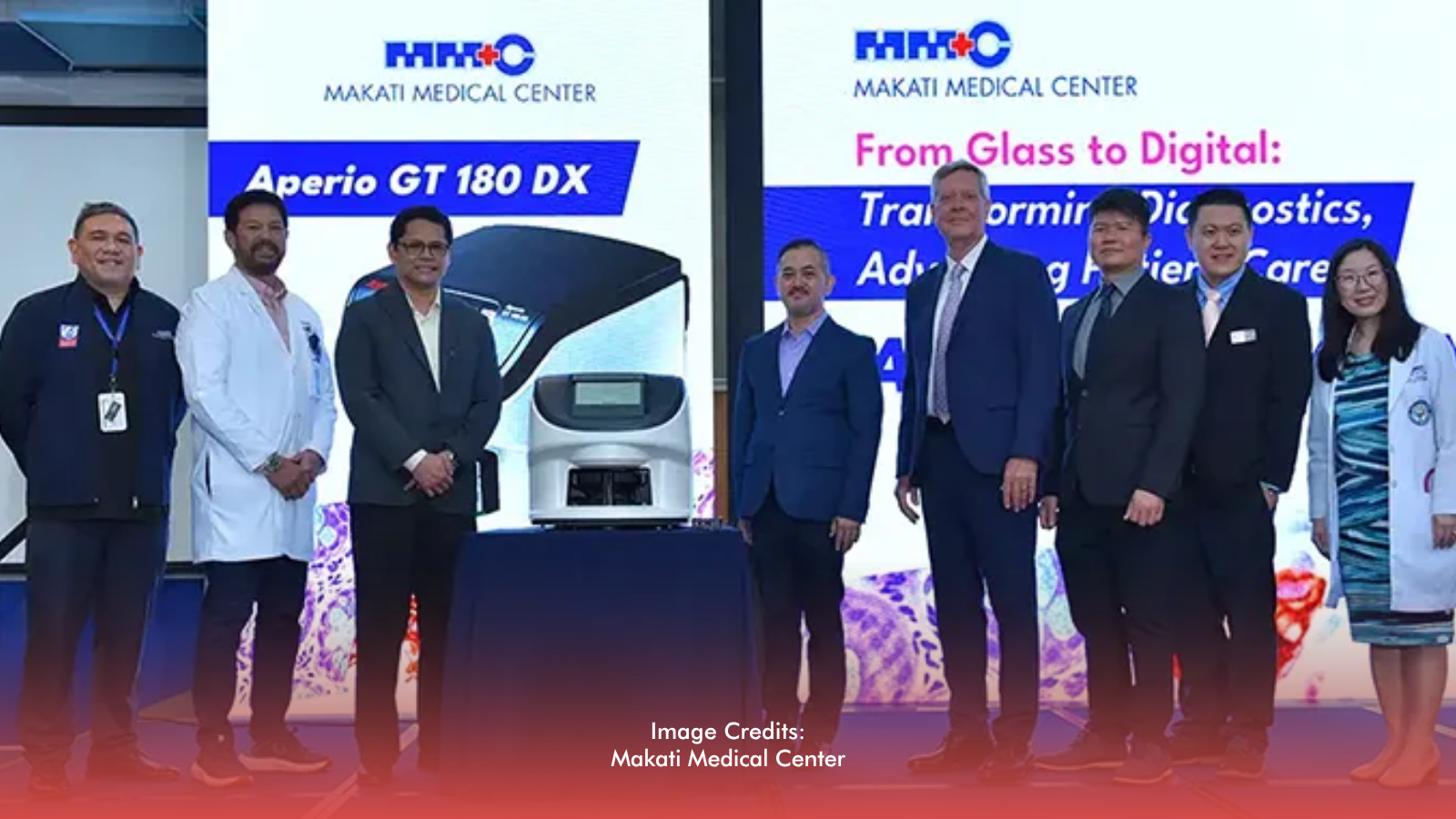
Makati Medical Center (MMC) has introduced a new digital tool for cancer diagnostics, bringing the first digital pathology scanner in the Philippines and Southeast Asia into use at the hospital.
The Aperio GT 180DX scanner, inaugurated last Wednesday, converts tissue samples into digital images that can be examined electronically. The technology is intended to make pathology work more efficient while allowing specialists to collaborate on cases without needing to be physically present at the hospital.
RELATED: [PGH Gets P1.86-B Boost For Medical, Specialized Services]
Digital Tool Aims to Speed Up Diagnosis
The scanner could be particularly useful as healthcare providers deal with rising cancer cases alongside a shrinking number of pathologists. Bob Blalock, Vice President and General Manager for APAC of Leica Biosystems, described the situation and the potential role of the technology.
“Cancer incidences are rising around the world, including in the Philippines. And unfortunately, the number of pathologists every year is getting smaller, and fewer doctors are going into this field. So it's sort of a perfect storm of increasing cases and fewer pathologists to diagnose it. So the Aperio GT 180 DX scanner can allow pathologists to be much more efficient,” Blalock said.
Dr. Redante Mendoza, Chairman of the Department of Pathology and Laboratories, said digitizing samples will allow specialists to examine cases remotely, potentially shortening the time needed to reach a diagnosis.
Mendoza explained that MMC frequently handles complicated cases requiring specialist input. Because some experts also work at other hospitals and may not always be physically available, digital access could allow them to review tissue samples in real time rather than waiting several days for their next visit.
“Makati Medical Center is a referral hospital and a specialized hospital. We do get very difficult cases. So our case loads are sometimes surprisingly difficult, and we need experts. We have most of them in our team, but they are not here all the time because they also go to other hospitals. So we can give them access and they can look at it in real time on the same day rather than wait for their schedule to come in a few days later,” Mendoza said.
He added that reducing delays in pathology results could also ease the uncertainty faced by cancer patients and their families while allowing treatment to begin sooner.
Building Philippine Cancer Research
Beyond clinical diagnosis, the technology could give researchers an opportunity to build a larger body of data specifically on cancers affecting Filipinos. Mendoza noted that much of the existing cancer data used in the country comes from other countries.
“We don’t have much data on Philippine cancers, most come from abroad, so we can do that,” Mendoza said.
Mendoza also said artificial intelligence could eventually be incorporated into the digital pathology process as a tool to assist pathologists in interpreting samples, rather than replacing medical professionals.
The technology could likewise support closer coordination among specialists involved in cancer treatment. Medical Oncologist Dr. Regina T. Edusma-Dy said digital access could make it easier for multidisciplinary teams to examine radiology, pathology, and tumor images together when discussing individual cases.
“So in the future, with the radiology, the pathology slides, and then the images of the tumor, can all be seen on a monitor then we can all discuss it, not like now, when we have to feed on our own, those images, and then the discussion will take off. Then this can be also shown and explained to the patient. The impact to the patient, seeing their team, discussing their cases, and then presenting it to them, makes their journey really meaningful,” Edusma-Dy said.
For Filipinos, faster access to pathology expertise and more coordinated cancer care could mean less waiting for critical results and potentially earlier treatment, while the development of Philippine-specific cancer data could help strengthen research and healthcare planning in the country.
RELATED: [Ilocos Hospital Opens P33.69-M Lab to Boost Disease Testing]