
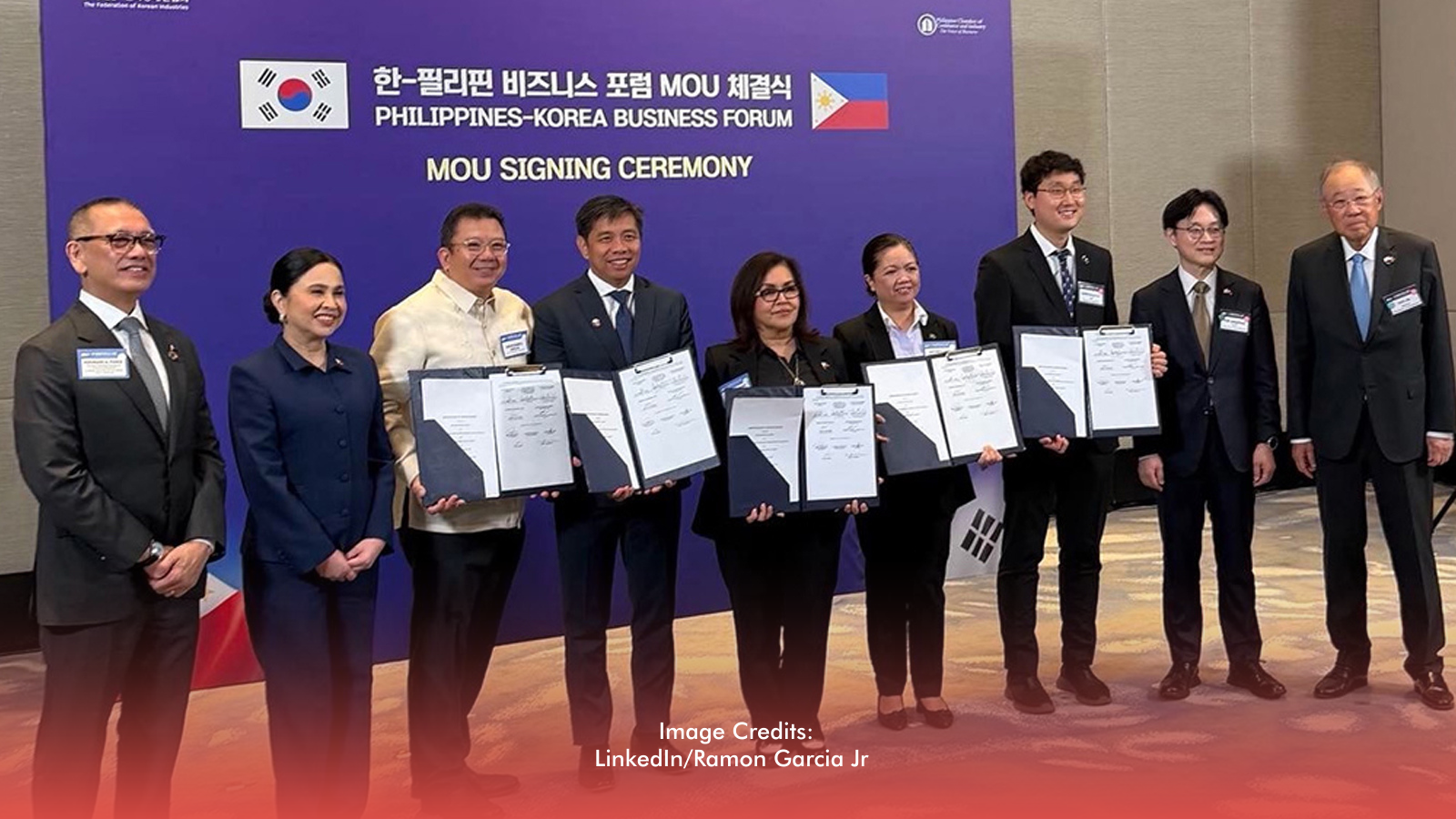
The Philippine Space Agency (PhilSA) has taken a major step toward developing the country’s space capabilities after signing a memorandum of understanding (MOU) with government agencies and private sector partners for rocket development training and experimental launches in the Philippines.
The agreement supports long-term plans to strengthen local space research, engineering, and launch technology development. The signing was held during the Philippines-Korea Business Forum at Conrad Manila.
Building the Philippines’ Space Launch Capability
PhilSA said the partnership is a step toward assessing the feasibility of establishing a Philippine spaceport. The country’s geography offers strategic advantages, with the Pacific Ocean to the east, allowing rocket launches and recovery operations to be conducted safely over open waters.
The initiative could help reduce launch costs, improve operational efficiency, and create new opportunities for scientific research and commercial space activities. PhilSA emphasized that the project supports the vision of positioning the Philippines as a regional gateway to space.
Expanding Rocket Training and Technology Expertise
The MOU builds on a 2025 rocket technology training program conducted in South Korea with Perigee Aerospace. The training included lectures and hands-on sessions covering launch vehicle systems, rocket assembly, and testing procedures.
PhilSA engineers who participated in the program gained practical knowledge that can help develop local expertise in rocket and satellite technologies. The agency said international collaboration remains key to advancing the country’s space engineering workforce.
Strengthening Partnerships for Future Space Projects
Signatories included PhilSA Ad Interim Director General Gay Jane Perez, Henry Aguda of the Department of Information and Communications Technology, and Katrina Ponce Enrile of the Cagayan Economic Zone Authority, along with private sector partners.
PhilSA said the collaboration may pave the way for future projects such as local rocket assembly, testing, and potential experimental launches as the country continues expanding its space technology ecosystem.