
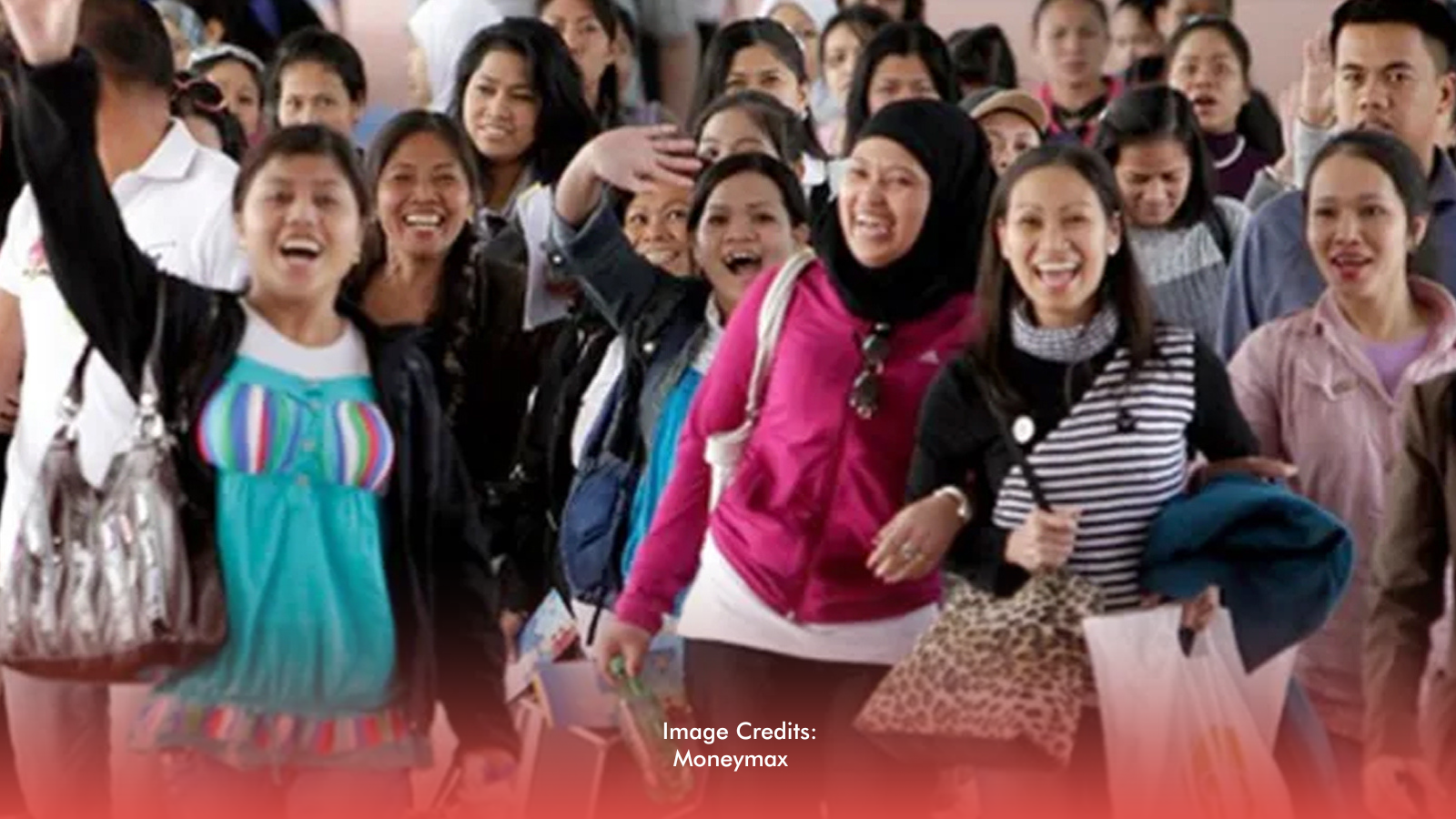
Women now make up the majority of overseas Filipino workers (OFWs). The 2023 Survey of Filipino Overseas Workers shows that of the 2.16 million Filipinos working abroad between April and September 2023, 55.6 percent were women. Experts say this reflects a long-standing trend of Filipinas being concentrated in domestic, caregiving, and service roles overseas.
Dr. Alicor Panao, associate professor at the University of the Philippines Diliman, said Filipina workers are mostly deployed to Saudi Arabia, the United Arab Emirates, Kuwait, and Hong Kong. These countries often have weaker labor protections for domestic workers, especially in private homes. Globally, scholars call this the “feminization of migration,” driven by aging populations and shrinking public care systems in wealthier countries, which increases demand for low-cost, flexible care labor supplied largely by women from lower- and middle-income countries.
High-risk jobs, limited protection
Data from the Philippine Statistics Authority show that in 2023, nearly two-thirds of women migrant workers were employed in physically demanding, repetitive jobs with long hours. Many work in isolation, increasing their risk of abuse and overwork. Panao noted that male OFWs are usually spread across construction, maritime, and technical trades, which offer clearer contracts and stronger oversight, while women in domestic and care roles often fall outside standard labor protections.
Even where destination countries have introduced reforms, enforcement remains inconsistent. Domestic workers face barriers like language difficulties, fear of retaliation, and risk of losing legal status when filing complaints.
Structural drivers behind migration
The gendered pattern of deployment stems from both global demand and domestic policies. Since the 1970s, the Philippines has institutionalized labor export, creating recruitment systems focused on household and care work. English proficiency, caregiving training, and state support have made Filipinas preferred workers in global care markets.
Persistent wage gaps and limited formal jobs at home also push women toward overseas care work as one of the few paths to higher income. Labor advocates say stronger recruitment oversight, better enforcement of bilateral agreements, and expanded welfare services are needed to protect women and prevent them from being funneled into some of the least protected jobs in the international labor market.