Presidents come and go, but according to palace folklore, one resident never leaves.
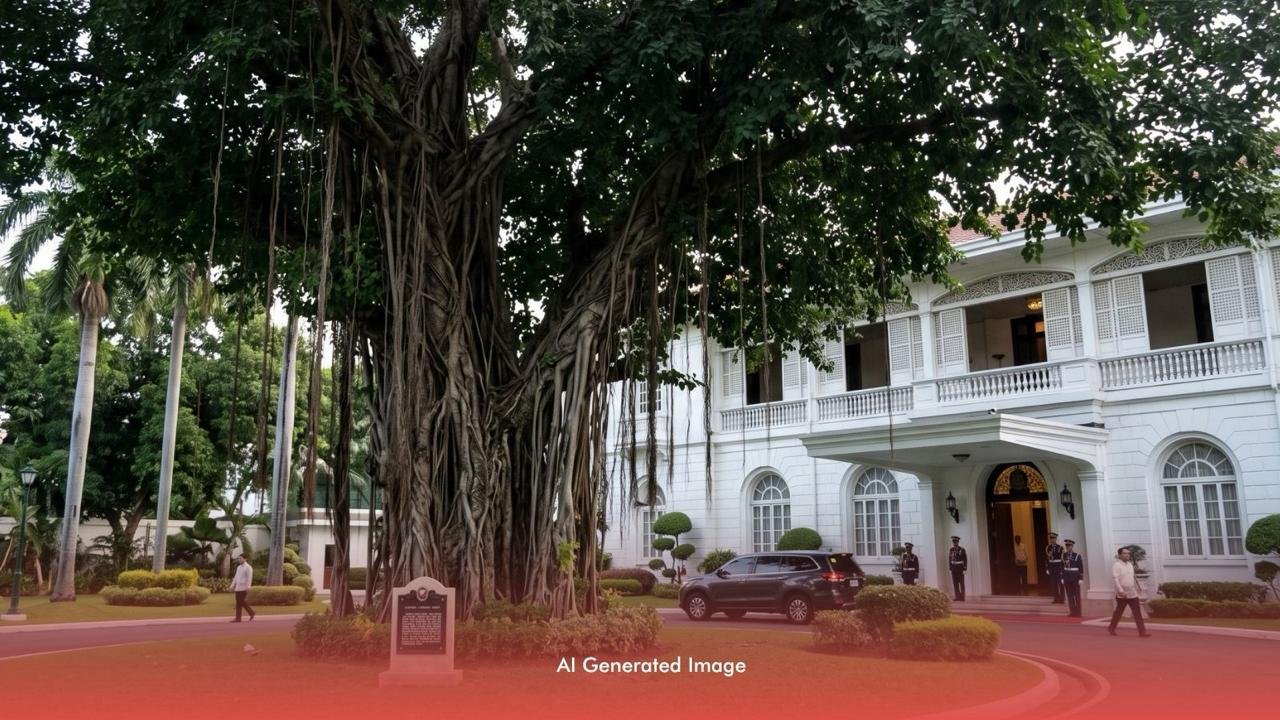
His name is Mr. Brown, a giant said to live inside the old balete tree near Malacañang Palace’s State Entrance. He supposedly smokes cigars, watches palace staff, and occasionally plays tricks on anyone who forgets to acknowledge him.
His nickname as the Philippines’ “real president” is a joke, but stories about the mysterious figure have circulated among palace employees for generations.
Who Is Mr. Brown?
Mr. Brown is believed to be a kapre, a giant in Filipino folklore typically described as hairy, dark-skinned, and fond of smoking cigars while hiding in large trees.
One of the most detailed accounts came from Miguel Perez-Rubio, a former palace chief of protocol who heard the story from a retired gardener who worked there during the 1930s.
According to the gardener, a seed dropped onto an older tree during the American colonial period. It eventually grew into a balete, a type of strangler fig, where a kapre supposedly settled. Some palace staff reportedly called the creature Mr. Jones instead.
Commonwealth-era household helper Anastasia de Joya Calalang also claimed to have encountered the creature. She recalled being chased home one dark night and seeing its coal-red eyes.
Did you know? In Filipino folklore, balete trees are often associated with supernatural beings, including kapre and other spirits. Their massive roots and tangled branches have helped make them fixtures of Philippine ghost stories.
Is Mr. Brown a Ghost or a Kapre?
The stories surrounding Mr. Brown are often confused with those of Father Brown, another supposed supernatural resident of Malacañang.
Father Brown is described in palace tales as the ghost of an American chaplain who supposedly wakes guards caught sleeping on duty. One version claims Japanese troops killed him during World War II.
A 2010 newspaper report suggested that the kapre's name may have been borrowed from the chaplain. Over time, the two figures' stories became mixed, making it difficult to distinguish their supposed encounters.
There is no verified evidence that either supernatural figure exists, and the origins of their names remain uncertain.
Who Has Seen Mr. Brown?
Most accounts come from palace employees rather than prominent political figures.
A former chief steward recalled a household aide named Mariano Dacuso reading a newspaper in the old Tea House when his chair supposedly rose toward the ceiling. He reportedly asked the kapre to put him down before fleeing.
Another story involves a taxi driver who asked a stranger on palace grounds for a light, only to look up and see a giant smoking a cigar.
Palace staff have also described unexplained typing sounds in empty rooms and guards who claimed the giant had awakened them by dropping cigar ash on their heads.
Former First Lady Ming Ramos reportedly encountered another curious story when flowers near Mr. Brown's tree repeatedly died. A staff member suggested asking the kapre's permission to plant them. After she supposedly explained that she wanted to beautify his space, the flowers bloomed.
Whether coincidence or folklore, such stories helped establish Mr. Brown as a familiar character in palace life.
In 2011, then-President Benigno Aquino III declared the balete a Heritage Tree. Asked about its famous resident, he joked that he had never seen Mr. Brown, Mr. Black, or Mr. White.
Is Malacañang Really Haunted?
Malacañang has long been associated with ghost stories, from unexplained noises to sightings of figures believed to be former residents.
In 2012, the Presidential Museum and Library published a Halloween feature discussing palace legends involving former President Manuel Quezon, self-playing pianos, and a painted cellist supposedly associated with strange occurrences.
However, the same feature offered ordinary explanations for some stories. A famous photograph supposedly showing a headless presidential guard was attributed to a long exposure during which the guard moved.
Did you know? Malacañang began as a Spanish summer house around 1750. The colonial government acquired it in 1825, and it became the governor-general's permanent residence after an earthquake damaged the palace in Intramuros in 1863.
Why Do Presidents Avoid Living in Malacañang?
Not every president has chosen to live inside the palace.
Corazon Aquino and Fidel Ramos lived at Arlegui Mansion. Benigno Aquino III preferred Bahay Pangarap, across the Pasig River, describing Malacañang as too large for a bachelor. Rodrigo Duterte also stayed at Bahay Pangarap and publicly described the palace as haunted.
Other presidents have lived in the palace or maintained strong personal connections to it.
The building's size, security arrangements, and isolation from ordinary life may explain some of the discomfort associated with living there. Hidden corridors, restricted areas, and heavy security can also make an already imposing structure feel unsettling.
The idea that Mr. Brown influences presidential decisions, however, belongs firmly to folklore. No evidence connects the kapre to political events or changes in administration.
Other Ghost Stories From Malacañang
Mr. Brown is not the palace's only legendary resident.
- Quezon's Chrysler: A palace engineer reportedly heard President Quezon's car door opening and closing on the night he believed the president died in the United States.
- The cigar at the dining table: Palace workers allegedly claimed to have seen deceased presidents smoking at the head of the State Dining Room table.
- The hooded friars: An old palace cleaner reportedly described hooded figures chanting through corridors and mysterious fireballs circling a tree.
- The bearded guards: Another story tells of a fortune-teller warning that a typhoon would destroy the palace if its guards grew beards. The servants were reportedly ordered to remain clean-shaven.
These accounts have been passed down as palace legends, rather than established historical events.
Can You Visit Mr. Brown's Tree?
Malacañang is a working government office and presidential residence, so access is restricted. Public heritage tours have been offered at different times, but venues, schedules, and booking requirements can change.
Visitors should check official Malacañang channels for current tour arrangements. Access to the State Entrance and Mr. Brown's balete tree is not guaranteed.
The tree itself has become part of the palace's heritage, giving the legendary kapre an unusually permanent home.
Whether Mr. Brown is a supernatural resident or simply a product of generations of storytelling, his legend reflects the Filipino fascination with spirits believed to inhabit old trees, ancestral homes, and places steeped in history.
And if you ever find yourself passing a giant balete tree after dark, you might remember the old reminder: Tabi-tabi po.