Brillante Mendoza’s Until She Remembers arrives with a premise that sounds powerful on paper: a young girl tries to reunite her grandmother with the woman she once loved before dementia erases what remains of their memories. It’s a story about aging, forgotten love, and the quiet tragedies that time leaves behind.
But while the film carries an emotionally rich idea, its execution has divided audiences, and for good reason.
A Beautiful Premise That Struggles to Land
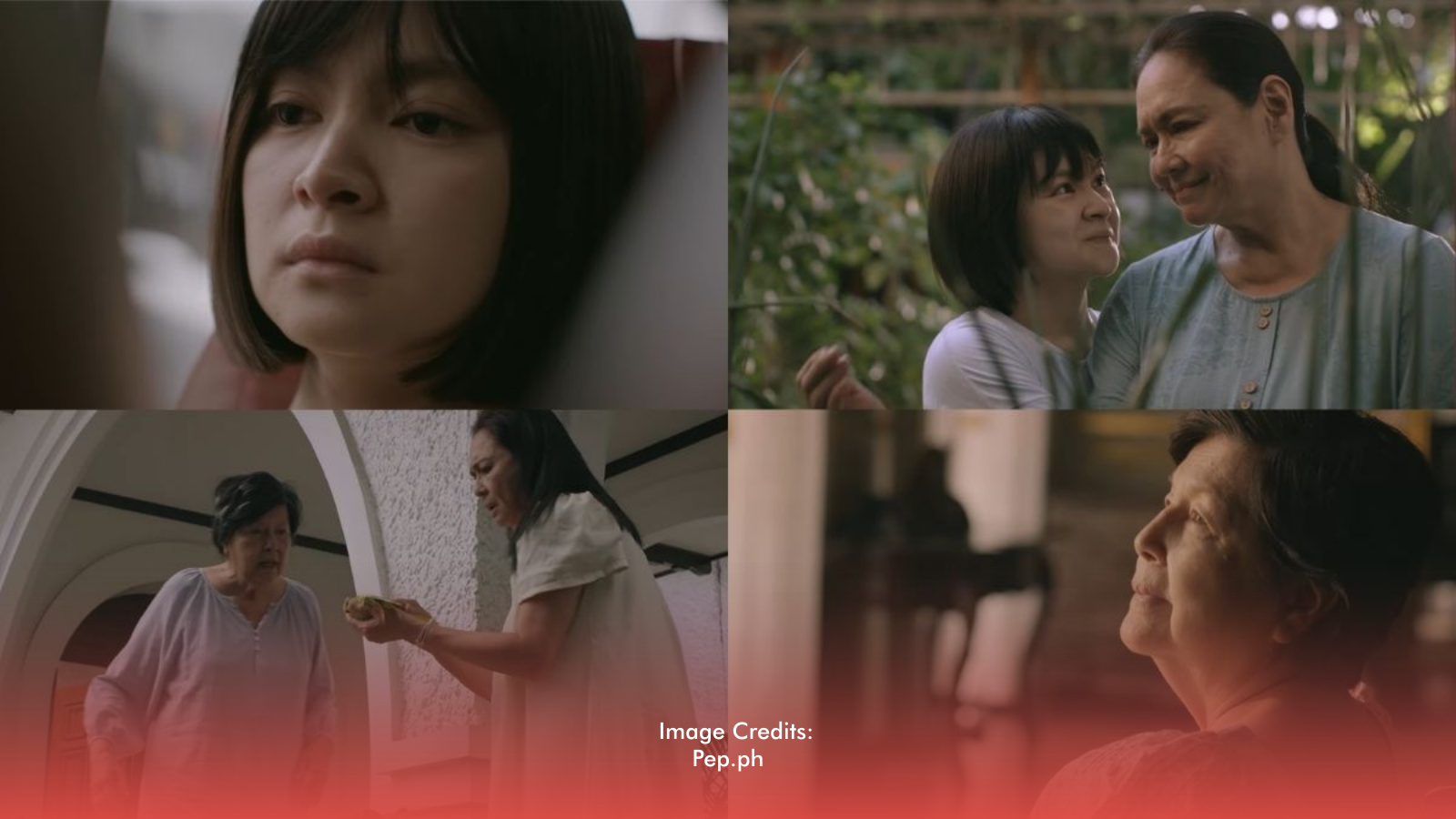
At the center of the film is Angel (Barbie Forteza), a troubled teenager who moves in with her grandmother Concha (Charo Santos-Concio). There, she discovers Concha’s long-buried relationship with Catherine (Boots Anson-Roa). As Catherine begins losing her memories to dementia, Angel attempts to reunite the two women, hoping they can reconnect before it’s too late.
On paper, this is a rare and meaningful story for Philippine cinema. Stories about elderly queer relationships remain uncommon in mainstream local films, and the concept alone gives Until She Remembers emotional weight.
However, the film’s storytelling often feels unfinished.
Director Brillante Mendoza made the unusual decision to shoot the movie without a full script, allowing actors to improvise dialogue during filming. The intention was authenticity; natural reactions, organic conversations, real emotion.
Sometimes, it works. Many scenes feel intimate and raw, especially the quiet interactions between the veteran actresses.
But other times, the lack of structure becomes painfully obvious.
When Improvisation Becomes the Problem
Without a clear narrative backbone, the film often drifts from one moment to another without strong direction. Subplots appear and disappear. Conflicts are introduced but never fully explored.
Angel’s struggles at school, her family dynamics, and even her motivations sometimes feel underdeveloped. Instead of building toward a powerful emotional climax, the film moves in fragments, moments that hint at something deeper but rarely commit to it.
This is where the film becomes controversial.
Some viewers see the loose structure as artistic freedom, consistent with Mendoza’s signature style of realism. Others argue it simply feels incomplete—like watching a first draft rather than a finished story.
Performances That Carry the Film
Despite these narrative issues, the film finds its strength in its actors.
Barbie Forteza brings sincerity to Angel, portraying a confused teenager searching for connection in unexpected places. It’s an interesting shift from her usual roles, showing she can carry heavier emotional material.
Still, the real emotional core belongs to Charo Santos-Concio and Boots Anson-Roa.
Their portrayal of Concha and Catherine is subtle but powerful. These are two women who loved each other in a time when that love had to remain hidden. Now, decades later, they are faced with the cruel irony of memory loss just as they might finally have the freedom to remember.
Their scenes together feel genuine, lived-in, and quietly heartbreaking.
A Film That Sparks Debate
Ultimately, Until She Remembers is a film that may be remembered more for its ambition than its execution.
It tackles themes rarely explored in Filipino cinema: aging queer love, dementia, regret, and the fragile nature of memory. That alone makes it important.
However, the film’s experimental approach also makes it frustrating to watch at times. The emotional potential is clearly there, but the storytelling never fully pulls everything together.
For some viewers, this rawness will feel poetic.
For others, it will feel like a missed opportunity.
And maybe that’s the real takeaway: Until She Remembers is less a polished film and more a conversation starter about how Philippine cinema chooses to tell its most difficult stories.