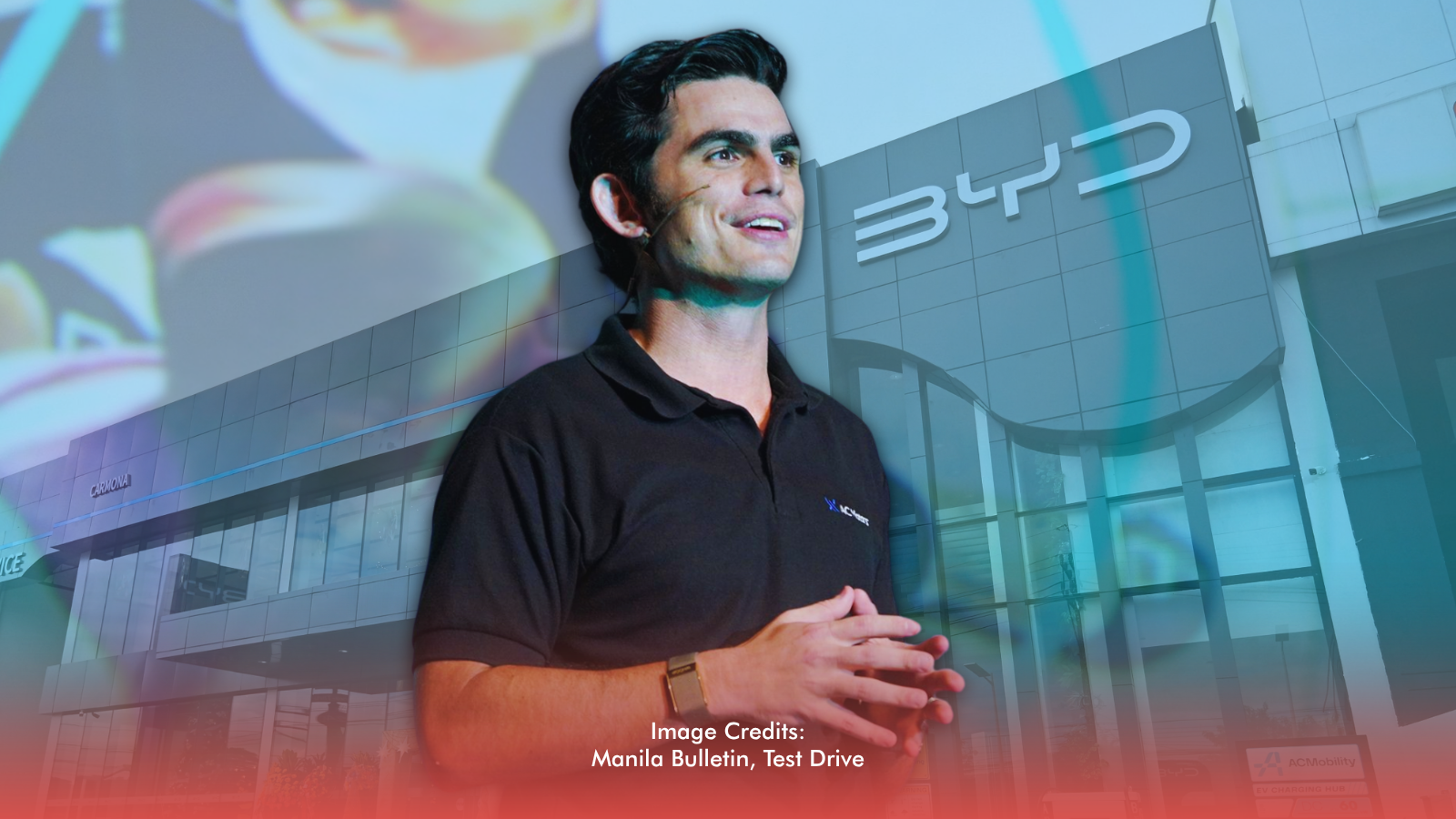
When Jaime Alfonso Zobel de Ayala took the wheel at ACMobility, the Ayala Group’s automotive arm, his decision to partner with Chinese electric vehicle (EV) giant BYD in late 2023 was viewed by some as a high-risk gamble. The Philippines, after all, has long been a country deeply set in its ways, heavily dependent on traditional internal combustion engines and plagued by the eternal anxiety of finding a charging station on long road trips.
Fast forward to 2026, and the gamble didn’t just pay off. It is fundamentally rewriting the country’s automotive landscape.
Driven by the relentless sting of volatile global fuel prices and a growing global consciousness toward sustainability, the demand for New Energy Vehicles (NEVs) in the Philippines has exploded. The surge is so profound that Zobel recently announced a massive upward revision in their projections: ACMobility now forecasts that nearly 50 percent of all new vehicle sales in the Philippines will come from electrified models or hybrids by 2030. Their initial, much more conservative estimate was just 30 percent.
The Vertically Integrated Advantage
The primary driver behind this hyper-speed growth is BYD, which Zobel describes as the "primary engine" of ACMobility’s massive surge. In 2025 alone, the brand catapulted unit sales by 82 percent and revenues to nearly P55 billion.
According to the 35-year-old CEO, BYD’s secret weapon is vertical integration. Because BYD originally built its empire as one of the largest battery manufacturers globally, it owns its raw materials and battery technology. This eliminates third-party markups and translates directly to a significant cost advantage; a critical factor for an emerging market like the Philippines, where the budget dictates behavior.
With the introduction of widely popular models like the urban crossover Atto 2 EV and the high-performance Sealion 7 SUV, owning an electric vehicle is no longer a luxury reserved for the ultra-wealthy; it’s becoming a viable, budget-friendly alternative for the modern Filipino family.
Curing "Range Anxiety" with the EV Spine
Dito sa Pilipinas, the biggest barrier to EV adoption has never been the cars themselves; it has been the infrastructure. No one wants to buy a battery-powered car if they fear getting stranded halfway to the province.
To solve this national pain point, ACMobility has shifted from simply selling cars to building an entire ecosystem. The conglomerate has been aggressively rolling out the "Philippine EV Spine," a nationwide network of over 200 charging locations that now spans from the northern tip of Luzon down to key cities in Mindanao.
To visually prove that range anxiety is a thing of the past, the brand recently launched the “Drive Electric. Love Pinas.” campaign in partnership with the Department of Tourism. A convoy of 20 electrified BYD vehicles traveled seamlessly across the archipelago, even bagging two Guinness World Records for the most cities visited in a continuous journey by an EV and a PHEV.
The Ultimate Green Vision
But Zobel’s vision extends beyond the highway. Skeptics often argue that EVs aren't truly green if the electricity used to charge them still comes from coal-fired power plants. To bridge this gap, ACMobility recently collaborated with ACEN RES to provide businesses and retail customers with green energy bundles. This guarantees that the power fueling the country's growing EV spine is sourced directly from clean, renewable energy.
The Bottom Line: The era of bahala na approach to transportation emissions and fuel reliance is fading. Through a blend of world-class technology, local market insight, and aggressive infrastructure investments, Jaime Alfonso Zobel has turned a green alternative into a mainstream powerhouse. By the end of the decade, seeing an EV silently gliding down our highways will be the standard. The future of Philippine mobility is electric, and it's happening a lot faster than anyone ever expected.