
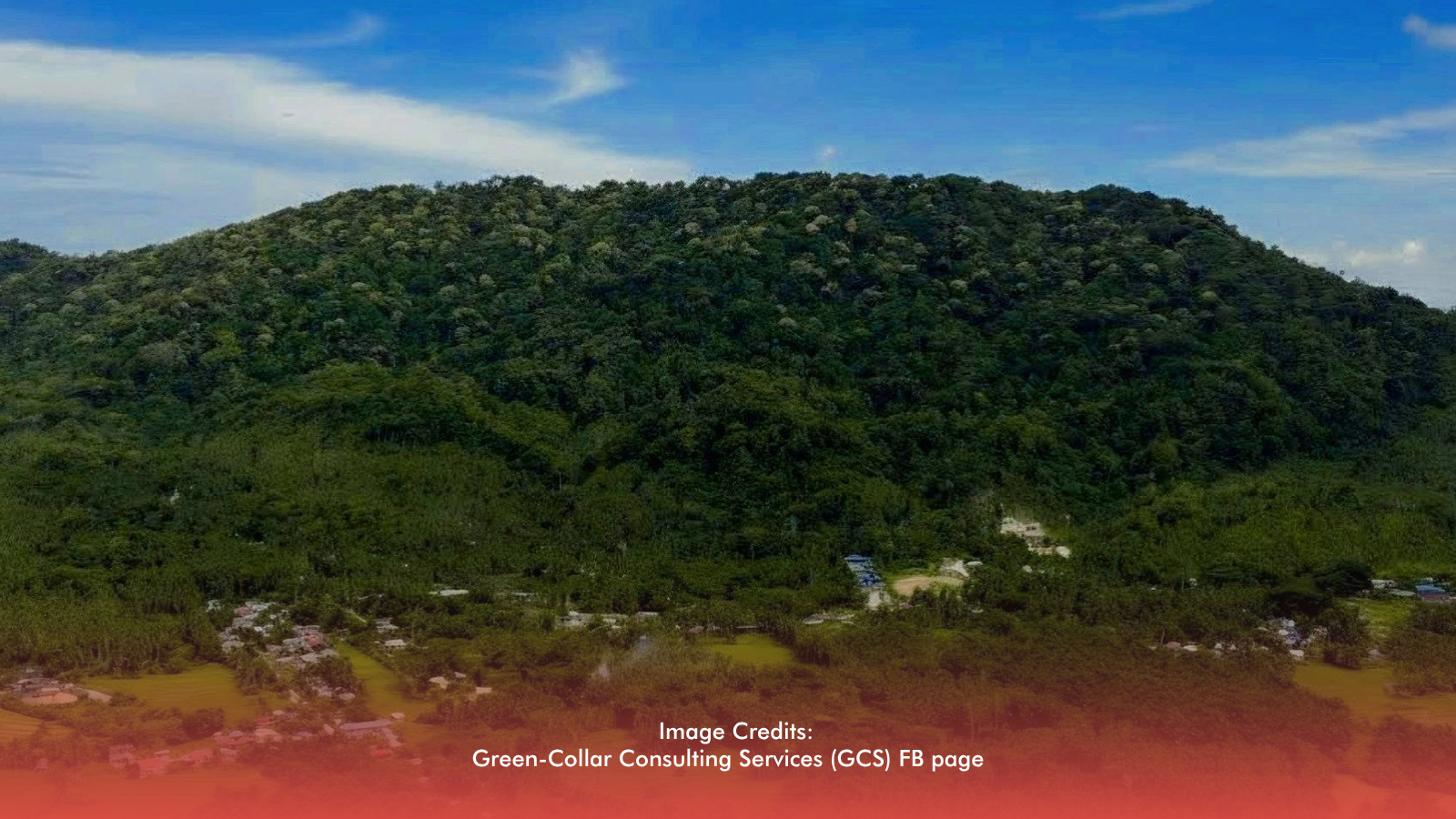
A rare and breathtaking natural spectacle is unfolding at the Mt. Magdiwata Forest Reserve in San Francisco, Agusan del Sur, where vast stretches of forest canopy appear from a distance like giant cauliflower formations blanketing the mountain slopes.
What looks like a surreal green landscape is actually a rare ecological event, which experts say reflects the improving health of the forest ecosystem. The synchronized flowering has drawn the attention of environmentalists, scientists, and local residents alike.
Synchronized Flowering Points to Forest Regeneration
The phenomenon is known as “masting,” a process where certain tree species flower at the same time over wide forest areas. Green-Collar Consulting Services (GCS), an environmental consulting firm specializing in ecosystem management, identified the species involved as members of the Dipterocarpaceae family, including White Lauan, Bagtikan, Mayapis, Almon, and Yakal.
In a May 26 Facebook post, GCS described the event as “ecologically significant and increasingly rare in degraded tropical forests,” noting that the trees appear to be flowering simultaneously across large sections of the reserve.
Masting does not occur every year, typically happening only once every four to 10 years. Scientists consider it a key process for forest regeneration, especially for dipterocarp species that are now classified as vulnerable or critically endangered due to long-standing deforestation and habitat loss.
Decades of Rehabilitation Now Showing Results
Beyond its visual impact, the event is being viewed as a sign of ecological recovery in Mt. Magdiwata, once regarded as a heavily degraded watershed.
Raul Buñao, founder and CEO of GCS, said the flowering reflects both the resilience of the remaining forest and the success of long-term restoration efforts.
Back in 1997, a study by the San Francisco Water District (SFWD) recorded only 695 hectares of natural forest remaining—about 54 percent of the reserve’s 1,658-hectare area. Since then, sustained rehabilitation programs have expanded forest cover to roughly 97 percent today.
These efforts included large-scale reforestation, protection of native species, strict enforcement against illegal logging, and the gradual restoration of open and degraded lands.