The Department of Science and Technology (DOST) has rolled out solar-powered irrigation systems in Aurora as part of its efforts to support farmers struggling with rising fuel costs and shifting climate conditions. The initiative aligns with the national government’s renewable energy direction under President Ferdinand Marcos Jr., which prioritizes energy efficiency, conservation, and the strengthening of key sectors through sustainable solutions.
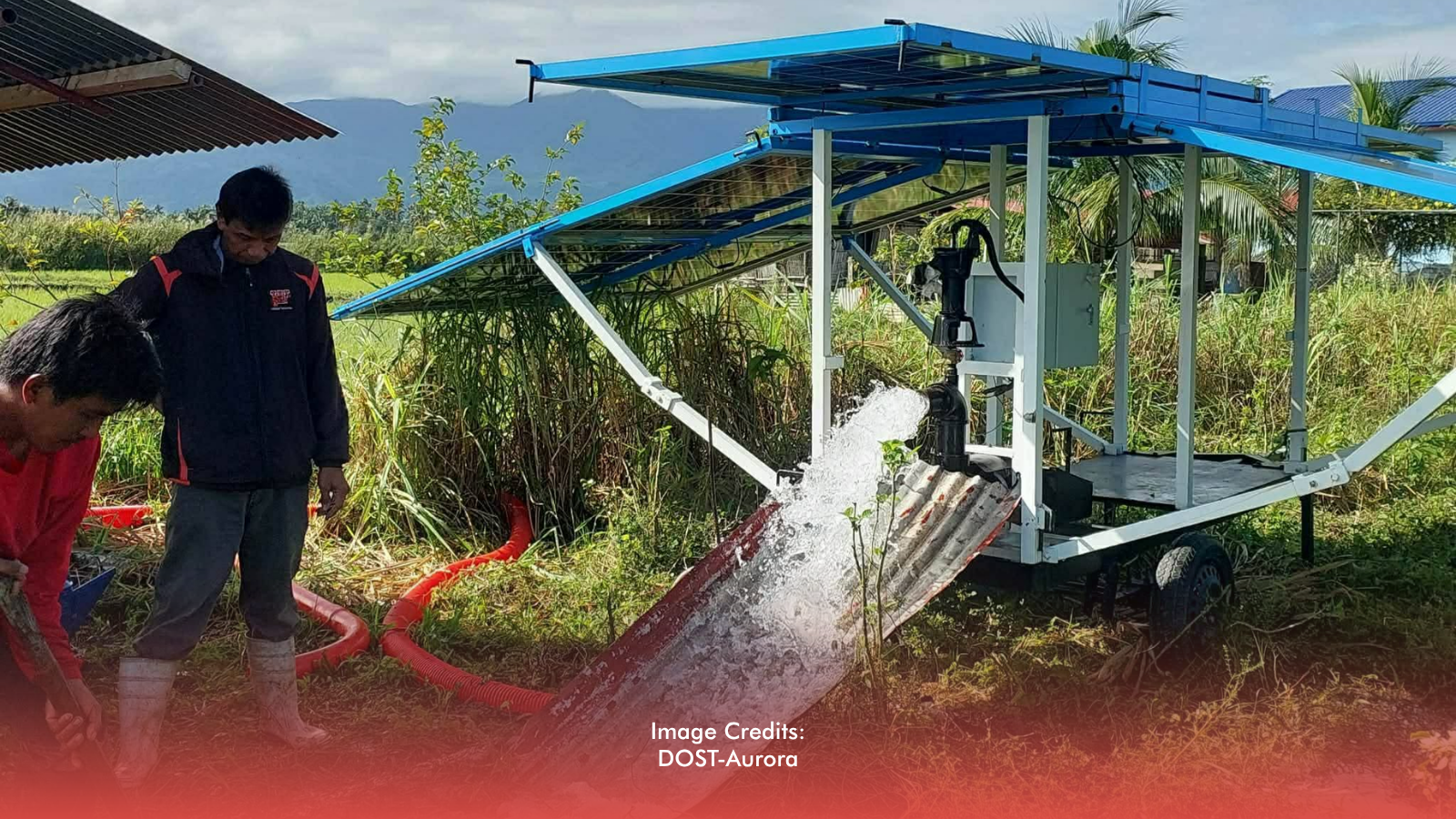
Five farming groups in Aurora were identified as beneficiaries of the program, including the Bianoan New Generation Farmers Association, Decoliat Multi-Agri Farmers Association, San Joaquin Farmers Association, Imulat Lowland and Upland Farmers Association, along with the provincial government of Aurora. Each group received a Mobile Solar Irrigation Pump valued at P165,000 through the DOST Community Empowerment through Science and Technology (CEST) Program.
RELATED: [Muntinlupa Becomes Home To NCR’s First DOST Innovation Hub]
Solar Technology Supports Farm Productivity and Cost Reduction
According to DOST Aurora science research specialist Regine Maines-Agumboy, the deployment of the solar-powered pumps is designed to ease the financial burden of irrigation, especially for farmers in remote areas that depend heavily on diesel-powered systems.
“The project strengthened agricultural productivity and resilience by helping local farmers maintain crop irrigation even during periods of fuel crisis,” Agumboy said.
The equipment operates using solar energy from 9 a.m. to 4 p.m. and can deliver up to 50 cubic meters or 50,000 liters of water per hour, making it suitable for irrigation demands during key planting periods.
Agumboy noted that this capacity allows farmers to sustain water supply for crops even during critical growing seasons, reducing reliance on costly fuel-based systems. She added that users could potentially save up to P4,000 per day depending on farm size and usage patterns.
“With the use of these units, farmers who previously relied on diesel-powered pumps can expect to save up to P4,000 per day in fuel costs, depending on usage and field size,” she said.
Push for Sustainable and Climate-Smart Agriculture
Beyond cost savings, the initiative also promotes cleaner energy use and improved farming efficiency, contributing to more climate-resilient agricultural practices in local communities. Agumboy emphasized that such interventions help strengthen both productivity and environmental sustainability in rural farming areas.
“By promoting renewable energy and efficient resource utilization, the project strengthened farmers’ resilience, improved productivity and encouraged environmentally sustainable farming practices in local communities,” she said.
The DOST said the CEST Program plays an important role in modernizing agriculture and building long-term resilience among farming households in Aurora, particularly as climate variability and fuel price fluctuations continue to challenge food production systems.
“As technology-driven interventions continue to be introduced in rural communities, initiatives like this are poised to contribute substantially to the development of the agricultural sector,” Agumboy said.
Officials added that the introduction of solar-powered irrigation systems comes at a critical time, as farmers face both economic pressure from fuel costs and environmental risks from climate change. By shifting toward renewable energy solutions, the program is expected to improve farm livelihoods and support more sustainable food production in the province.
For Filipino farmers and consumers alike, innovations like solar-powered irrigation can help stabilize food production costs, strengthen agricultural resilience, and contribute to long-term food security in communities dependent on farming.
RELATED: [DOST Promotes Bamboo Pellets, Briquettes As Local Fuel Alternatives Amid Energy Concerns]