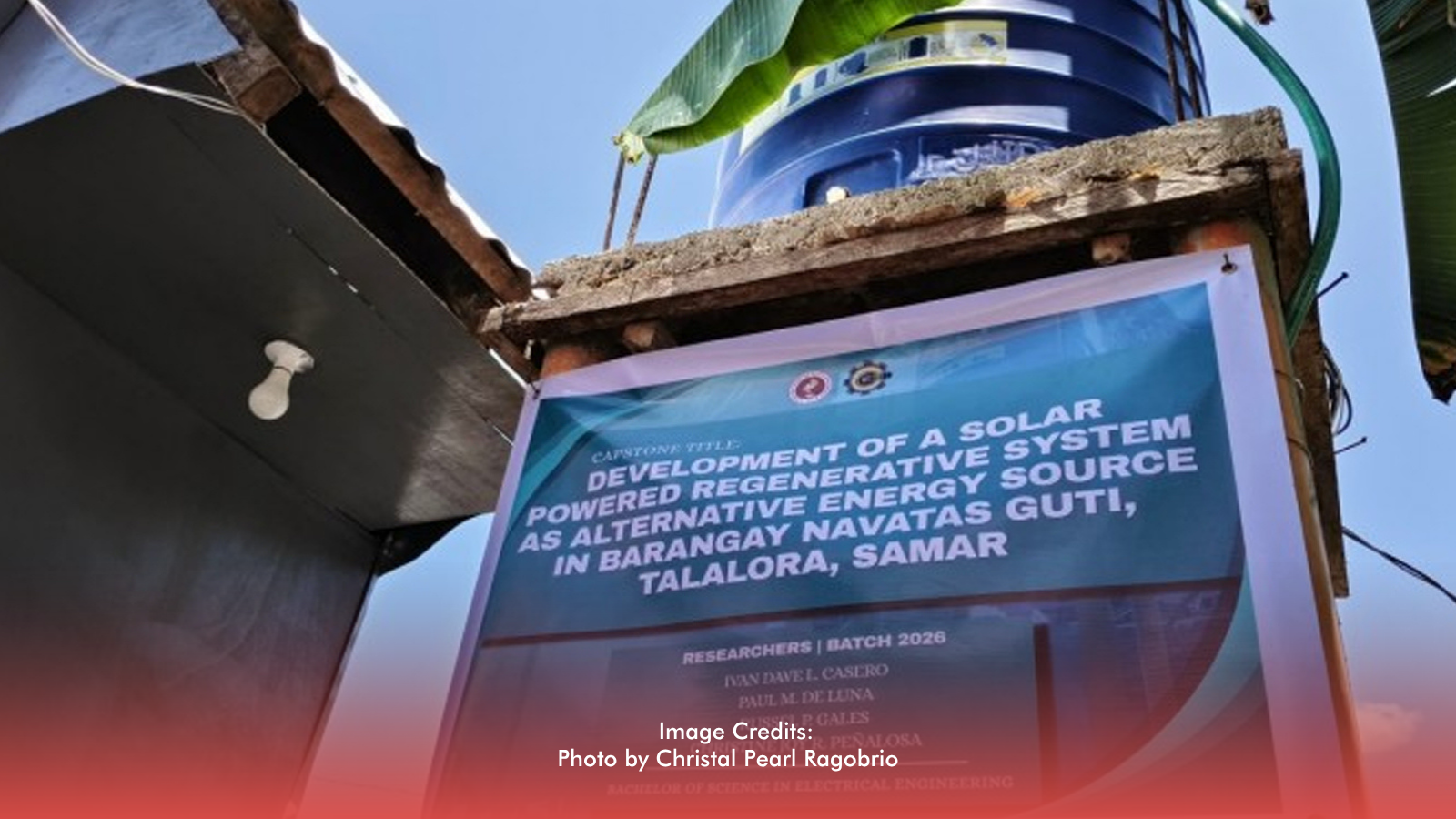
In Talalora, Samar, a remote coastal community once burdened by frequent and prolonged power interruptions is now experiencing more stable electricity following the installation of a hybrid renewable energy system developed by engineering students.
The project currently supplies 2,880 watts of electricity to the village hall and 16 streetlights in Navatas Guti, benefiting more than 1,000 residents of the fishing community. For years, the area struggled with unreliable power, especially after typhoons that often left the village in darkness for days or even weeks.
The initiative, titled “Development of a Solar Powered Regenerative System as Alternative Energy Source,” was developed by graduating Bachelor of Science in Electrical Engineering students from Eastern Visayas State University (EVSU) in Tacloban City. The team spent months traveling by land and sea to design, transport, and install the system in the remote village.
Addressing long-standing power interruptions
Before the project, Navatas Guti frequently experienced long blackouts due to its isolation, with electricity restoration often delayed compared to urban areas. Village chief Perla Lauzon said these outages severely affected daily life, particularly after storms when the community was left without lighting and communication became difficult due to the inability to charge mobile phones.
With the new system in place, residents now benefit from improved nighttime lighting and more consistent electricity access. To support long-term operation, the village council has committed to allocating around 20 percent of its annual budget for maintenance.
Hybrid solar-hydro system for off-grid communities
The student team designed the system by combining solar photovoltaic technology with a pumped hydro storage mechanism. Project leader Russel Gales said solar energy alone would not be sufficient during cloudy or rainy periods, prompting the integration of a hydro-based backup system.
During the day, solar panels generate electricity to power a submersible pump and charge batteries. The pump lifts water from a deep well into an elevated tank. At night or during low sunlight, the stored water is released to drive a turbine connected to a generator, producing electricity.
Unlike conventional hydro systems, the design does not rely on rivers or continuous water flow, making it suitable for off-grid communities like Navatas Guti.
The project cost about PHP170,000, funded through student contributions and local government support. It primarily powers the village hall, a key center for governance, community activities, and disaster response.
Community support and potential for replication
Local officials and faculty advisers praised the initiative, noting the strong collaboration behind the project and its potential to be replicated in other remote communities facing similar energy challenges.