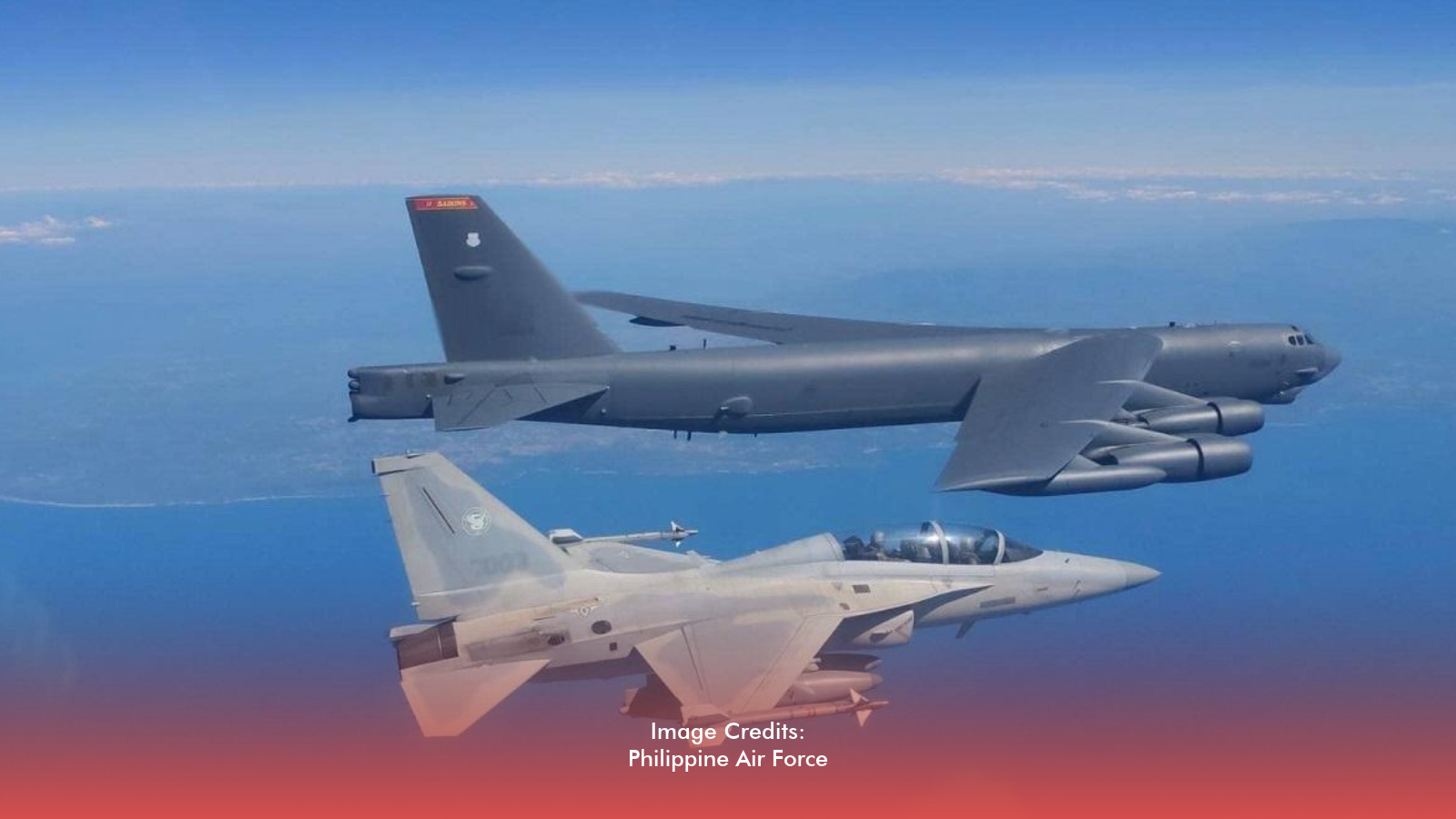
The Philippines ranks 27th worldwide in active military aircraft inventory, with 250 aircraft in service, according to the 2027 World Air Forces directory. The country shares the position with the Czech Republic and Morocco, accounting for approximately 0.5 percent of the 52,160 military aircraft recorded across 160 countries.
The latest figures come as military aviation across the Asia-Pacific expands by 4 percent, with the region adding 606 aircraft compared with the previous edition. The increase reflects continued investments in air force modernization among countries facing evolving security concerns and growing demands for surveillance, air defense and maritime protection.
RELATED: [Meet The Filipino West Point Graduates Who Survived Bataan]
China Leads Regional Aircraft Inventory
China maintains the largest military aircraft fleet in the Asia-Pacific, with 4,179 units. India follows with 2,158, while South Korea has 1,496, Japan has 1,446, and Pakistan has 1,409.
China recorded an increase of 650 aircraft in the latest directory, partly attributed to improved reporting of its People's Liberation Army Air Force inventory. These include Chengdu J-10s, Shenyang J-11/J-15 aircraft, Sukhoi Su-30s, and Xian JH-7s. The report also estimates that China operates 300 Chengdu J-20 fifth-generation fighters.
The Philippine figure, meanwhile, covers more than fighter jets and other combat aircraft. The directory includes several categories, such as special-mission aircraft, tankers, transport aircraft, combat helicopters, and training aircraft and helicopters.
This distinction is important when comparing national fleets. The number of aircraft alone does not establish a country's actual combat strength, since operational readiness, aircraft performance, weapons systems, personnel, training, and mission requirements also affect military capability.
The Philippines' ongoing military modernization program seeks to improve territorial defense, including its air power and maritime surveillance capabilities. These priorities are particularly relevant as the country works to monitor and respond to security concerns across its maritime domain.
Global Fleet Records Mixed Changes
Worldwide, the directory registered a net decline of 71 active military aircraft, bringing the total to 52,160. The United States remained the largest operator, with 12,647 aircraft, equivalent to about 24 percent of the global inventory. Its fleet also declined by 3 percent to 13,009 aircraft in the North American regional accounting.
Europe recorded a 1-percent increase to 7,895 aircraft, while Russia and the Commonwealth of Independent States had 4,941, down 77. The Middle East fell 5 percent to 3,965, Africa declined 2 percent to 4,175, and Latin America registered a 1-percent decrease to 2,888.
Conflict-related changes also affected the figures. Yemen's 160 aircraft were removed following offensive action by Houthi rebels, while Syria's 414 aircraft were no longer included. Ukraine recorded 359 active aircraft, up 12, while Russia's individual inventory stood at 4,186, down 51.
Across the Indo-Pacific, the directory noted Indonesia's order for 12 Leonardo M-346FA light-attack aircraft. Australia received its first nine of 29 Boeing AH-64E Apache attack helicopters while retiring 21 Airbus Tiger armed reconnaissance helicopters. Potential procurement programs in Bangladesh and Malaysia involving Eurofighter Typhoon fighters and Leonardo AW149 helicopters were also cited.
The Philippines' ranking highlights the scale of its air fleet compared with regional powers, but the more important measure is whether modernization translates into dependable defense capabilities. Improving aircraft availability, surveillance coverage and readiness will remain essential to protecting the country's territory and maritime interests.