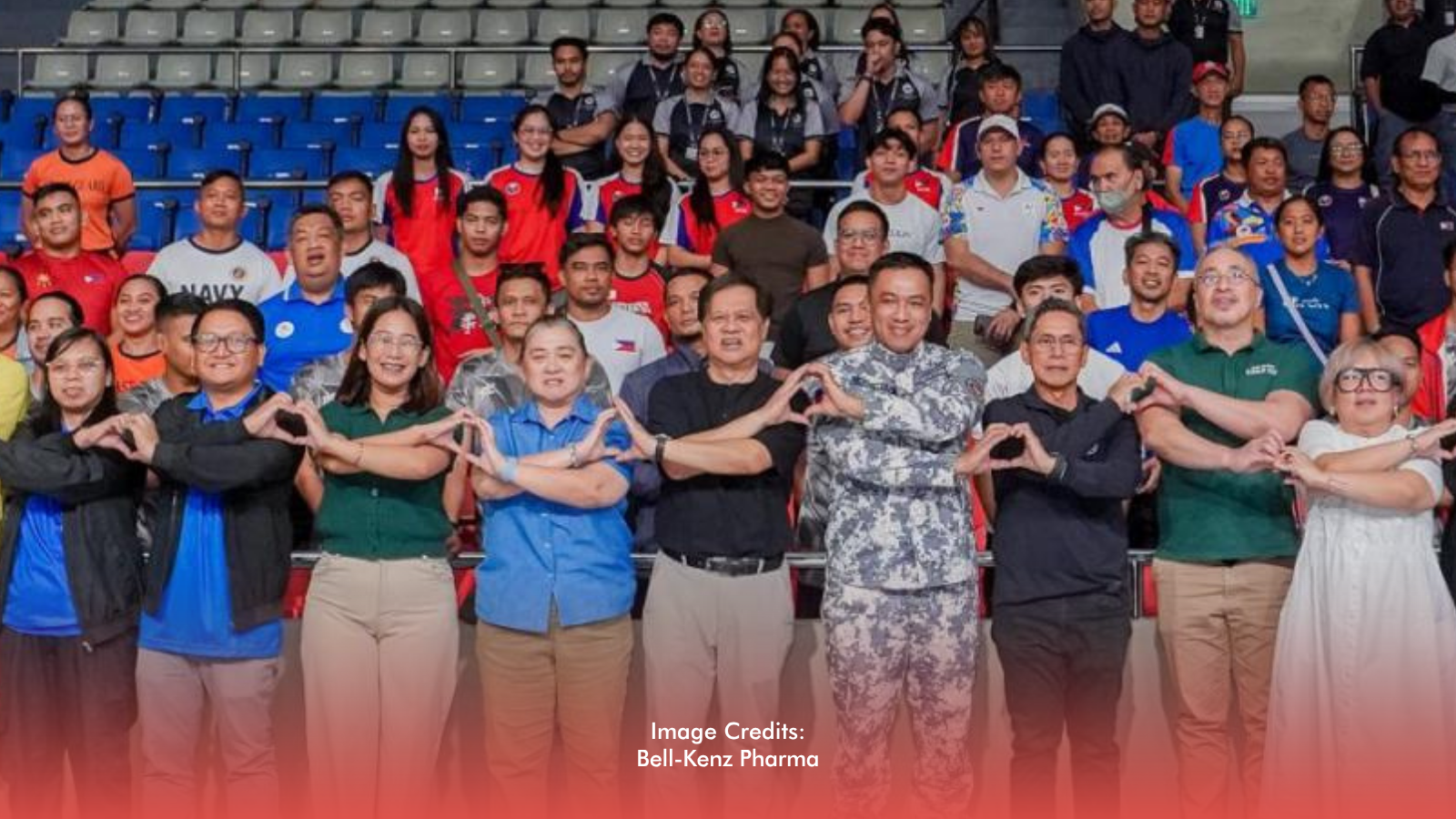
Athletes are trained to perform under pressure, work as a team, and push their physical limits. But these abilities can also serve a purpose beyond competition. Through a partnership with the Philippine Sports Commission (PSC), Bell-Kenz Pharma is expanding its Sagip CPR initiative to equip 2,000 national athletes, para-athletes, coaches, and members of the sports community with Hands-Only CPR and drowning-response skills.
The program recognizes that emergencies can happen anywhere, including stadiums, training facilities, and community spaces. By giving sports participants practical life-saving knowledge, the initiative aims to help them become potential first responders who can act when someone needs immediate assistance.
RELATED: [Bell-Kenz Supports Coast Guard Readiness Through ULTIMA Challenge in Bataan]
Beyond the Playing Field: Athletes as First Responders
The partnership draws inspiration from basketball legend Samboy Lim, whose cardiac arrest during an exhibition game in 2014 helped highlight the importance of emergency preparedness in sports. His case contributed to the passage of Republic Act No. 10871, or the Basic Life Support Training in Schools Act, also known as the Samboy Lim Law.
Bell-Kenz, PSC, the Department of Health (DOH), National Youth Commission, Philippine Life Saving, and Philippine Coast Guard conducted Hands-Only CPR and drowning-response training at the Ninoy Aquino Stadium for national athletes, para-athletes, and coaches.
Bell-Kenz Head of Corporate Communications and Public Affairs Patrick Larraga welcomed the collaboration, saying, “We are happy to be working with the Philippine Sports Commission, the National Youth Commission, Philippine Life Saving, the Philippine Coast Guard, and the Department of Health in advancing this important initiative. Through Sagip CPR, we hope to equip our athletes, coaches, and the broader sports community with the knowledge and confidence to respond to emergencies.”
PSC Chairman Patrick Gregorio also highlighted the importance of preparing the sports community for emergencies, particularly as the country develops its water sports programs.
“If we want to grow our water sports in the country, this is what we need to do.”
PSC Commissioner Walter Francis Torres added that the training aims to make athletes, coaches, and sports personnel capable of responding when lives are at risk.
“Our goal is to empower the sports community to be first responders, underscoring the value of equipping athletes, coaches, and sports personnel with practical life-saving skills that can make a difference when every second counts.”
Building a Culture of Life-Saving Readiness
The drowning-response component also reinforces the importance of water safety and proper emergency intervention. Philippine Life Saving, an internationally recognized organization, supports the effort through lifeguard training and the promotion of established water-safety practices. Its work in Panglao, Bohol, has also helped former fishermen develop aquatic rescue skills and become scuba divers at marine attractions.
Larraga emphasized that the ability to save lives is another measure of what it means to be a champion.
“In sports, we celebrate the victories that happen on the playing field. But there is no greater victory than saving a life. Being a champion is not just about winning games-it is also about having the ability to save lives.”
Danilo Salanga Jr. of Philippine Life Saving also reaffirmed the group's commitment, saying, “We are committed to produce 75,000 lifesavers”.
Being an athlete is not only about physical preparation for competition. It can also mean being ready to protect others, whether during a game, a training session, or an emergency in the community. Equipping sports participants with these skills helps extend the value of discipline and teamwork beyond the playing field, while building a wider network of people who may be able to save lives when every second matters.
RELATED: [Bell-Kenz Brings Lifesaving Skills to Bohol’s Tourism Communities]