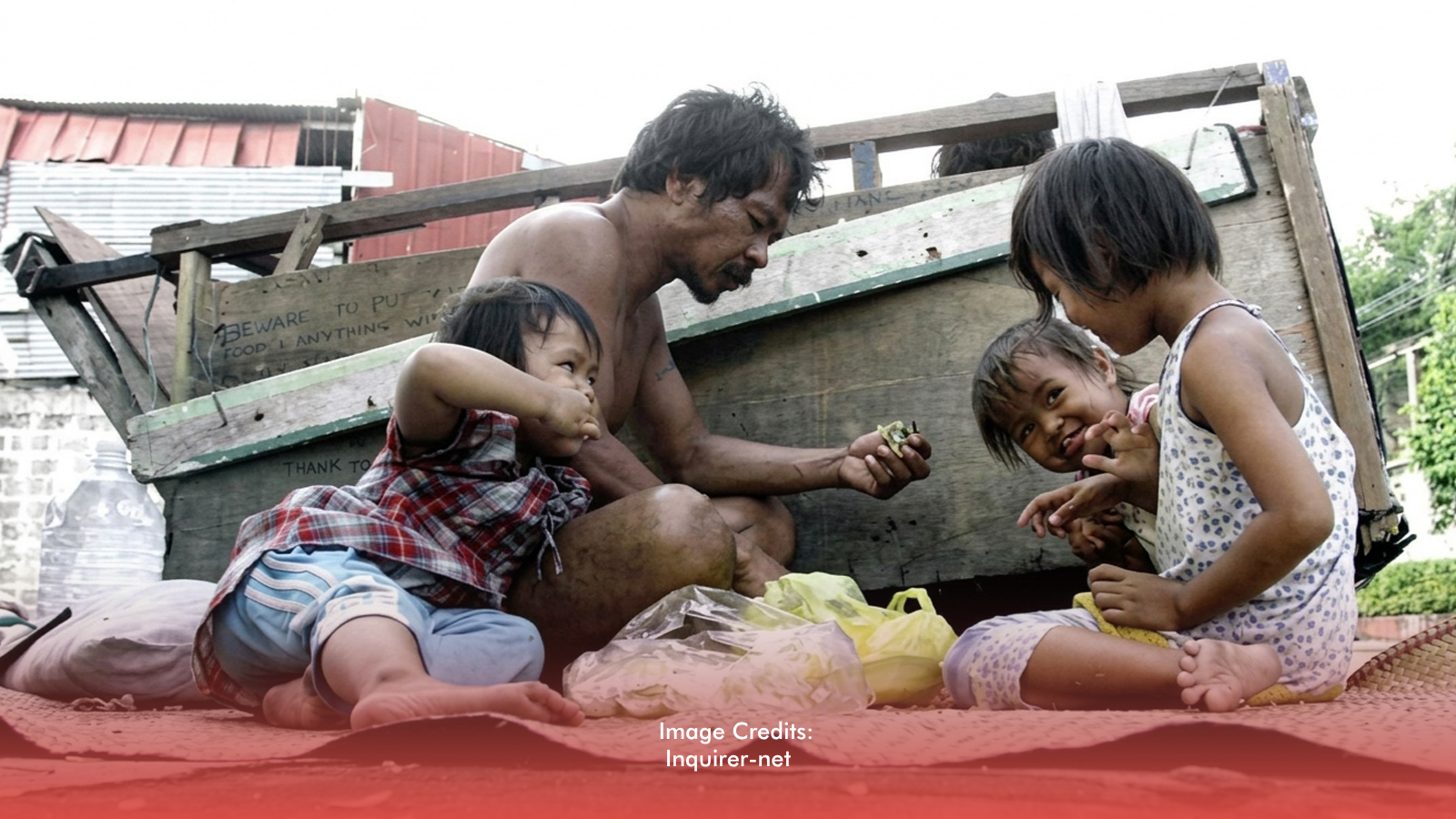
More Filipino families consider themselves poor, with 55% describing their households as mahirap in a September survey by Social Weather Stations (SWS). The figure rose six percentage points from 49% in June and represents an estimated 16.8 million families, up from 13.6 million.
The survey, conducted from September 21 to 27, found that the increase came mainly from families in the borderline category, or those who placed themselves between poor and not poor. This group fell from 14% to 9%, while the share of families who considered themselves not poor barely changed, slipping from 37% to 36%.
The September result was four percentage points above the 2025 annual average of 51%. It matched the 55% recorded in April 2025, the highest reading since December 2024, when self-rated poverty reached 63%.
Poverty Ratings Rise Across All Regions
Self-rated poverty increased in all four major areas. Mindanao recorded the highest share at 64%, followed by the Visayas at 63%, Balance Luzon at 51%, and Metro Manila at 44%.
Balance Luzon, which covers areas in Luzon outside Metro Manila, posted the largest increase, climbing 10 percentage points from 41% in June.
Food poverty also worsened. The share of families who considered themselves poor based on the food they could afford rose eight percentage points, from 36% in June to 44% in September. SWS estimated that this was equivalent to 13.3 million families, the highest level since December 2024.
Families Say They Need More to Make Ends Meet
The median monthly household budget that self-rated poor families said they needed to stop considering themselves poor increased from P14,000 to P15,000. The median amount they said they still lacked also rose, from P5,000 to P6,000.
In Balance Luzon, the median monthly budget threshold reached a record P20,000. SWS noted that these budget thresholds have remained relatively slow to rise despite inflation, which it interprets as a sign that poor families have been tightening their budgets and lowering their living standards.
The survey also found that most self-rated poor families had experienced poverty for years. Of the estimated 16.8 million families, 11.7 million were classified as “always poor,” meaning they had never considered themselves non-poor. Another 2.7 million were “usually poor,” while 2.2 million were “newly poor,” having reported being non-poor one to four years earlier.
Survey Details
SWS interviewed 1,500 adults face-to-face nationwide. The survey has a margin of error of plus or minus three percentage points for national results.
Self-rated poverty reflects how respondents assess their household’s financial situation. It is separate from the government’s official poverty statistics, which use a different method to determine poverty based on income and other measures.