
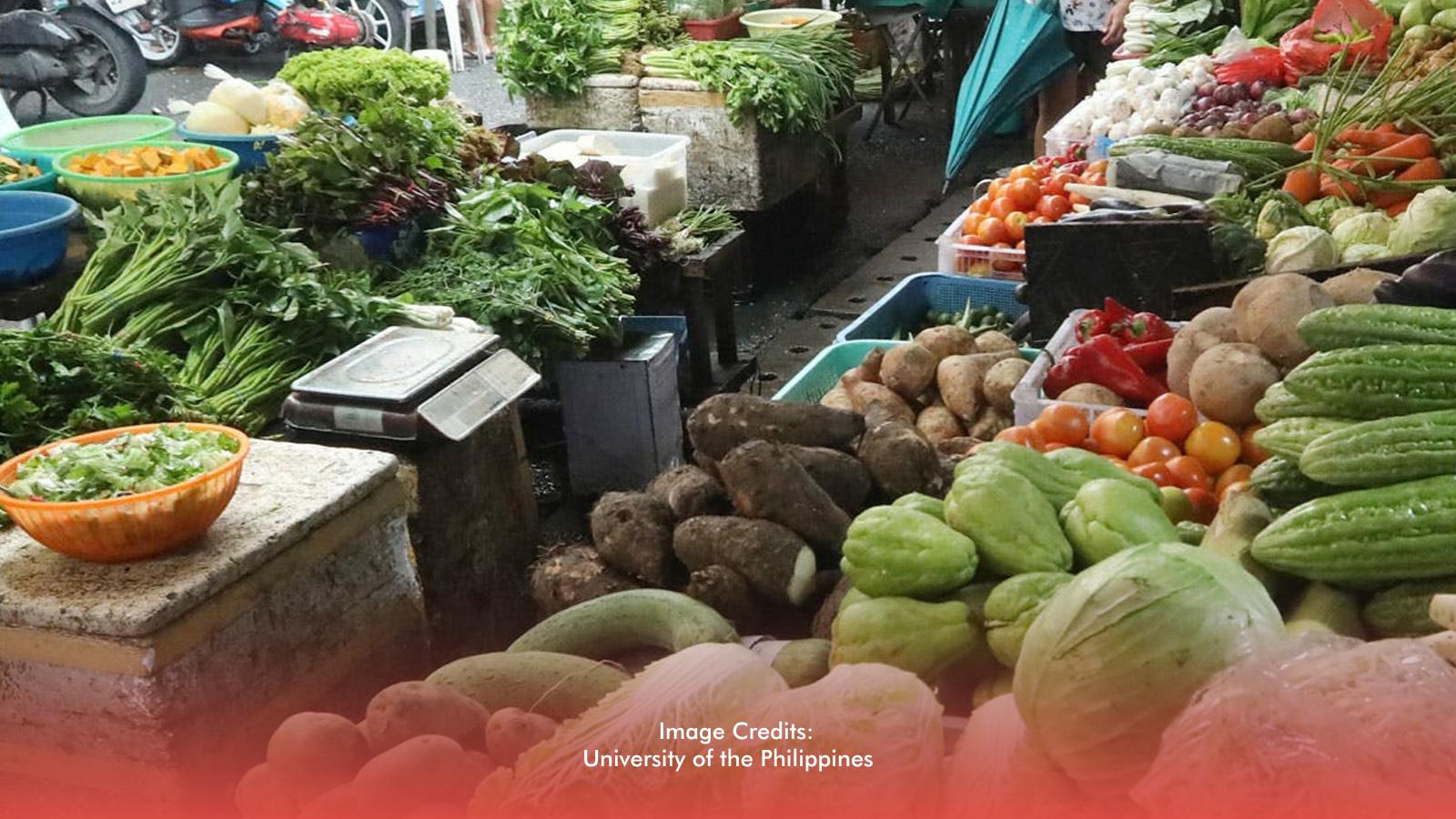
Heavy Southwest Monsoon rains and cyclones Luis and Maymay have disrupted the supply of agricultural products, pushing up prices of vegetables and fish in several markets.
The Department of Agriculture (DA) said the weather disturbances have caused around P1.4 billion in damage to agriculture, affecting major producing areas in the Cordillera Administrative Region, Central Luzon, and Southern Tagalog.
Vegetable Prices Rise
The impact of the recent rainfall is already being felt in vegetable prices. DA data as of August 17 showed that cauliflower increased from P120–P270 to P180–P350 per kilo, while pechay Baguio rose from P40–P120 to P40–P150. Carrots climbed from P70–P160 to P70–P170, while cabbage increased from P40–P90 to P60–P160.
Prices also rose for ampalaya, eggplant, and string beans. Ampalaya went from P50–P150 to P90–P220 per kilo, eggplant from P70–P150 to P110–P200, and string beans from P70–P150 to P100–P240.
Vegetable seller Linda Barzaga said flooding has damaged crops because many vegetables are planted close to the ground.
“Naapektuhan ng baha, kasi binabaha tayo. Ang tanim niyan mababa sa lupa lang talaga, pag binaha, wash out,” Barzaga said.
Fish Prices Also Climb
The weather disruptions have also affected fish prices. The DA said galunggong now costs as much as P400 per kilo, while bangus ranges from P160 to P320 per kilo and tilapia is around P200 per kilo.
The higher food prices have prompted some residents to fish in the Marikina River to help provide food for their families.
Farmers Also Bear the Losses
In Benguet, several farmers were forced to discard harvested carrots and cabbages along Provincial Road in Labey-Lacamen after failing to sell their produce in La Trinidad. Some used the vegetables as livestock feed instead.
DA spokesperson Arnel De Mesa said some cabbage spoiled after trucks carrying the produce were exposed to heavy rain and delayed by long lines.
The DA said aid has been prepositioned in affected areas, while recovery loan packages are ready to help farmers recover from their losses.
The damage shows how severe weather can disrupt the food supply chain, affecting farmers, sellers, and consumers through both wasted produce and higher market prices.