The national government is looking at Marikina City as a possible template for strengthening flood mitigation efforts across the country, particularly as discussions move forward on implementing no-build zones and constructing water retention basins in vulnerable areas.
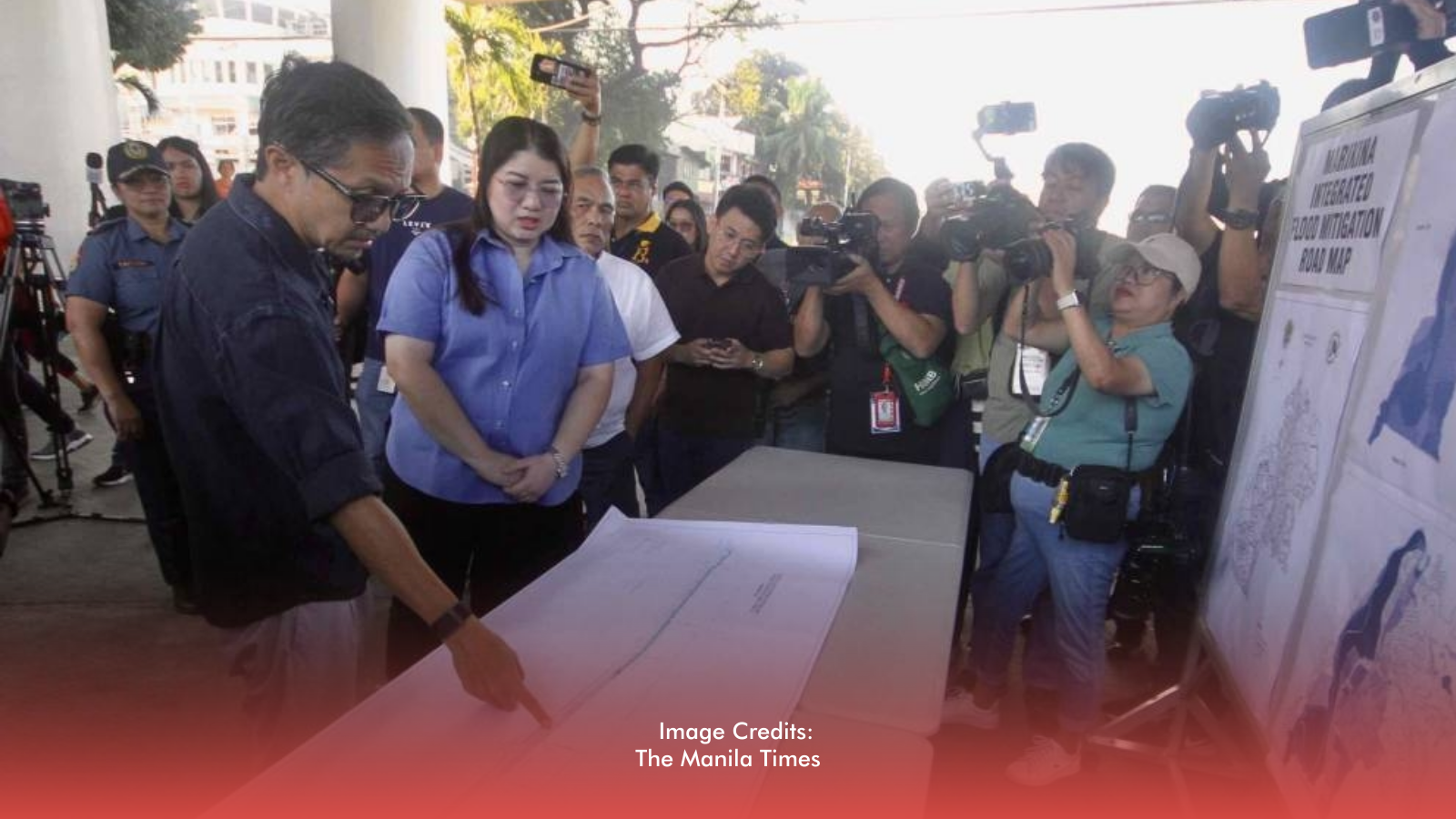
The proposal gained traction during a visit by Vince Dizon, Secretary of the Department of Public Works and Highways, who toured ongoing flood control projects in the city on Wednesday. He also met with Mayor Marjorie Ann Teodoro and First District Rep. Marcelino Teodoro to review local strategies that have been refined through years of responding to severe flooding.
Dizon stressed the importance of restricting construction in high-risk areas while investing in infrastructure that can temporarily hold excess rainwater. “We need to establish no-build zones. Then we will build retention basins where water can go and be contained. We will build parks. That is important. Marikina has shown us that it is possible,” Dizon said, outlining the direction being considered for national policy.
He further explained that Marikina’s experience has allowed it to develop practical measures that other local governments could replicate. “In fact, I invited the mayor and the engineer so we can show other local government units the best practices because Marikina has already learned from experience,” he said, emphasizing the value of shared lessons among cities.
Integrated River and Drainage Management
During the inspection, city officials detailed their comprehensive approach to flood control, which merges large-scale national projects with localized drainage improvements and river management initiatives.
Rep. Teodoro pointed to the continuing dredging of the Marikina River, noting that sections of the waterway are being deepened and widened to improve water flow and boost the river’s ability to carry floodwaters during heavy rains.
He also explained that the city’s drainage layout ensures that runoff from residential communities is funneled directly into the river through designated outfall channels. This setup allows accumulated water to leave the city more efficiently, reducing the duration and depth of flooding in low-lying areas.
Upstream Coordination
City officials also highlighted close coordination with the Wawa Dam Authority to regulate gradual water releases upstream. By managing discharges carefully, authorities aim to prevent sudden surges in the Marikina River that could worsen flooding during intense rainfall.
As climate change intensifies extreme weather events, Marikina’s layered strategy combining zoning reforms, river rehabilitation, drainage planning, and inter-agency coordination, offers a framework that could influence national urban planning. For the average Filipino living in flood-prone communities, adopting similar measures nationwide could mean safer neighborhoods, fewer disruptions to work and school, and reduced economic losses each time heavy rains hit.
RELATED: [Oplan Kontra Baha: DPWH Mobilizes Nationwide Effort To Mitigate Flooding]