
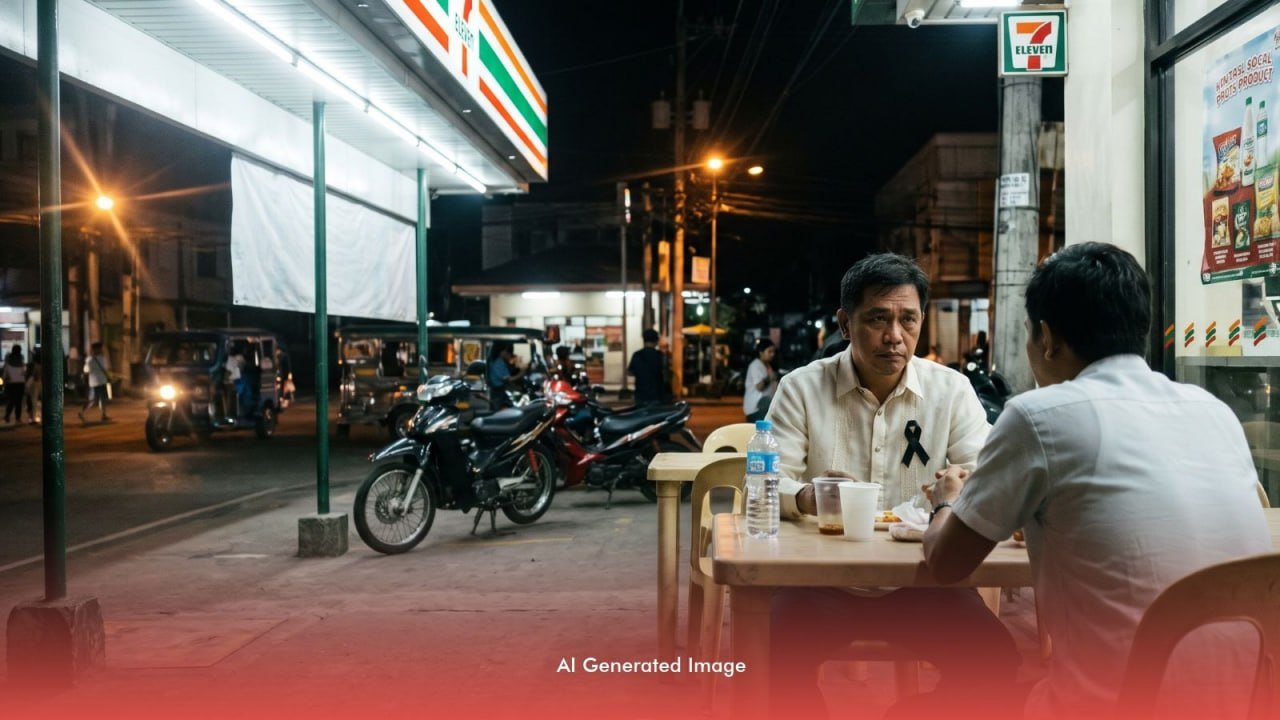
The wake is over. You have offered your condolences and said goodbye to the grieving family. As you prepare to head home, someone suddenly reminds you to stop somewhere first.
“Dadaan muna tayo somewhere.”
It does not matter whether you need groceries, a snack, or a cup of coffee. According to a familiar Filipino superstition, going straight home after attending a wake could invite something unwanted to follow you.
The practice is called pagpag, a folk custom passed down through generations and still observed by some Filipino families today.
What Is Pagpag?
In Filipino, pagpag means shaking or brushing dust and dirt off something. In funeral folklore, it takes on a symbolic meaning: shaking off the presence of death, bad luck, or a spirit that might follow someone home.
The belief holds that people who attend a wake or funeral should visit another place before returning to their own homes. This detour supposedly prevents the deceased's spirit from following them or bringing misfortune into the household.
A 2017 account in the University of Southern California's Digital Folklore Archives documents a Filipino student's description of the practice, including the belief that visiting a mall before going home could help shake off unwanted spiritual attachments.
Pagpag is a folk belief, however, not a proven method of preventing supernatural harm.
Why Do People Stop at a Mall or Convenience Store?
There is no single required destination for pagpag. Depending on the family, people might stop at a convenience store, restaurant, coffee shop, mall, or park before heading home.
Some buy a snack or drink, while others simply walk around for a few minutes before continuing their journey.
Did You Know? A mall can serve as a pagpag stop. One account in the USC Digital Folklore Archives describes walking around a mall before returning home, showing how the custom can adapt to modern city life.
For some families, the destination matters less than the act of stopping somewhere. A quick visit to a brightly lit convenience store can serve the same purpose as a longer stop at a shopping mall.
Why Is Going Straight Home Considered Bad Luck?
The superstition is rooted in the idea that death can leave a spiritual presence that follows the living beyond the funeral.
According to the belief, someone who goes directly home after visiting the deceased might unknowingly bring the spirit back to their household. The detour is meant to interrupt that supposed connection and leave the spirit behind.
Other versions describe pagpag as a way to keep bad luck or negative energy away from the family.
These explanations vary across communities, but the central warning remains familiar: do not go straight home after attending a wake.
There is no credible evidence that taking a detour prevents a spirit from following someone. The supernatural explanation belongs to folklore rather than established fact.
Do All Filipino Families Practice Pagpag?
No. Beliefs surrounding death and funerals vary across families, regions, generations, and religious backgrounds.
Some families observe pagpag every time they attend a wake. Others follow it because their parents or grandparents insist on it, while some do not practice it at all.
The USC Digital Folklore Archives also documents an account of a Filipino student who did not regularly observe pagpag at home but participated when attending wakes with more traditional friends.
This shows how folklore can survive even when belief is not universal. Someone may follow a custom out of respect for older relatives or family habits without necessarily believing that a spirit will follow them home.
For many, the familiar reminder to stop somewhere first has become part of attending a wake, passed down alongside other customs surrounding death and mourning.
Is Pagpag Part of Catholic Teaching?
Pagpag is a folk custom, not a standard requirement of Catholic funeral rites.
In the Philippines, funeral practices may combine Catholic prayers, family traditions, local beliefs, and personal interpretations of the afterlife. These traditions can coexist in the same household, even when family members do not share identical beliefs.
It is therefore more accurate to describe pagpag as a Filipino funeral superstition than as an official religious teaching.
Its precise historical origins are also difficult to establish from the available accounts. Although pagpag is sometimes described as an ancient Filipino tradition, there is not enough evidence to confidently identify when the practice began or how it developed across different communities.
What documented folklore accounts show is that the belief has been passed down and continues to be observed by some Filipinos today.
What Other Superstitions Surround Filipino Wakes?
Pagpag is only one of several folk beliefs associated with death and mourning in the Philippines.
Depending on the family and community, visitors may also hear warnings against sweeping while the deceased is lying in state or bringing certain food served at the wake back home.
These customs have different explanations, often involving beliefs about misfortune, spirits, or protecting the household. However, they should not be treated as universal Filipino rules because their meanings and observance differ across communities.
Does Pagpag Have a Practical Purpose?
Beyond its supernatural explanation, pagpag may serve as a familiar transition between attending a funeral and returning to everyday life.
A brief stop to eat, talk, or spend time with other mourners can offer an opportunity to decompress after an emotionally difficult gathering. For families that have followed the custom for years, it may also help preserve a connection with parents, grandparents, and shared traditions.
These are possible contemporary interpretations, not established explanations for the custom's original purpose.
Ultimately, pagpag reflects how people respond to uncertainty surrounding death. Even when a tradition's explanation is not universally accepted, it can remain meaningful because it is woven into family habits and cultural memory.
What Should You Do After Attending a Wake?
If your family observes pagpag, you may choose to follow the custom out of respect for its traditions. If you do not practice it, there is no established evidence that going straight home will cause supernatural harm.
Understanding what the custom means to relatives who take it seriously can help avoid unnecessary tension during an already difficult time. At the same time, no one should be made to fear that something terrible will happen simply because they went home directly.
The next time someone tells you to make one more stop after a wake, you will know why. For some Filipinos, pagpag is more than a quick detour. It is a familiar way of saying goodbye to the departed while making sure, at least according to tradition, that nothing follows them home.