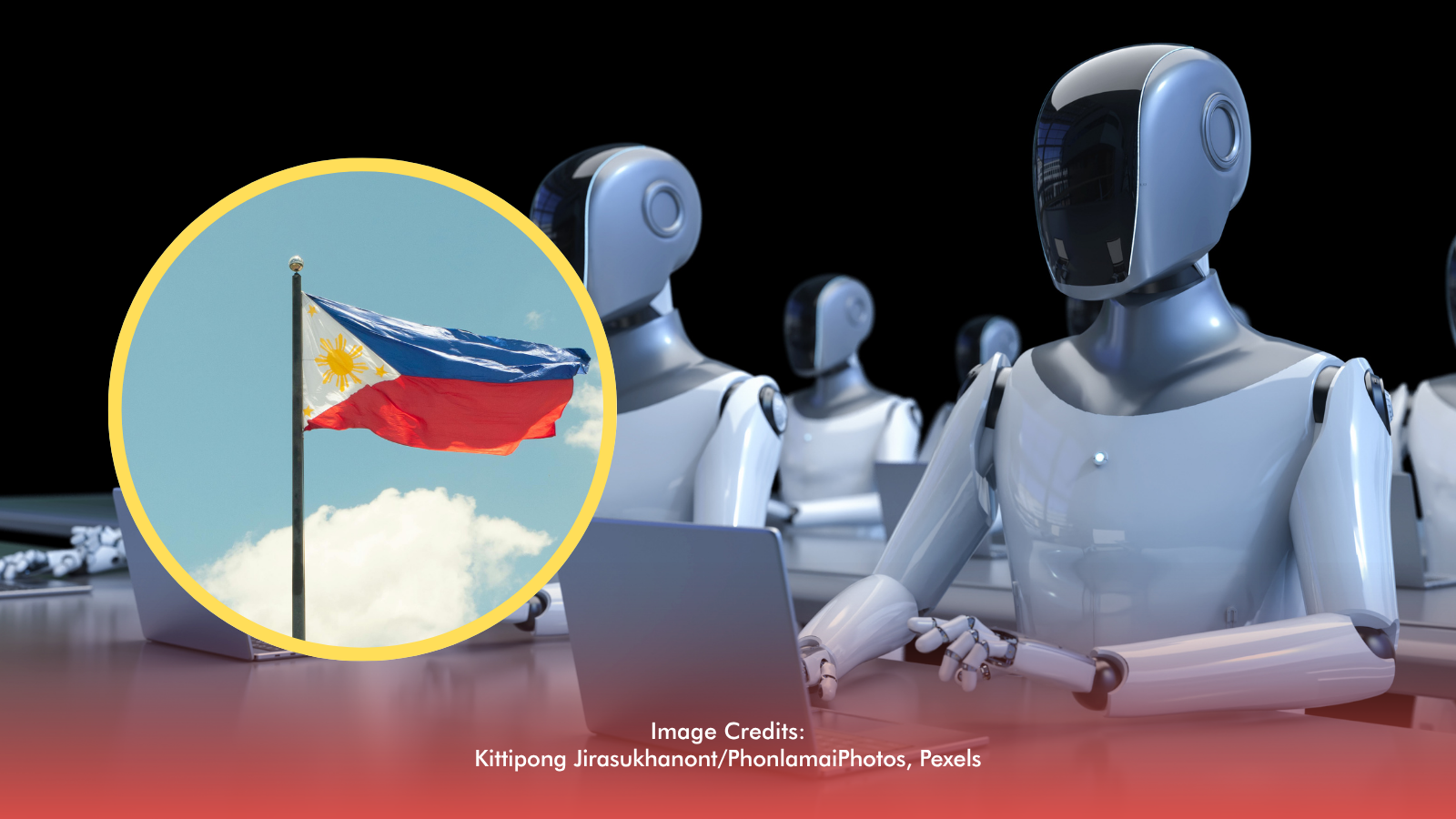
The Philippines may face a widening gap between the skills being developed through workforce programs and the occupations most exposed to artificial intelligence (AI), raising questions about how education and training should respond to rapid technological change.
Elizabeth King, a non-resident senior fellow at the Brookings Institution, said the country has placed significant investment in preparing workers for clerical support roles even as these jobs become increasingly vulnerable to technological disruption. “The jobs that are most vulnerable to artificial intelligence are exactly the jobs we have been investing in, which [are] clerical support jobs,” King said at the 12th Annual Public Policy Conference of the Philippine Institute for Development Studies on Sept. 17.
Access to technology presents another hurdle. Nearly 19 million Filipinos, or about 17 percent of the population, cannot afford a minimum internet package, according to figures cited by King. She added that differences in AI adoption across regions could further widen disparities in access to technology and employment opportunities.
RELATED: [POLL: 3 in 4 Students Embrace AI Writing Tools]
Preparing Workers Before They Enter the Workforce
King said preparing Filipinos for an AI-driven economy needs to start during childhood rather than only when young people approach employment. She highlighted nutrition, health, and cognitive development during the first 1,000 days of life as important investments in building the capabilities of future workers.
“Stunting delays entry to school. It hurts achievement in school, completion [of] basic education, and so forth and so on,” King said, noting that these early investments could help strengthen children expected to enter the workforce around 2040.
University of the Philippines School of Economics Associate Professor Renato Reside Jr. connected the AI challenge to the Philippines’ continuing difficulty in retaining skilled workers and creating enough domestic demand for their expertise. While overseas employment and remittances are likely to remain important in the near term, Reside said reducing that dependence will require changes within the domestic economy.
“I think it is time for the Philippines to take a hard look at, as Dr. King would say, implementation,” Reside said. He pointed to manufacturing, the electric-vehicle industry, and the greater domestic processing of mineral resources as areas that could generate stronger economic activity and demand for skilled workers.
Aligning Education With Economic Demand
Philippine Business for Education Executive Director Hanibal Camua also called for closer alignment between education policy and labor-market needs. He cited the scale of the basic education system, which includes about 47,000 public schools, while pushing for further discussion on decentralizing education decision-making.
“We need to discuss and further flesh out that issue on the decentralization of education,” Camua said.
Asian Development Bank Director Eisuke Tajima said social-sector investments should be treated as part of economic growth planning. “The social sector policy and operation must be viewed as an economic growth strategy, part of it,” Tajima said, calling for stronger coordination among education, health and economic policies.
Shift Consulting President and Asian Institute of Management adjunct faculty member Richard Anthony Cruz likewise emphasized whether human-capital spending produces measurable economic results. “You invest the capital, but did it really result in the outcome that we're looking for?” Cruz said.
Cruz urged government, industry associations, and the private sector to identify areas where the Philippines can build competitive advantages, while saying improvements in international assessments such as the Programme for International Student Assessment should be treated as a national effort.
If education, connectivity, and job creation fail to move together, technological change could widen existing gaps in opportunity. Aligning what Filipinos learn with the jobs the domestic economy can actually create will be critical to whether AI becomes a source of productivity or another pressure on workers.
RELATED: [Explainer: What Is Smart’s P49 “AI.Smart,” and How Does Load-Based AI Work?]