The history of precolonial Philippine gold will take center stage at an international conference organized by Ayala Museum on October 21 and 22, 2026, bringing Filipino and foreign scholars together to examine the country’s gold heritage and its connections to wider Asian cultures. Titled Ritual, Ornament, Currency: Gold in Early Asian Cultures, the first-ever international conference dedicated to the study of precolonial Philippine gold will be held at Ayala Museum and the Bangko Sentral ng Pilipinas (BSP) Complex.
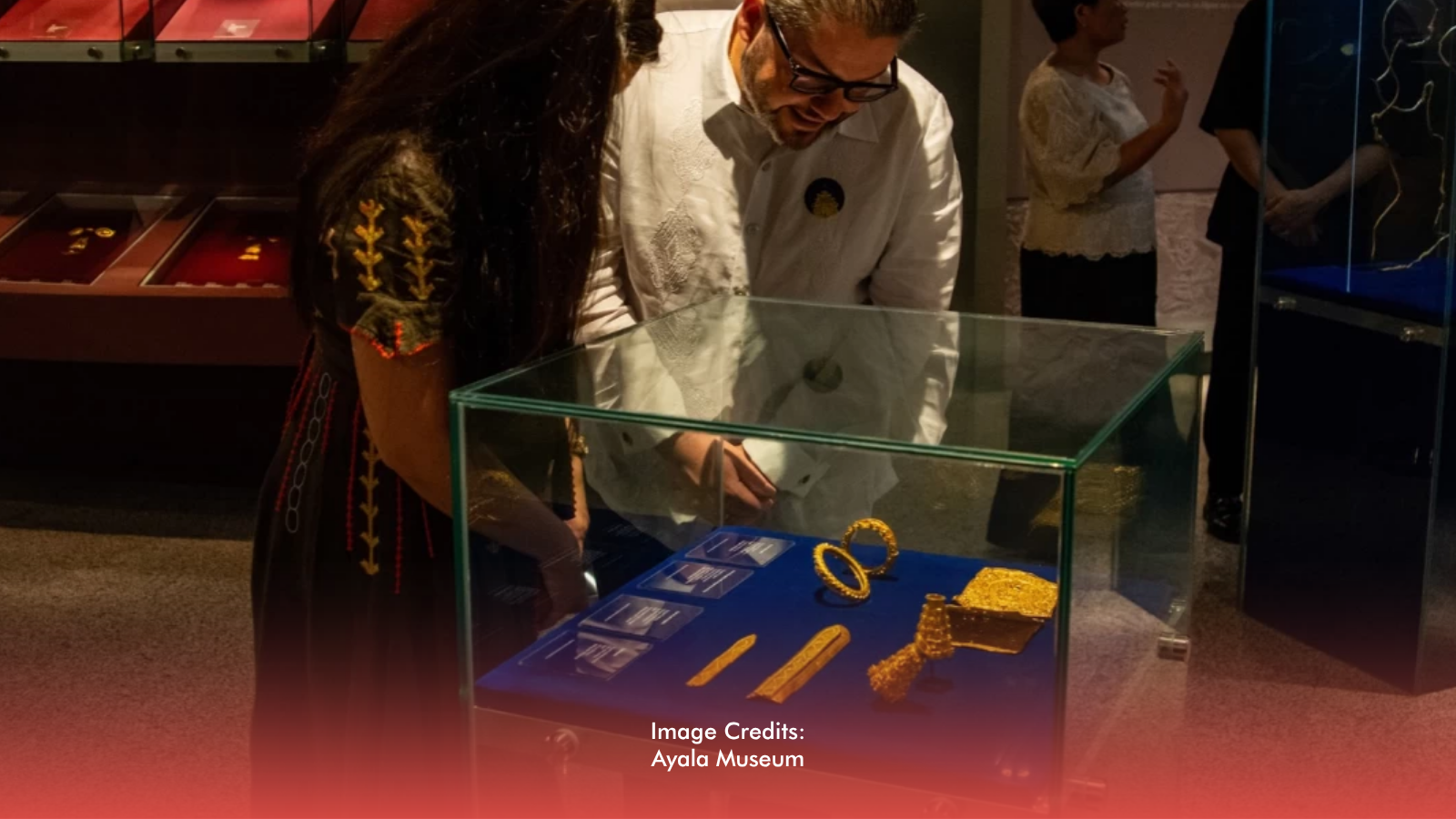
The gathering builds on the ongoing Reuniting the Surigao Treasure: From the Collections of Ayala Museum and the Bangko Sentral ng Pilipinas (2024–2027) exhibition, made possible by a historic three-year loan of gold objects from BSP to Ayala Museum. Since opening on May 17, 2024, the exhibition has attracted over 68,000 visitors, bringing together important collections that offer a closer look at the country’s artistic traditions, social structures, and economic practices before colonization.
RELATED: [Gov’t Eyes Revamp of Ifugao Rice Terraces, Heritage Protection]
Exploring Gold Beyond Its Material Value
The exhibition combines 38 gold works loaned from BSP with approximately 1,000 gold objects from Ayala Museum’s permanent collection. Together, these pieces provide evidence of the craftsmanship and social systems that shaped precolonial Philippine communities, while also offering clues about how gold figured into economic life and cultural traditions.
Convened by exhibition curator Dr. Florina Capistrano-Baker, the conference will examine three major areas: the historical, cultural, and archaeological contexts of pre-colonial Philippine gold; related material traditions across the region; and the history of gold as currency in the Philippines.
Jorell Legaspi, Senior Director for Arts & Culture of Ayala Foundation, said the exhibition has helped bring the country’s early history closer to the public.
“Through the Reuniting the Surigao Treasure exhibition, generations of Filipinos have had the chance to come face to face with these extraordinary objects, a vivid reminder of the richness of our pre-colonial past, and of what that history reveals about who we are as a people,” Legaspi said. “This gold conference takes the conversation one step further, gathering a distinguished panel of international speakers to discuss the significance of Philippine gold in maritime trade and regional connections, proving the world-class caliber of Philippine craftsmanship.”
Scholars to Examine Regional Links and Trade
The conference begins on October 21 at Ayala Museum with a keynote address by Dr. Ambeth R. Ocampo, Senior Professor of History at Ateneo de Manila University. The program will also feature Dr. Adriana Proser of The Walters Art Museum, who will discuss evidence of Chinese metalworking influences in precolonial Philippine gold, and Dr. Li Xiaolu of the Guangzhou Academy of Fine Arts, who will trace the development of Southeast Asian aesthetics through pottery, gold, and porcelain.
Proceedings move to the BSP Complex on October 22, where Dr. Himanshu Prabha Ray, Tagore National Fellow at Jawaharlal Nehru University, India, will deliver a keynote address on Indian Ocean trade. Other sessions will look into the Surigao gold mines and the process through which gold moved from mine to treasury. The day will close with a tour of Museo BSP and the launch of Bahandi: The Surigao Treasure and Related Finds.
Capistrano-Baker said the gathering is intended to encourage younger researchers to pursue the subject across several academic disciplines.
“This conference is both an invitation and a challenge to young researchers to delve into the rich history of pre-colonial Philippine gold, a subject that touches archaeology, history, geopolitics, and trade,” said Dr. Capistrano-Baker, conference convenor. “We hope it sparks new interest in this field of study, for a new generation of scholars to carry it forward.”
Registration has been extended until October 19, 2026, or until all slots are filled. Onsite participants will receive access to both conference days, admission to all Ayala Museum exhibitions until October 25, a 10% discount on select Museum Shop purchases, lunch and snacks on both days, a conference welcome kit, and a certificate of participation upon completing the two-day conference. Online participants will receive two-day virtual access and exhibitions until October 25.
The growing interest in the Surigao Treasure shows that the country’s precolonial history can draw public attention when its artifacts are made accessible and placed in context. Continued research and public engagement can help Filipinos understand that the Philippines had established artistic traditions, economic systems, and regional connections long before colonial rule, giving heritage preservation a role not just in protecting objects but in strengthening the historical record taught to future generations.
RELATED: [Davao de Oro Celebrates 19th Bulawan Festival, Honors ‘Golden People’]