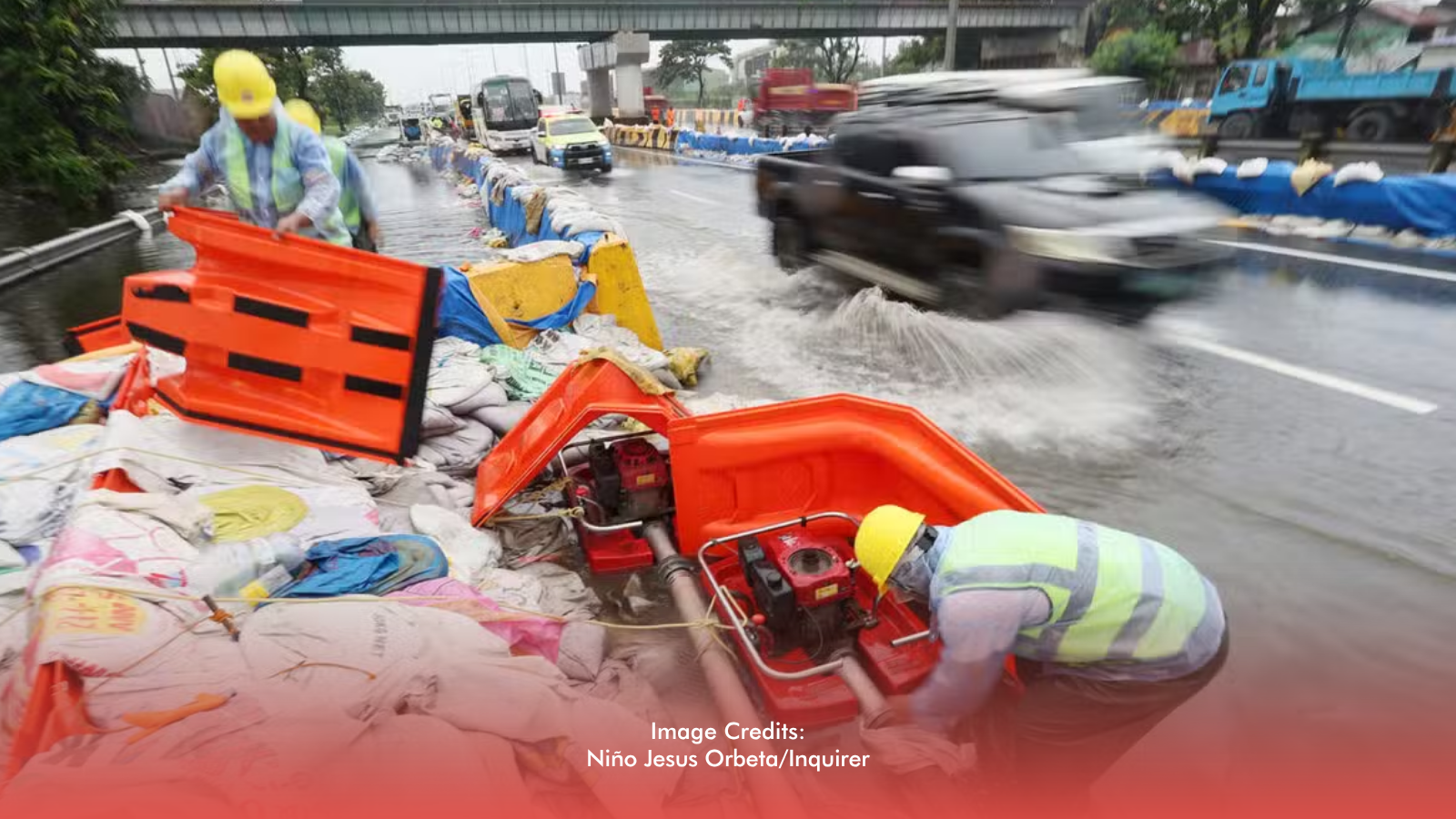
Clearer traffic information and accessible alternate routes are being prioritized by the Land Transportation Franchising and Regulatory Board (LTFRB) following the recent flooding that submerged portions of the North Luzon Expressway (NLEX) in San Simon, Pampanga. The agency is seeking closer coordination among road operators, local governments, and transport groups to help travelers respond to unexpected disruptions.
RELATED: [Why More Flood Control Projects May Not Be Enough for Metro Manila]
Regional Offices Told to Improve Traffic Coordination
Acting LTFRB chairman Greg Pua Jr. has directed the agency’s regional offices (ROs) to coordinate with expressway operators so traffic conditions can be relayed to the public in a timely manner. The order applies to Region 1, covering the Tarlac-Pangasinan-La Union Expressway (TPLEX); Region 3, covering the Subic-Clark-Tarlac (SCTEX) and North Luzon Expressway (NLEX); Metro Manila; and Region 4A, covering the South Luzon Expressway (SLEX), Southern Tagalog Arterial Road (STAR Tollway), and Cavite-Laguna Expressway (CALAX).
The regional offices are also expected to work with local government units (LGUs) to identify alternative routes that can be used when expressways are affected by emergencies or unforeseen incidents. The approach is intended to give motorists and transport operators practical options instead of leaving them to navigate disruptions without clear route information.
"Our priority has always been the welfare of passengers and the uninterrupted delivery of goods to the Filipino people. The NLEX incident is a wake-up call for the LTFRB and other agencies to step up and implement measures that maximize public assistance," Pua stressed.
The flooding in San Simon has placed particular attention on the need for route planning during emergencies. Pua has pointed to the importance of preparing alternatives before major disruptions occur, rather than relying solely on responses once traffic has already accumulated.
Real-Time Updates, Alternate Routes Key to Response
The LTFRB is pursuing two measures as part of its response: expanding the dissemination of traffic information to commuters and transport operators, while also developing alternative routes for worst-case situations.
“No motorist or commuter wants to be trapped in hours-long traffic, and both strategies are essential for enabling travelers to plan their journeys ahead,” according to the acting LTFRB head.
Digital platforms are also being considered an important channel for providing timely information. Pua said real-time social media updates about expressway incidents could give motorists sufficient lead time to change their travel plans and take alternate routes.
However, information alone may not be enough when travelers have no clear alternatives. Pua noted that motorists affected by the NLEX flooding encountered this problem, with widespread discussion on social media reflecting the difficulty caused by the absence of clearly identified alternative routes.
The LTFRB plans to address this through closer collaboration with LGUs and other concerned agencies. Regional offices are likewise being urged to strengthen coordination with transport and trucking companies to ensure that traffic advisories reach a wider range of people during unforeseen road emergencies.
In areas vulnerable to flooding and other road disruptions, stronger coordination can also help maintain the movement of passengers and goods while reducing the broader impact of emergency road closures.