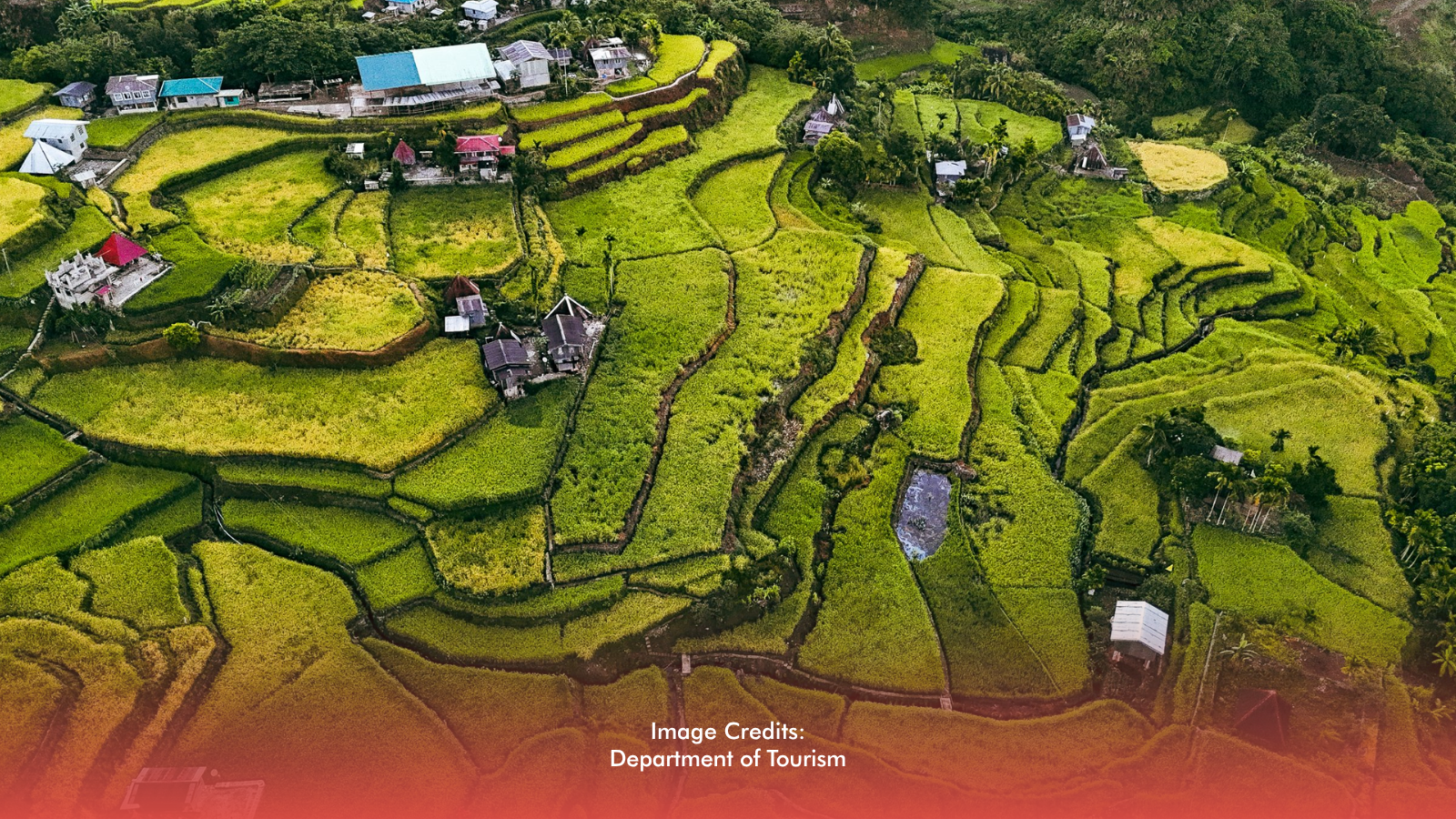
A new development framework is being considered for the Ifugao Rice Terraces as the government looks to protect the historic landscape while creating more sustainable opportunities for the communities that depend on it.
President Ferdinand Marcos Jr. met with Palafox Associates at Malacañang Palace on Aug. 13 to discuss a proposed comprehensive urban, environmental and infrastructure master plan for the terraces. The initiative is intended to bring together conservation, environmental protection, community development, and ecotourism in addressing the challenges faced by the iconic landscape.
RELATED: [Nueva Vizcaya Pushes for Provincial Tribal Center for Indigenous People]
Master Plan Targets Conservation, Community Development
The proposed approach covers both the physical preservation of the terraces and the economic needs of communities in the area. Palafox Associates presented proposals involving ecotourism and infrastructure improvements while seeking to protect Ifugao culture and traditions and generate sustainable economic opportunities for local residents.
Five clusters of the Ifugao Rice Terraces were inscribed on the Unesco World Heritage List in 1995 because of their outstanding universal value. These are Bangaan and Batad in Banaue; Nagacadan in Kiangan; Hungduan; and central Mayoyao.
The landscape was developed by generations of Ifugao Indigenous peoples over roughly 2,000 years, making it one of the Philippines’ most significant cultural landscapes. However, its preservation has been challenged by deteriorating sections of the terraces, damage to ecological systems, the migration of younger residents and insufficient income among terrace farmers.
A comprehensive development strategy could therefore help address conservation needs alongside the economic realities facing the communities that maintain the terraces.
From World Heritage in Danger to Renewed Protection
The terraces have previously faced serious conservation concerns. In 2001, the Ifugao Rice Terraces were placed on Unesco’s World Heritage in Danger list due to neglect, erosion, abandonment and other threats.
That status was reversed in 2012 after government agencies, local communities, and private-sector groups undertook restoration and conservation efforts. These included protecting watersheds, improving management systems, and reviving traditional practices needed to sustain the terraces.
The removal from the danger list was described by Malacañang at the time as a victory for the government and the Filipino people. The Ifugao provincial government, Ifugao Cultural Heritage Office, Unesco National Commission of the Philippines and other agencies and stakeholders were credited for their work.
The Unesco World Heritage Committee said the Philippines had reached the desired state of conservation through landscape restoration, protection measures, planning and improved management. Efforts in 2012 included restoring about 8,700 cubic meters of eroded stonewalls, rehabilitating 2.5 kilometers of irrigation systems serving 106 hectares of rice paddies, reforesting 25 hectares of watershed areas and increasing forest cover in 12 hectares of communal forests.
The Ifugao Rice Terraces is a National Cultural Treasure under Presidential Decree 260 and is protected under Republic Act 0066, or the National Cultural Heritage Act of 2009. It was also recognized as a Globally Important Agricultural Heritage System in 2011.
Palafox Associates, which was cited in the World’s Top 500 Architectural Firms of World Architecture Magazine, has completed over 1,900 projects in 40 countries.
For Filipinos, preserving the terraces goes beyond protecting a tourist attraction. Sustaining the landscape also helps safeguard Indigenous heritage, agricultural traditions and local livelihoods, while responsible infrastructure and ecotourism could create economic opportunities for communities in Ifugao and strengthen the country’s cultural tourism sector.
RELATED: [Mt. Apo Geopark Museum Opens as UNESCO Bid Moves Forward]