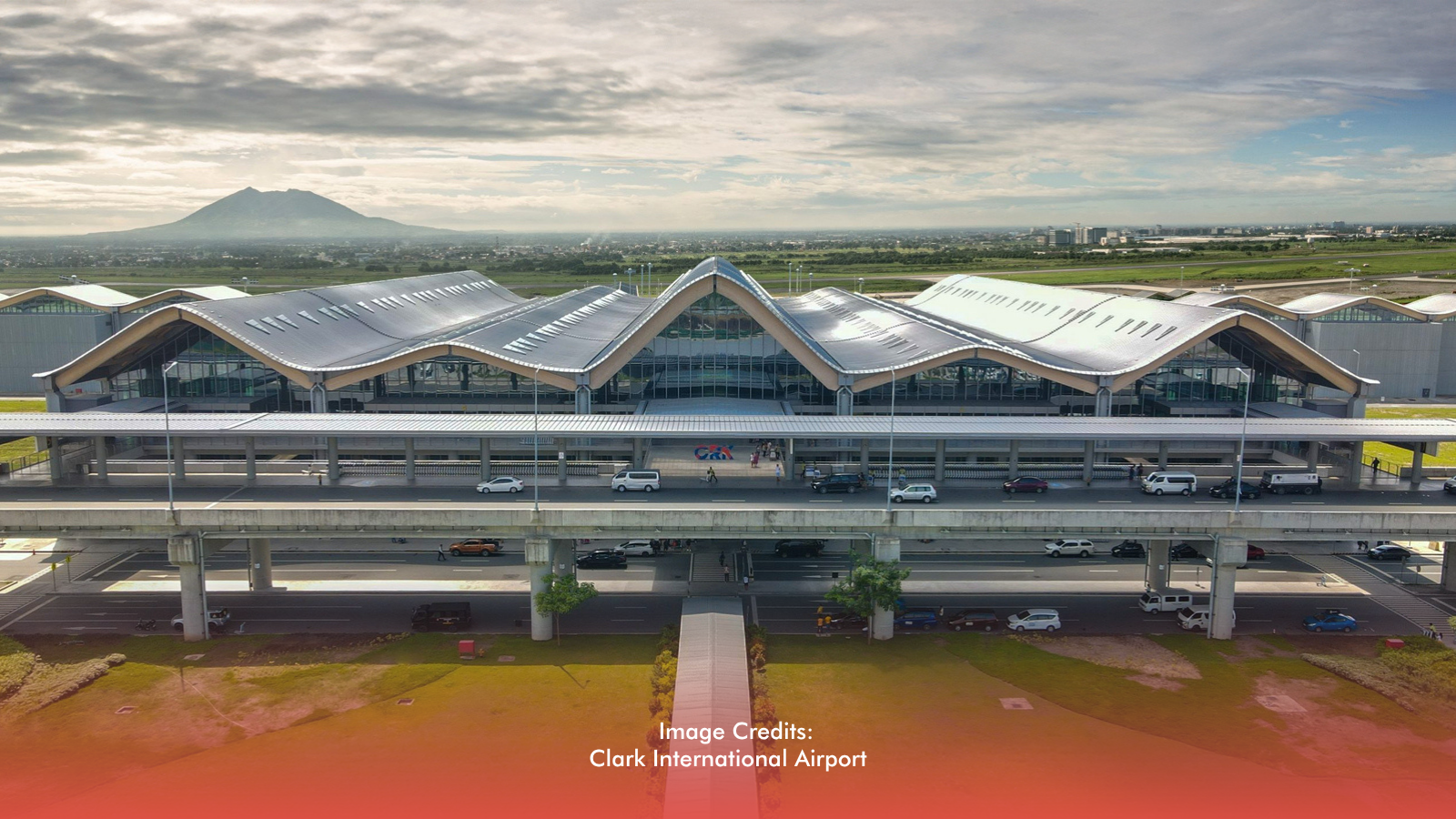
Clark International Airport is taking a major step toward becoming the Philippines' first airport city, with operator Luzon International Premiere Airport Development (LIPAD) Corp. unveiling a master plan that aims to transform the gateway into an integrated hub for aviation, logistics, business, and commercial development.
The 759.39-hectare Clark AeroDistrict, designed by global infrastructure consulting firm AECOM, will combine airport operations with industrial and commercial spaces to support long-term economic growth.
Integrated Hub for Aviation and Commerce
The master plan features four development zones covering aircraft maintenance, repair and overhaul (MRO) facilities, general aviation and cargo operations, a dedicated cargo city, and commercial developments that will support future airport expansion.
LIPAD President and CEO Noel Manankil said Clark is being positioned as more than just a transport gateway.
"We want Clark to become a leading hub for aviation, logistics, business and investment," he said.
Around 130 hectares remain available for lease, with plans to attract hotels, office buildings, and mixed-use developments near the passenger terminal.
Cargo Expansion Anchors Growth
A key component of the project is a 30-hectare cargo city, with a detailed master plan expected by the end of the year. Once completed, the facility will integrate cargo handling, customs clearance, and warehousing to improve the movement of goods.
Several global firms have already committed to expanding operations at Clark. UPS will open its new sorting facility in September, while FedEx and Lufthansa Technik Philippines are targeting completion of their expansion projects by 2028.
Clark handled 48,655 metric tons of cargo in the first half of 2026, up 10 percent from a year earlier, with international shipments accounting for 97 percent of total volume.
Strategic Location Fuels Future Opportunities
LIPAD also expects Clark to benefit from the Luzon Economic Corridor, including the planned Pax Silica artificial intelligence hub in nearby New Clark City. Manankil noted that high-value products such as AI hardware, semiconductors, and electric vehicle components are typically transported by air, making Clark well-positioned to capture future demand.
From January to June 2026, Clark served 1.64 million passengers, a 6 percent increase from a year earlier, while flight movements rose 27 percent to 14,987, driven in part by the transfer of turboprop operations from Ninoy Aquino International Airport in March.