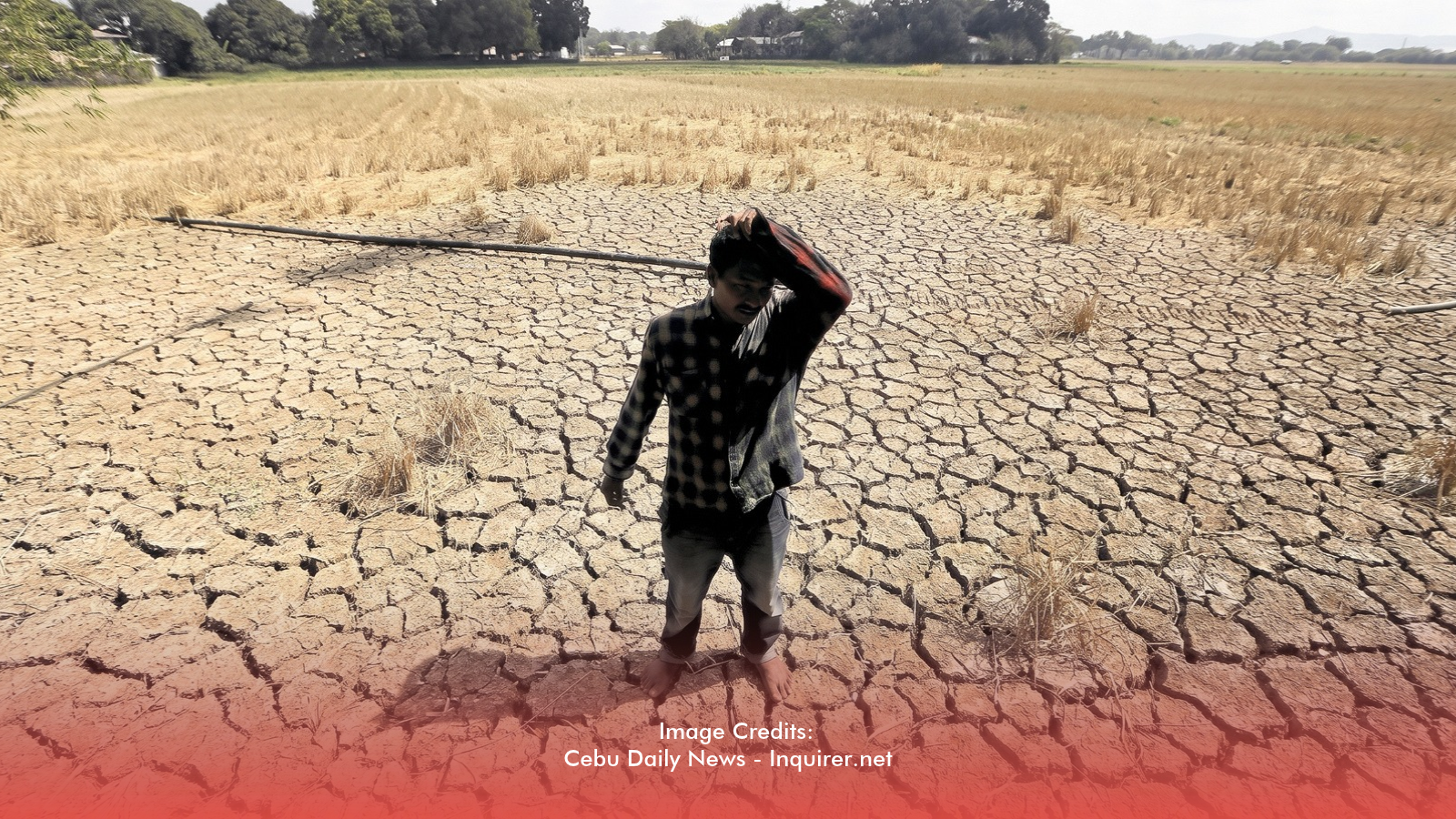
The Philippines could face worsening drought conditions and water shortages as a Very Strong El Niño develops in the tropical Pacific, with its effects expected to persist through the first half of 2027, the Philippine Atmospheric, Geophysical and Astronomical Services Administration (PAGASA) said.
In an advisory issued on November 4, PAGASA said the phenomenon could reach its strongest phase before the end of 2026, bringing below-normal rainfall and warmer temperatures to much of the country.
Despite the expected dry conditions, the agency cautioned that tropical cyclones and other weather systems could still bring heavy rainfall to affected areas.
More provinces at risk of drought
PAGASA’s October assessment recorded drought conditions in five provinces, dry spells in 11, and relatively dry conditions in 10 others.
Its November outlook points to significantly reduced rainfall across much of the country, raising the possibility of more areas experiencing drought or dry spells before the month ends.
The weather bureau urged local governments and communities to prepare for prolonged dry conditions by conserving water and ensuring the efficient distribution of available supplies.
Cebu prepares for months of dry weather
Cebu is also bracing for worsening conditions, with PAGASA forecasting a dry spell in November 2026, followed by drought from December 2026 to April 2027.
The provincial government’s vulnerability mapping identified 11 local government units (LGUs) with potentially affected communities.
Tuburan has the highest number of at-risk barangays at 36, followed by Daanbantayan and Catmon with 20 each. Carmen has 15, Borbon 12, Sogod 11, while Tabuelan and Bogo City have seven each.
Provincial government mobilizes response
Cebu Gov. Pamela Baricuatro issued Executive Order No. 57 on October 26, establishing the Super El Niño Task Force to coordinate preparedness and response efforts.
The body will involve provincial offices, LGUs, and national government agencies in identifying vulnerable communities, mobilizing resources, and implementing measures to address prolonged dry conditions.
The proposed 2027 provincial budget also includes P354.82 million for programs supporting farmers and fisherfolk, alongside P100 million for water supply development.