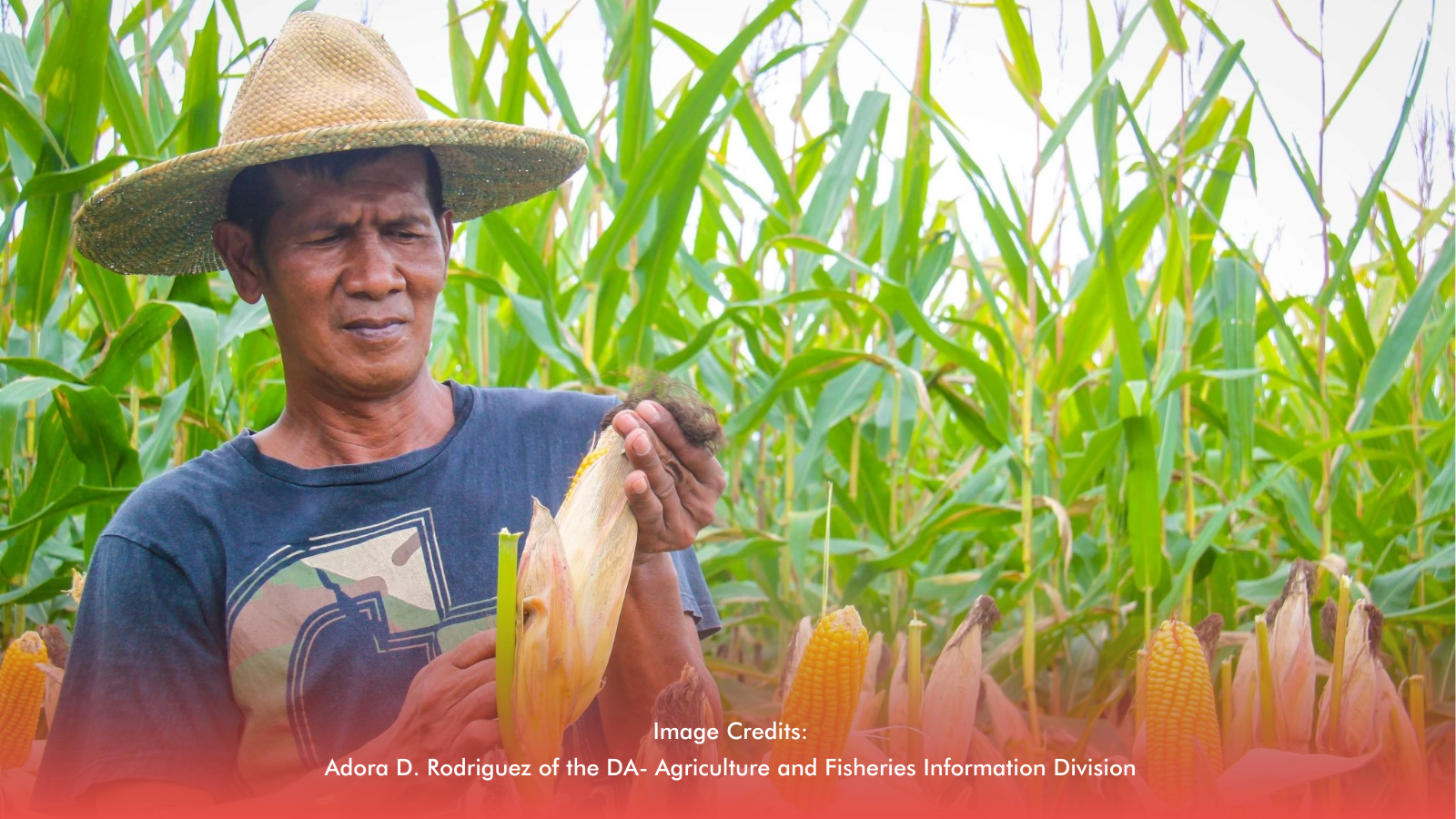
Corn is more than just a crop in Central Visayas; it is a staple for families, a vital source of livestock feed, and a steady contributor to local economies across the islands. For thousands of farmers, it remains both food on the table and a livelihood that sustains their communities.
The Department of Agriculture in Central Visayas (DA-7) reported that corn farming covered 65,676 hectares in 2024, solidifying its role as one of the region’s most important commodities alongside rice, livestock, vegetables, mango, and ube.
Regional Hubs and Community Farming
White corn continues to dominate, planted across 63,336 hectares or 96.4 percent of the total area, while yellow corn occupies 2,107 hectares or 3.2 percent, according to DA-7 Planning, Monitoring, and Evaluation Division Officer Elvin Milleza. Cebu led production with 49,957 hectares, followed by Bohol with 5,886 hectares, while Negros Oriental and Siquijor shared the rest.
Cebu remains the backbone of corn production in the Visayas, with four major growing zones: South Cebu (10,948 hectares), North Cebu (10,044 hectares), Camotes Island (2,415 hectares), and Bantayan Island (1,775 hectares).
Across these areas, farmer associations and clusters thrive in towns such as Daanbantayan, San Remigio, Danao City, Toledo City, Badian, and Poro. In partnership with DA-7, these groups apply modern farming methods, use certified seeds, and help ensure a steady supply of corn for food and livestock.
Milleza emphasized that Central Visayas ranked fourth nationwide in corn program implementation in 2024, a sign of efficient local management and strong output that benefits both households and industries. He noted that the sector provides thousands of families with income, while sustained government support, including training and technical assistance, continues to boost productivity.
Innovation and Opportunities Ahead
One example of innovation is Cebu’s Sugbo Maisan program, launched in Medellin in 2022, which encouraged yellow corn production at a time when some sugar mills closed down. Through the initiative, farmers gained access to seeds, fertilizers, technical aid, and drying facilities, helping link growers with local governments and institutional buyers. This program has opened stronger market opportunities, especially for yellow corn used in feeds.
Looking ahead, Visayan corn has the potential to expand beyond regional markets and contribute more significantly at the national and even international scale. With proper investment in technology, infrastructure, and global market access, the region could position itself as a competitive player in the feed and food supply chain.
By building on its strengths, community farming, government support, and growing demand, Central Visayas’ corn industry can move from being a local lifeline to a global opportunity.
RELATED: [Unlocking the Potential: Benefits of Corn-Soybean Cropping in Caraga]