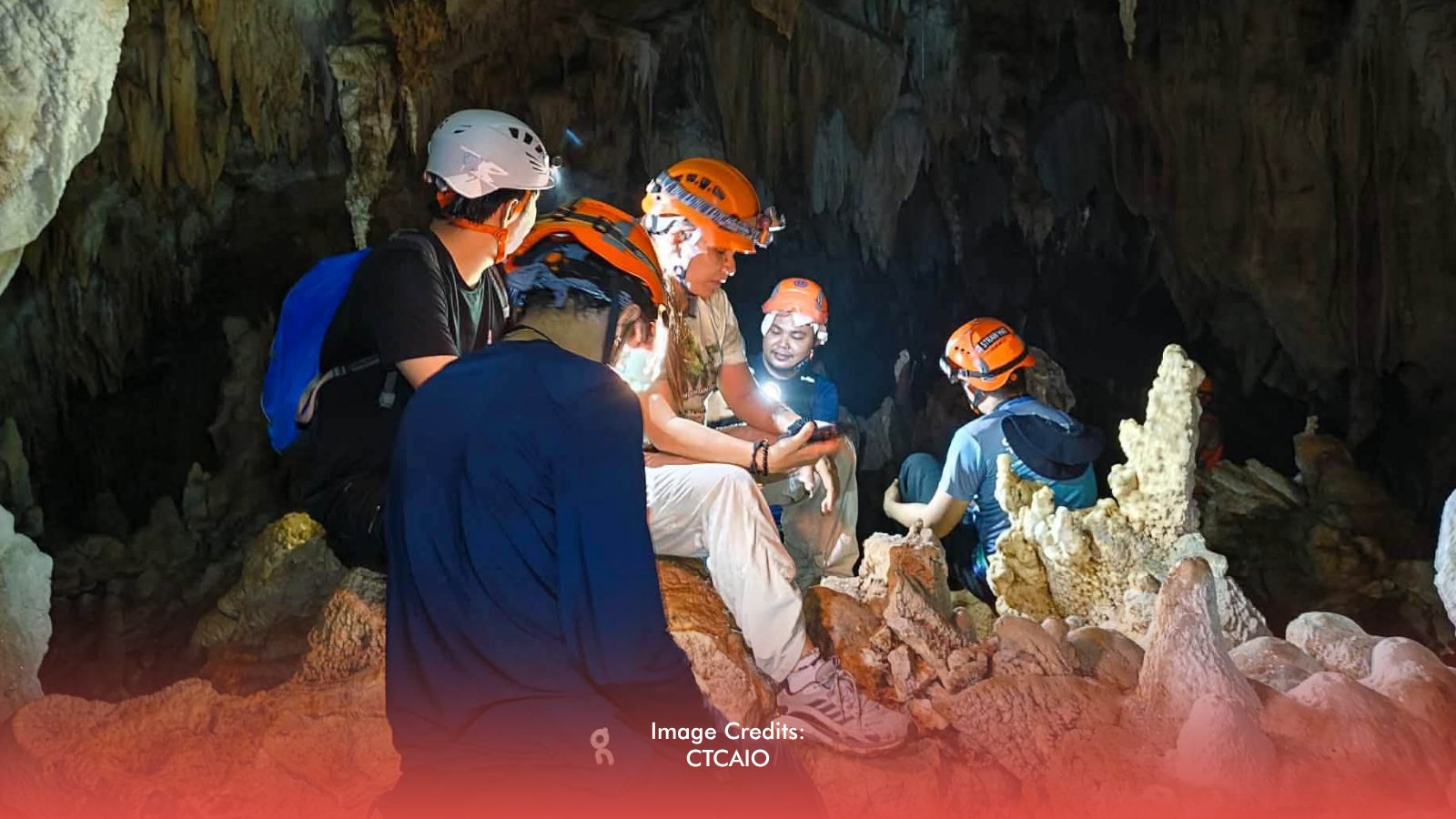
Catbalogan City is building local capacity for nature-based tourism by combining cave exploration skills with efforts to promote more inclusive tourism practices. More than 20 cavers, tourism workers and outdoor enthusiasts recently completed a Gender-Inclusive Tourism Awareness Training and Basic Caving Course as part of the city’s continuing Cave Mapping Project.
RELATED: [Beat The Heat In Sagada: Things That Make This Mountain Town Special]
Training Local Talent for Responsible Exploration
The four-day program was organized by the Catbalogan City Tourism, Culture, Arts and Information Office (CTCAIO) in partnership with Speleo Samar Philippines Inc., the City Gender and Development Focal Point System, and the Catbalogan City Tourism Council.
Instead of focusing solely on technical cave exploration, the training covered both the natural environment and the responsibilities involved in managing these sites. Participants took part in discussions and practical activities involving cave and karst landscapes, the history of caving, cave ecosystems, basic caving techniques, equipment, and principles of cave conservation and ethics.
The field component gave participants an opportunity to apply what they learned. They joined a caving immersion at Central 3 Cave in Barangay San Andres and explored Oringan Cave 7.
Reaching the sites also required significant preparation and physical effort. The participants trekked for about four hours to reach the base camp before making a 20-minute hike to the cave entrance. A tree-planting activity was also held around the campsite as part of the field experience.
Mapping More Caves for Sustainable Tourism
The training forms part of a broader effort that started in 2024, when Catbalogan launched its Cave Mapping Project through cave expeditions, explorations, reconnaissance missions and mapping activities.
Those efforts have already helped identify more than 20 caves within the city, according to CTCAIO Culture and Arts Division focal person Ronaldo Espino.
“One of the things we see there is the cave system of Catbalogan,” Espino said, noting that the city continues to develop programs aimed at strengthening its tourism initiatives.
Not every cave identified through the mapping work is immediately opened to visitors. Some have already been classified for tourism and research purposes, while others remain closed because of safety concerns.
The city government plans to continue coordinating with government agencies and local communities to locate more caves with tourism potential. It also intends to develop community-based cave guides who can help ensure that future exploration is conducted responsibly while protecting the caves and supporting sustainable tourism.
For Catbalogan, the initiative can create new opportunities for community-based tourism while protecting natural resources that could become long-term attractions. For Filipinos, it also highlights how local destinations can grow beyond conventional tourism by developing outdoor experiences that create livelihoods while encouraging conservation and responsible use of the country’s natural heritage.
RELATED: [Why Mt. Pulag Is The Perfect Summer Escape For Hikers]