
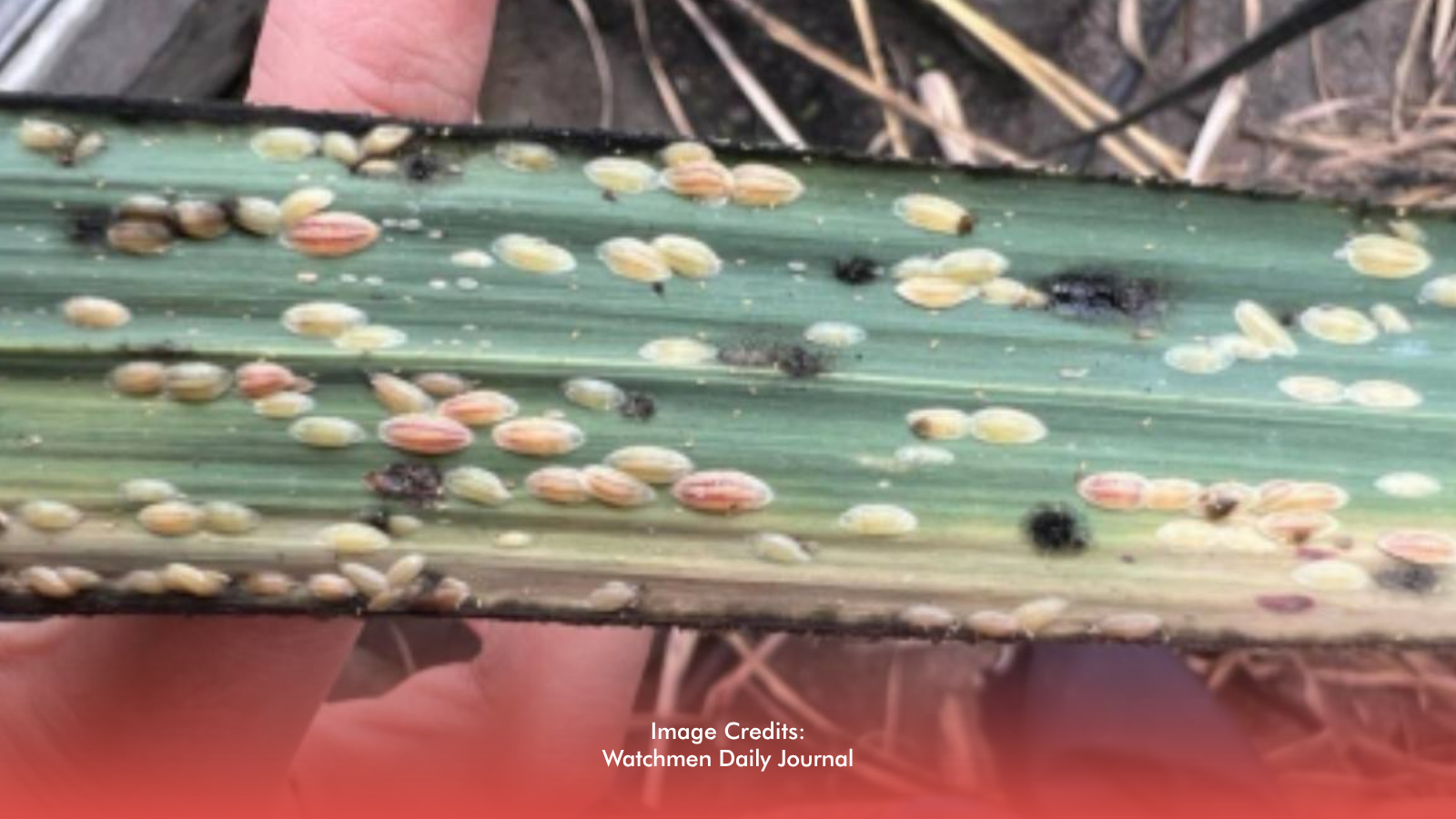
Negros Occidental has decided to adopt an environmentally friendly strategy to address the growing infestation of the Red-Striped Soft Scale Insect (RSSI), opting against the use of aerial chemical spraying despite the pest affecting over 30 percent of Negros Island’s 250,000 hectares of sugarcane farms. The provincial government said it will instead focus on biological and sustainable methods to protect the region's sugar industry.
Governor Eugenio Jose Lacson announced the province's decision on Monday, July 13, emphasizing that future pest control efforts will prioritize nature-based solutions over large-scale chemical application.
“We will go natural. We will go green on this approach to eradicate RSSI and future pest problems,” said Lacson.
RELATED: [Sen. Pangilinan Calls for Wider Use of Tech in Farming and Fishing]
Province Shifts to Sustainable Pest Management
The move comes after the United Sugar Producers’ Federation of the Philippines (Unifed) earlier considered the use of aircraft for pesticide spraying but eventually abandoned the proposal due to concerns over its potential effects on public health, livestock, and fisheries.
Following the issuance of Executive Order 26-12, which created the Provincial Biosecurity Task Force, the group's technical team immediately prepared a comprehensive response plan. Among the proposed measures are genome sequencing of RSSI, the mass production of local parasitoids, predatory insects, and beneficial fungi, as well as the completion of budget requirements needed for field operations.
At the same time, the Sugar Regulatory Administration (SRA), city agriculture offices, and farmer organizations have been conducting training activities to improve pest management practices and strengthen farmers' response to the infestation.
Calls for Direct Farmer Support
The decision to abandon aerial spraying also gained support from the National Congress of Unions in the Sugar Industry of the Philippines-Trade Union Congress of the Philippines (Nacusip-TUCP), which argued that the approach would have been an inefficient use of government funds.
National President Roland Dela Cruz pointed out that even drone-based pesticide application has not delivered effective results against RSSI, describing aircraft spraying as “nothing more than throwing money away.”
Instead, he urged the government to channel assistance directly to affected farmers by providing insecticides, equipment, and financial aid while ensuring that pest control is carried out on the ground with proper government supervision.
Dela Cruz also raised questions over the implementation of the SRA's existing P200 million anti-RSSI program, saying its results have yet to be clearly demonstrated despite proposals for another multi-million-peso initiative.
Meanwhile, Provincial Administrator lawyer Rayfrando Diaz disclosed on Wednesday, July 15, that the Provincial Biosecurity Task Force is proposing a P24 million budget to support the province's campaign against RSSI.
For Negros Occidental, where sugar production plays a vital role in the local economy, successfully controlling the pest is critical to protecting farmers' livelihoods and ensuring stable sugar production. Effective and sustainable pest management can also help strengthen the country's agricultural sector, support food and commodity supply chains, and reduce the economic impact of crop losses on Filipino communities.
RELATED: [P604M Fuel Aid Set For Bicol Farmers, Fisherfolk Amid Economic Pressure]