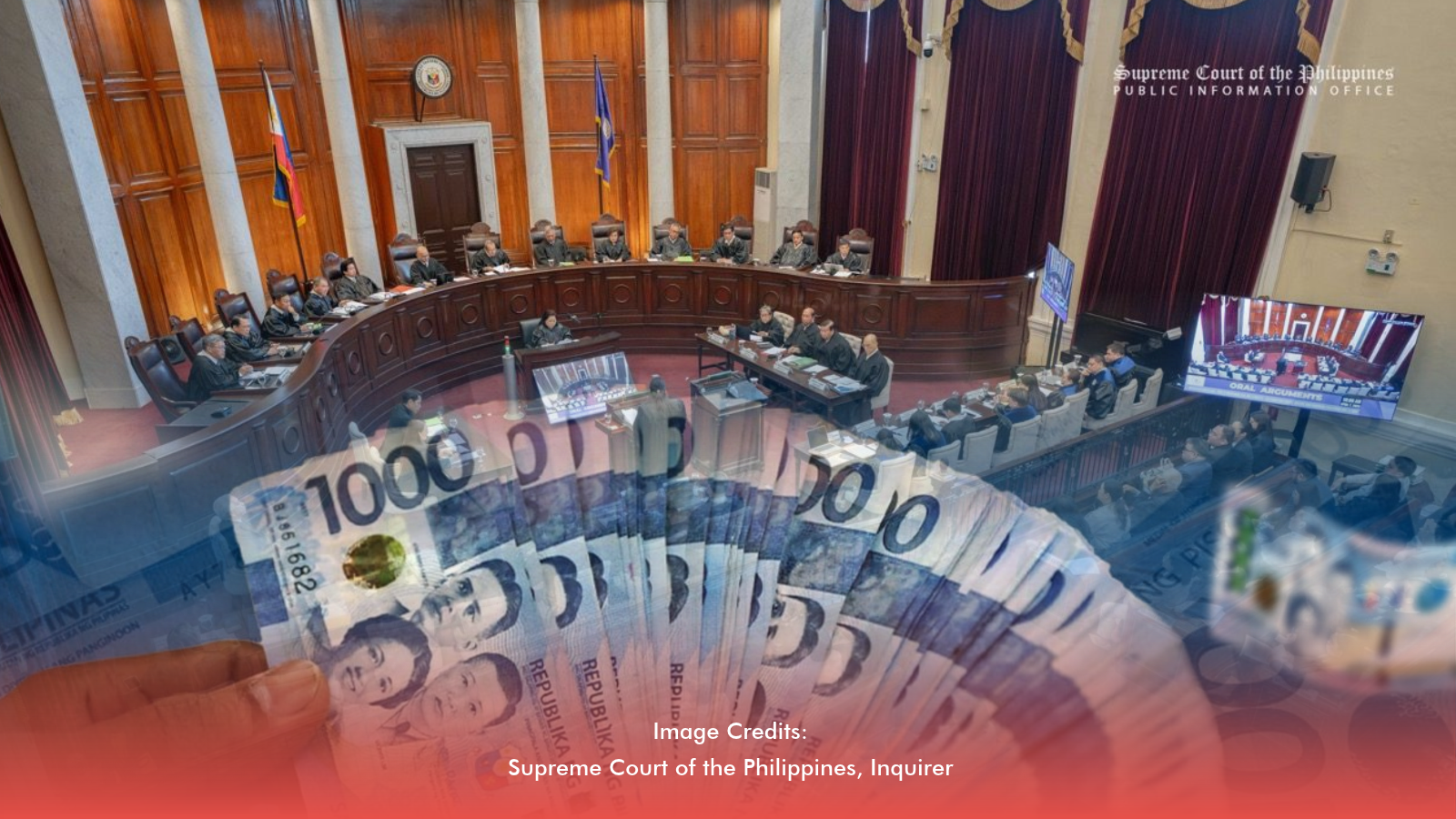
The Supreme Court has declared the 2024 and 2025 General Appropriations Acts unconstitutional, along with the 2026 budget’s rules on unprogrammed appropriations, and Malacañang said on Wednesday, Oct. 21, that it will ask the court to reconsider.
The 121-page decision, penned by Senior Associate Justice Marvic Leonen, is dated Oct. 7 and was made public on Tuesday, Oct. 20.
The court struck down Republic Act 11975, the 2024 budget, because Congress raised unprogrammed appropriations by P449.5 billion, from P281.9 billion in the National Expenditure Program (NEP) to P731.4 billion in the enacted law. It voided RA 12116, the 2025 budget, over a P17.99-billion increase that Congress made to the Department of Public Works and Highways’ Special Road Fund. In both cases, the court said, the increases pushed total appropriations above what the President had recommended.
For 2026, the court voided Special Provisions 1(a) and (b) of Chapter XLIII, the unprogrammed appropriations rules, calling them “overly broad,” lacking prioritization standards and partly functioning as “prohibited lump sum appropriations.” It permanently barred the Senate, the House, the Office of the Executive Secretary and the Department of Budget and Management (DBM) from implementing them.
The court voted 13-2, Supreme Court spokesperson Camille Ting said. She said the ruling is not yet final and executory, and the Office of the Solicitor General (OSG) may file a motion for reconsideration within 15 days from notice.
No Refunds Expected
Ting said funds already spent on irreversible programs whose beneficiaries acted in good faith remain valid under the doctrine of operative fact. “So … there will be no funds returned in that case,” she told reporters. That covers at least P467 billion in increases flagged by the court. Ting said any criminal or administrative liability should be pursued before the proper tribunals.
Senate President Pro Tempore Vicente Sotto III and Sen. Panfilo Lacson both said unspent funds under the voided provisions may no longer be released, while those already spent may not be invalidated.
The court said unprogrammed appropriations are not unconstitutional in themselves. According to reports of the ruling, they must contain no lump sums, carry clear prioritization standards, stay consistent with the national fiscal program, and set separate conditions for using new and excess revenues.
Palace to Seek Reconsideration
“We respectfully request the Supreme Court to reexamine its decision. The Office of the Solicitor General has also been directed to file a motion for reconsideration,” Palace Press Officer Claire Castro said.
Castro said the ruling kept the mechanism on paper but set conditions that “rendered this mechanism useless and no longer usable for government programs.” She said that since 2015, Congress had allowed releases when collections from even one specified nontax revenue source beat the target. “The Marcos administration merely followed this policy,” she said.
The DBM said it is coordinating with the OSG and other executive offices to assess the ruling’s legal, fiscal, technical and operational implications.
Senate Leaders Vow Scrutiny
“Let me assure the Filipino people: what transpired in past budget deliberations will not happen under my watch in the proposed 2027 national budget,” said Sen. JV Ejercito, chair of the Senate finance committee.
Lacson said the decision came as the Senate reviews the House-approved P7.2-trillion 2027 budget. “One good thing about the Supreme Court ruling is its timing,” he said. He said the Senate may restore “hundreds of billions” of pesos in House cuts and realignments, particularly for foreign-assisted projects and flood control.
Sotto said Senate budget deliberations would again be livestreamed. “If these fall into the category of what the Supreme Court said, we will not allow it in the Senate,” he said.
Public finance expert Zy-za Suzara said the ruling would have limited immediate impact on the 2027 budget but that Congress “cannot increase the level” of unprogrammed appropriations. Former finance undersecretary Cielo Magno said the DBM should stop releasing the affected funds “out of courtesy.”
Why It Matters
The court has now set limits on how Congress can expand standby funds, and those limits apply to the P7.2-trillion 2027 budget the Senate is reviewing. The court’s spokesperson said money already spent in good faith will not be returned.
What to Watch
The OSG has 15 days from notice to file its motion for reconsideration. Senators will show in the coming weeks whether the 2027 budget’s unprogrammed appropriations stay within the court’s conditions.