
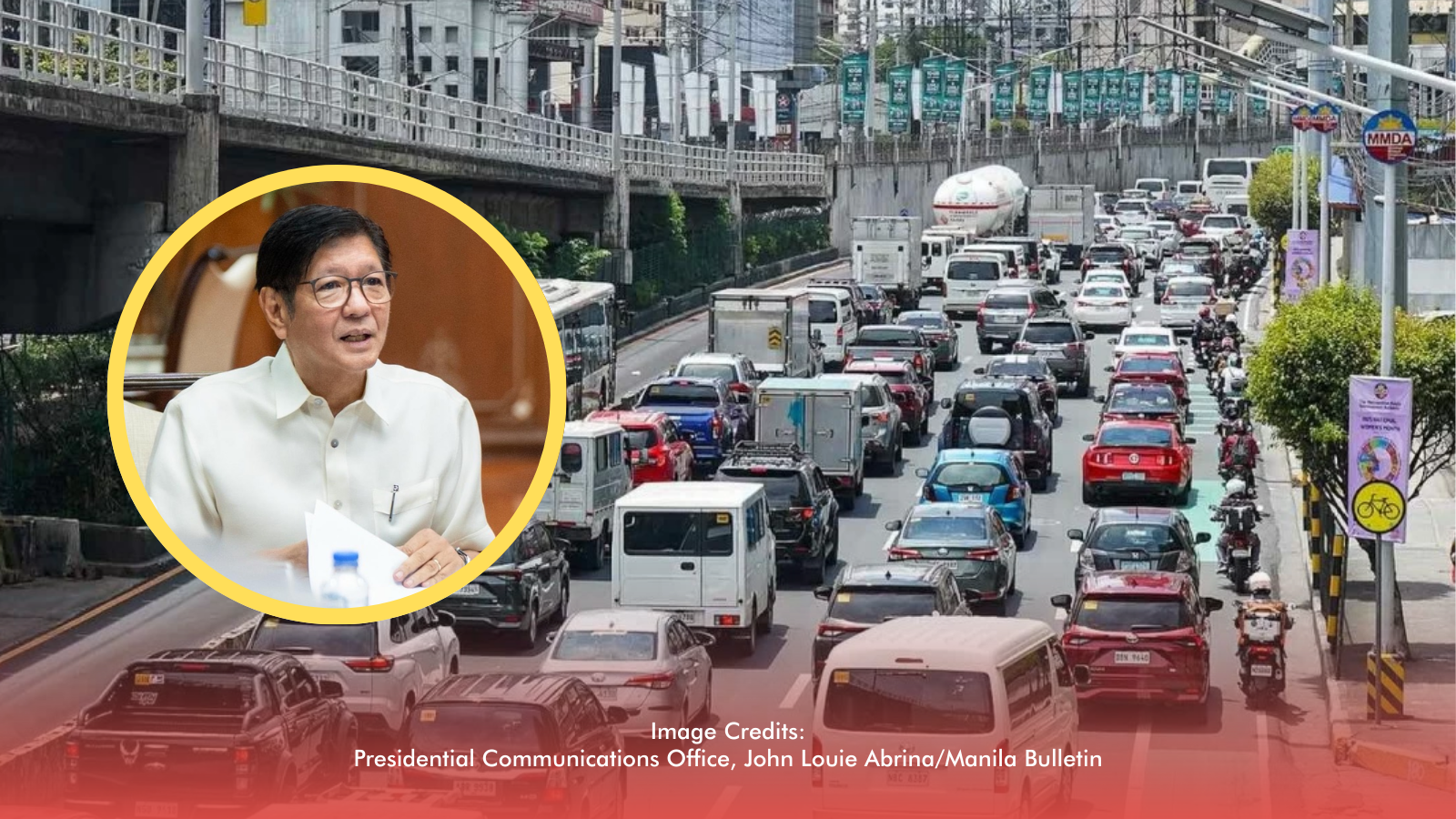
Extending the validity of new vehicle registration to five years is now closer to becoming policy after President Ferdinand Marcos Jr. gave initial approval to the proposal, signaling a possible shift in how motorists handle their first registration period. The move is part of broader discussions within the administration aimed at easing transactions for the public while improving the overall efficiency of transport-related services.
RELATED: [‘Drive Electric. Love Pinas’ Campaign Promotes Eco-Friendly Travel Across PH]
Initial Approval for Longer Registration Validity
Malacañang confirmed that the president agreed in principle to lengthen the registration period for brand-new motor vehicles from three years to five years following a meeting with officials of the Department of Transportation (DOTr).
“Transportation Secretary Giovanni “Banoy” Lopez suggested that the registration of new vehicles be extended from three years to five years, and he highlighted the benefits of this proposal,” Undersecretary Claire Castro explained during a press briefing.
“The president has initially approved this, and it will be followed by memoranda to be issued by the DOTr, so we just have to wait for these,” she added.
Castro did not indicate when the new registration validity might take effect, noting that implementing guidelines still need to be finalized by concerned agencies.
Under existing rules, the initial Land Transportation Office (LTO) registration for brand-new vehicles is valid for three years and is usually processed by the dealer at the time of purchase. This applies to new cars, including those with engine displacements of 200 cc or higher. After this initial period, vehicle owners are required to renew their registration annually, based on the last digit of their license plate number.
Railway Upgrades and Commuter-Focused Directives
Beyond vehicle registration reforms, the president was also briefed on ongoing and upcoming improvements to the country’s railway systems.
Lopez reported the rehabilitation of facilities at the Metro Rail Transit (MRT) Quezon Avenue Station, the continued rollout of cashless payments on MRT-3, and preparations to introduce cashless transactions on Light Rail Transit Line 1 and Line 2 (LRT-1 and LRT-2). He also updated Marcos on the rehabilitation of the remaining unused Dalian trains for MRT-3.
“President Marcos Jr. issued a directive to the DOTr secretary to prioritize the welfare of commuters, keep facilities clean and tidy, and ensure reliable and on-time trains at all times,” Castro said.
The transport chief likewise informed the president that partial operations of the North-South Commuter Railway are expected to begin in 2027 for the Valenzuela–Malolos route and in 2028 for the Malolos–Clark route. Partial operations of MRT-7, which will connect Quezon City and Bulacan, are also targeted for 2027, while the Metro Manila Subway is scheduled for a demonstration run in 2028, with full operations expected by 2033.
If implemented, the longer registration period could reduce the frequency of renewal visits for new vehicle owners, saving time and easing congestion at LTO offices. Combined with planned rail upgrades, these measures reflect the administration’s push to modernize transport systems in ways that directly affect the daily mobility, convenience, and overall quality of life of ordinary Filipinos.
RELATED: [NCR Set To Welcome Fully Electric, Rail-Free Public Transport]