Small-scale fishers in Davao City fear smaller catches as a “very strong” El Niño is expected to last into the first half of 2027, Davao Today reported.
The Philippine Atmospheric, Geophysical and Astronomical Services Administration (PAGASA) warned on September 23 that the current El Niño could strengthen between September and December 2026. El Niño usually brings warmer weather and less rain, raising the risk of drought and water shortages.
A Fisher’s Math
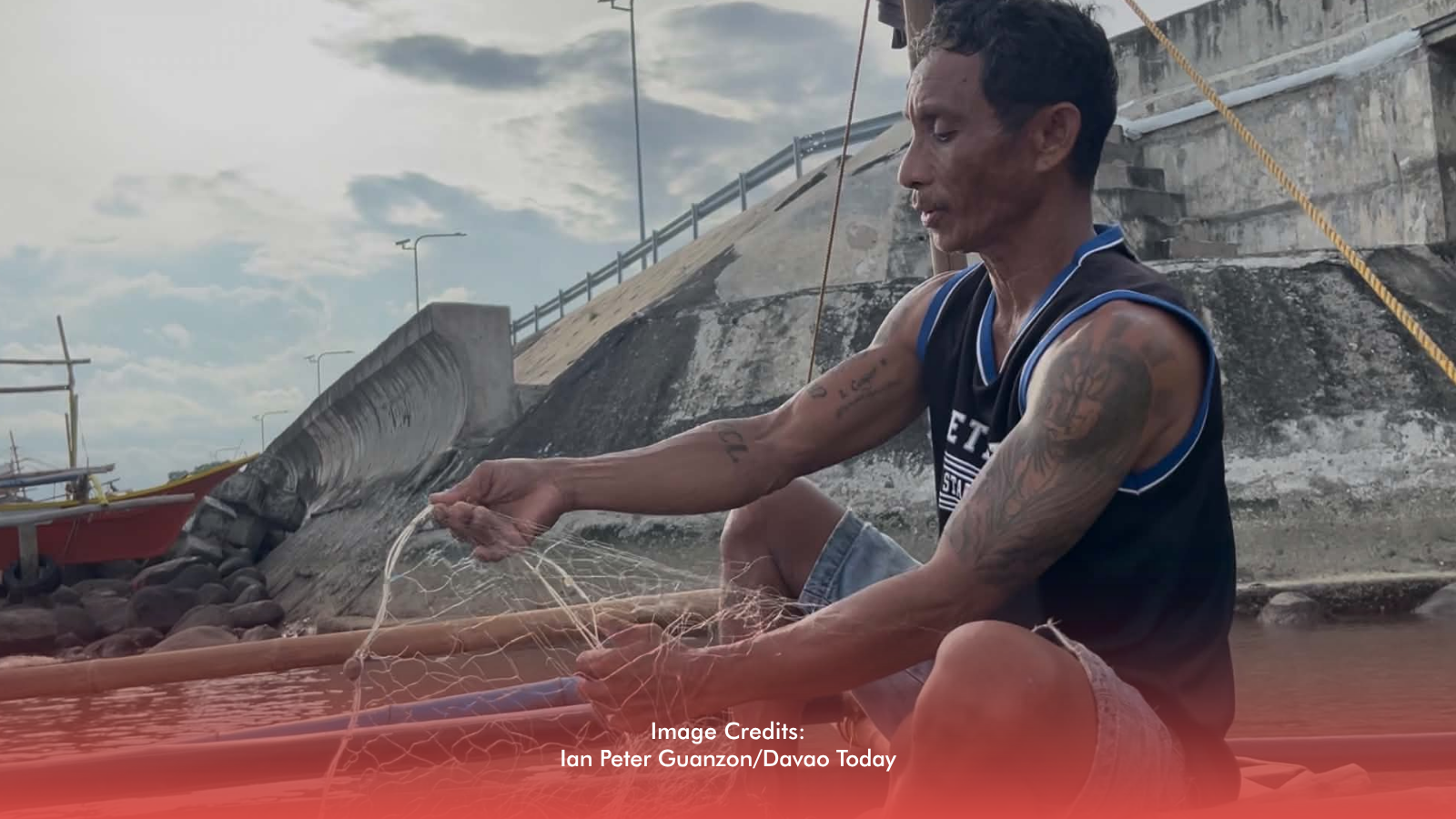
Generoso Olasiman, 48, has fished for three decades. When catches are poor, he takes construction jobs to support his family, according to Davao Today.
His biggest catch can reach about 10 kilograms, worth roughly P2,000 before it is shared. His cut may be just over P500, which he uses for groceries and rice. Fuel costs eat into that, even when fish are plentiful.
Mansueto “Jojo” Bayale Jr., 56, has fished since he was 13. In August, strong habagat(southwest monsoon) waves overturned and damaged the boat he uses, which belongs to his cousin. Repairs cost about P5,000. A donation drive by University of the Philippines Mindanao students had raised about P2,000 at the time of the interview.
On a good day, Bayale earns P500 or P1,000, but sometimes it barely covers food. “You really have to find ways to survive, because if you do not, your family will suffer,” he told Davao Today in Cebuano.
Is El Niño to Blame?
Leo XL Fuentes Jr., Mindanao coordinator of the farmer-scientist network Masipag, said El Niño could reduce plankton and push fish toward cooler waters. But he cautioned that it is not the only factor.
Fuel prices are already cutting time at sea. “A fuel supply worth P1,000 used to last 12 hours at sea. Now, it lasts only six hours,” Fuentes said.
The national fisherfolk group Pamalakaya warned on October 9 that fish tend to move farther offshore during El Niño, forcing fishers to use more time and fuel. National Chairperson Fernando Hicap said small fishers may struggle to adapt while fuel stays expensive.
The Numbers
Davao Region’s fish production is already down. Philippine Statistics Authority data released September 30 showed the region produced 14,638.52 metric tons of fish in the second quarter of 2026, down 13.2 percent from a year earlier, according to Davao Today. Commercial fisheries fell 38.4 percent, and marine municipal fisheries fell 14.7 percent.
Davao Today noted the figures do not prove El Niño caused the decline.
A Health Risk Too
Pamalakaya warned that hours under the sun put fishers at risk of heat exhaustion and heatstroke. Roselyn Regalado, a fishers’ group leader and barangay health worker in Subic, Zambales, said fishers in her community had suffered heatstroke and high blood pressure at sea, with limited first-aid equipment.
What’s Next
Pamalakaya urged the government to give fuel subsidies, help families who can’t fish, and provide boats with first-aid kits and emergency training.
Masipag is running community training to prepare for El Niño in 2027, promoting water-impounding systems and organic aquaculture, or fish farming, Fuentes said.
For fishers like Olasiman and Bayale, the daily question stays the same: will a trip to sea cover its cost and still feed the family?