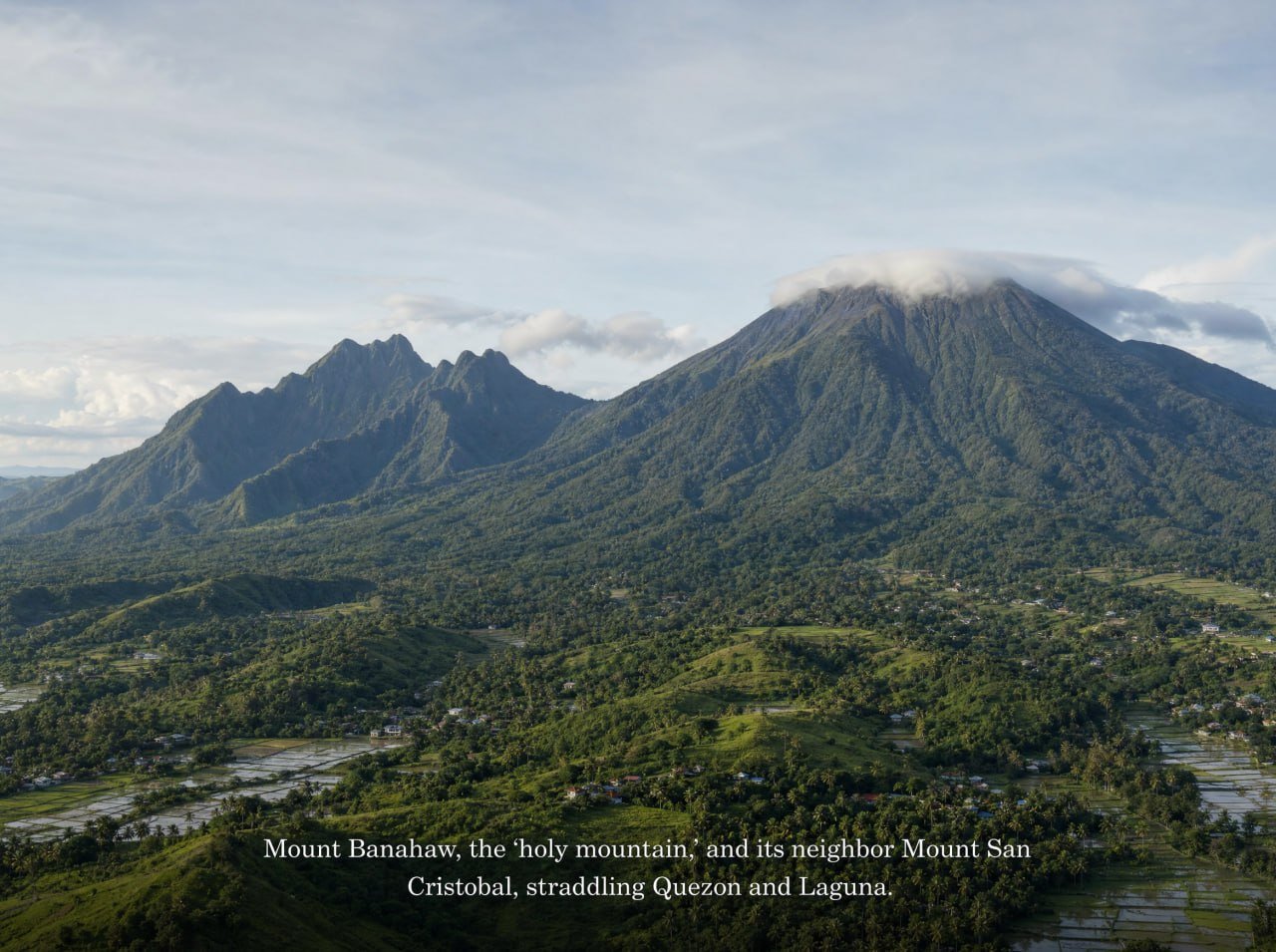
Every country has a mountain people pray to. The Philippines has one it prays to and another it warns you about.
They share a border, a forest and a long history of legends.
Mount Banahaw rises more than 2,100 meters along the Quezon-Laguna boundary. Pilgrims call it the bundok dambana, or holy mountain. Some devotees call it the New Jerusalem.
On its western flank stands Mount San Cristobal, known in folklore as the Devil’s Mountain.
This is the first entry in Tabi-Tabi Po, a series about the places, creatures and beliefs Filipinos still greet politely, just in case.
Why Is Mount Banahaw Holy?
Start with the water.
Banahaw’s old nickname is “Vulcan de Agua,” or volcano of water, because of its many springs, waterfalls and streams. For generations, people living below the mountain have regarded its waters as holy.
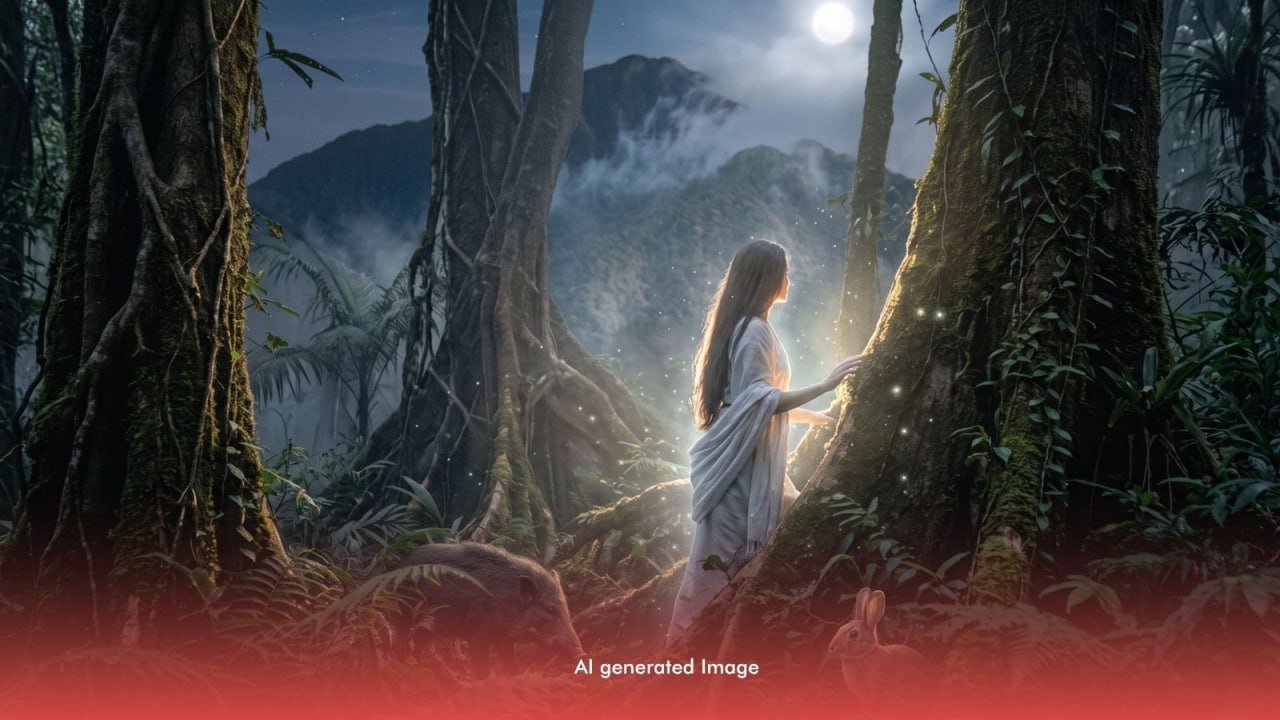
The mountain was considered sacred even before the Spanish arrived. Tagalog lore identifies it as the home of Mariang Banahaw, a diwata or nature spirit, alongside Mariang Makiling and Mariang Sinukuan.
One of Banahaw’s best-known stories involves Agripino Lontok, a rebel from Taal, Batangas, who fled to the mountain in 1886 to escape the Guardia Civil.
Legend says Lontok gained supernatural powers there but would go blind if he left. He remained on Banahaw until his death in 1930, following instructions from the Santong Boses, or Holy Voice. Believers say the Voice revealed the mountain’s sacred sites to him.
The historical story goes further back.
In 1841, Spanish forces crushed Hermano Pule’s Cofradía de San José in Tayabas. Historians say some survivors fled toward Banahaw and San Cristobal, renaming places they encountered. A creek became the River Jordan. A reddish spring became the Blood of Christ.
For more than a century, Banahaw became a place where religious belief and resistance to colonial rule met.
Where Are Banahaw’s Sacred Places?
On Banahaw, a puwesto is a natural formation treated as a shrine.
UP professor Prospero Covar classified these as bato or rocks, bukal or springs, kuweba or caves, and taluktok or peaks. Pilgrims believe these places have tagatanod, or guardian spirits.
Visiting them in a set order is called pamumuwesto. It involves walking, praying and bathing in the mountain’s cold waters.
At Sta. Lucia Falls, twin cascades are associated with God the Father and the Buhok ng Birhen, or Virgin’s Hair. Near the crater, pilgrims venerate red and white waterfalls as the “Blood” and “Milk” of the Mother, while botanists attribute the colors to algae.
In Kinabuhayan, meaning “place of resurrection,” pilgrims point to a footprint in a clear pool and say it belongs to Christ. Nearby is Suplinang Tubig, a waterfall more than 100 feet high.
The journey also has rules. Pilgrims are expected to follow the route and, in some traditions, remain silent.
They are not simply climbing a mountain.
They are moving through a sacred landscape.
Who Comes to Banahaw?
Nobody agrees on the number of religious groups associated with the mountain. Estimates range from about 30 to more than 130.
One of the best known is the Suprema de la Iglesia del Ciudad Mistica de Dios in Barangay Sta. Lucia, Dolores, Quezon.
Founded by Maria Bernarda Balitaan, the group reveres her as the Mahal na Ina, or Holy Mother. Members say the Santong Boses revealed her mission to her.
The church worships God as a Mother and has been led by women priests since Balitaan’s death. National heroes serve as saints, and Dec. 30, the anniversary of Jose Rizal’s execution, is a major rite.
The group also has a prophecy: one day, the mountain will open and reveal a golden flag, golden church and golden palace.
But most pilgrims come for something simpler.
The water.
Some describe feeling lighter after bathing in the springs, while others speak of answered prayers and healing.
“Dito ako gumaling, sa tubig at saka sa pananampalataya,” one pilgrim told VERA Files.
“I was healed here, by the water and by faith.”
Why Was Banahaw Closed?
Holy Week once brought more than half a million people to Banahaw, leaving tons of garbage and damaging the forest.
The government closed the mountain’s inner sanctuaries and peaks in 2004.
Five years later, Republic Act No. 9847 declared Mounts Banahaw and San Cristobal a protected landscape under a Protected Area Management Board.
The result is an unusual rule for a holy mountain:
Pilgrims can visit its sacred areas, but they cannot simply climb to the summit.
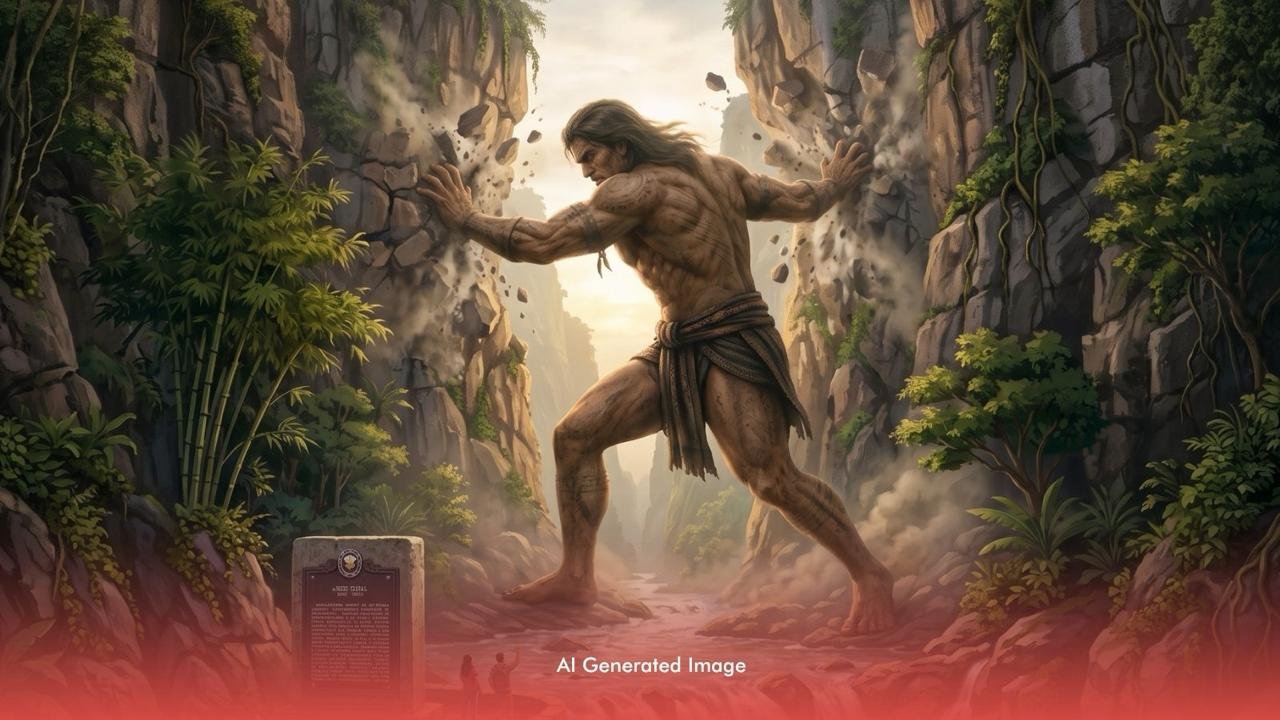
Why Is San Cristobal the ‘Devil’s Mountain’?
San Cristobal is a 1,470-meter satellite cone on Banahaw’s western flank. It is part of the same protected landscape and is classified by PHIVOLCS as potentially active.
But its reputation was not always dark.
In the 1890s, historian Reynaldo Ileto wrote, a brotherhood treated San Cristobal as a patriotic shrine where Jose Burgos and Rizal were said to be living.
Over time, however, the sacred geography flipped.
Researchers recorded Banahaw sect members describing Cristobal as an evil mountain, a place of “many misfortunes” and “haunted and haunting spirits.”
Hikers have their own stories.
Some say spirits lead climbers away from trails and make them walk in circles. Others speak of a powerful spirit demanding lives as “tribute.”
Then there is the Tumao, a creature sometimes compared to Bigfoot.
A former tour guide once told a television feature that he had seen a dark, hairy, red-eyed figure with horns. Another story claims a photograph of four hikers came out showing five.
There is no verified evidence for these stories, and no official records confirming supernatural deaths.
Fog, dense forest and difficult terrain can explain plenty.
Still, the stories remain.
Even the word Tumao has its own folklore. Jesuit folklorist Francisco Demetrio recorded tumao as an old Visayan term for enchanted beings. No established connection has been found between that word and the creature said to roam San Cristobal.
Two Mountains, One Filipino Tradition
Banahaw and San Cristobal may seem like opposites: one holy, one haunted.
But together, they reflect something deeply Filipino about belief.
Catholic saints exist alongside diwata. Sacred springs coexist with stories of spirits. Revolutionary heroes become part of religious traditions.
Banahaw is where all of those beliefs meet.
Even its legends refuse to stay in one category.
One story says an engkanto gave the hunter Limbas golden balls that turned into anahaw fruit after he forgot to kiss his parents’ hands. His cry, “Ba! Anahaw!” supposedly gave Banahaw its name.
Another legend claims Rizal survived his execution in 1896 and wandered through the mountain.
And then there is the golden church, said to appear at the end of days.
Perhaps that is why Banahaw remains fascinating even with its peaks closed.
The mountain is not just a place people visit.
It is a place people believe in.
Before You Go
The summits are closed. Banahaw’s peaks and inner sanctuaries have been off-limits since 2004, while San Cristobal is also closed.
It is protected. Both mountains fall under the Mounts Banahaw-San Cristobal Protected Landscape under RA 9847. Avoid anyone offering unauthorized access.
Visit designated areas. Pilgrims gather around Sta. Lucia and Kinabuhayan in Dolores, Quezon. Check current rules, permits and fees with DENR Calabarzon or the Protected Area Management Board before traveling.
Respect the puwestos. Keep your voice down, respect people at prayer and leave no trash behind.
Expect crowds during Holy Week. It is the busiest season.
The holy mountain and its so-called devil twin share the same volcanic roots, the same forest and, when the fog rolls in, the same silence.
So if you ever find yourself walking toward either one, there is only one proper way to begin:
Tabi-tabi po.