A piece of Philippine heritage recently found its way into an Indian school as young learners got the opportunity to write using Baybayin, one of the Philippines' ancient writing systems. The activity introduced students not only to basic Baybayin characters but also to a historical connection between Philippine and Indian writing traditions.
RELATED: [Baybayin, Not Alibata: Retracing Philippine Pre-Colonial Script]
Young Learners Discover Philippine Script
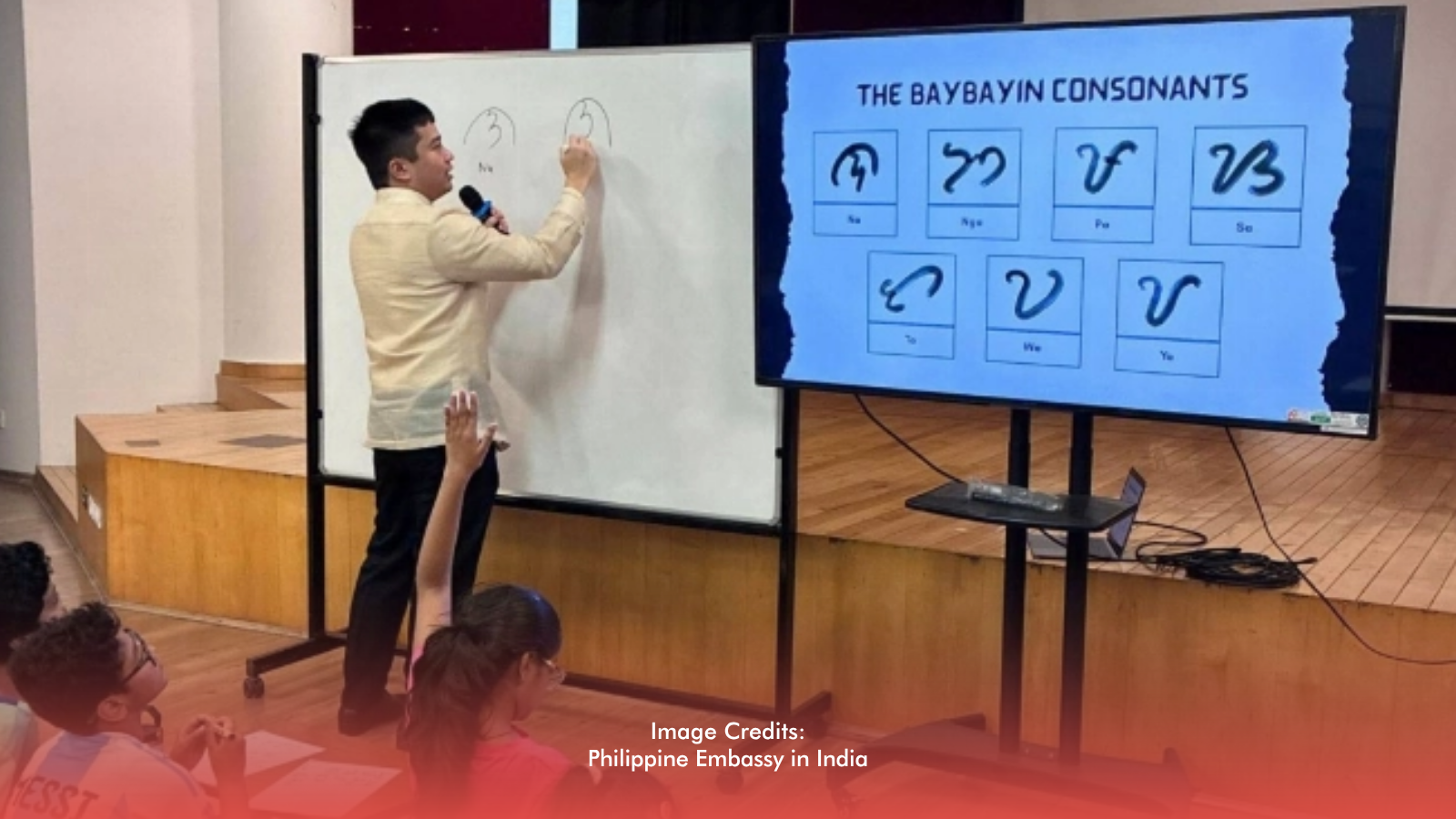
The Philippine Embassy in New Delhi held the workshop as part of Vega Schools Gurgaon's Literacy Week activities. Third Secretary Ronn Bautista and the embassy's cultural team guided about 100 students from classes 2 to 5 through the basic characters of Baybayin.
For the students, the lesson went beyond simply learning an unfamiliar script. “Students wrote their names in Baybayin, discovering firsthand the beauty of this ancient Philippine writing tradition,” the embassy posted on Facebook.
The cultural activity also highlighted Baybayin's “visual similarities and historical connection with Devanagari, the writing system used for Sanskrit, Hindi and many other languages in India.”
Tracing Baybayin's Historical Roots
Baybayin was widely used by communities in Luzon, the Philippines' largest island, before Spanish colonizers arrived in the 16th century. The colonizers initially modified the writing system before the use of the Latin script was later propagated, according to the embassy.
Its history also points beyond the Philippines. The embassy said Baybayin is believed to trace its origins to the ancient Brahmi script that developed in India around the 3rd century BCE, giving the workshop an added dimension as a cultural exchange between the two countries.
Introducing Baybayin to students in India provides an opportunity to present Philippine heritage through a shared historical lens. Rather than limiting cultural education to well-known traditions, activities like the workshop can bring attention to indigenous and precolonial elements of Philippine history that remain relevant to how Filipinos understand and preserve their identity.
The initiative serves as a reminder that cultural heritage can also become a bridge between countries. Bringing Baybayin to an Indian classroom gives Philippine history greater visibility abroad while opening space for younger generations in both countries to learn about the connections that have shaped their respective writing traditions.
RELATED: [Baybayin Tattoo Exhibit Unveils Filipino Heritage in San Francisco]